REVIEW · OSAKA
Kyoto and Nara Day Trip from Osaka
Book on Viator →Operated by JTB Global Marketing & Travel Inc. · Bookable on Viator
Kyoto and Nara in one long day is a bold move. This one works because you get a real guide and you’re hopping between stops by shinkansen-style train time-saving routes, not slow local wandering. You start early from Osaka and come back in the evening with the major hits of Kyoto and Nara checked off.
I like two things a lot. First, the professional English-speaking guide keeps the day coherent, with historical context tied directly to each place. Second, key admission fees and transportation costs are included, so you spend less time figuring out ticket lines and more time looking at the buildings.
One drawback to plan for: the schedule is tight. You get set windows at each site, so if you want to linger for photos, quiet corners, and extra explanations, you’ll feel the pace.
In This Review
- Key things to know before you go
- Getting to Kyoto fast: shinkansen timing from Osaka
- Nijō Castle: Tokugawa power behind calm walls
- If Nijō Castle is closed on your day
- Kinkaku-ji Golden Pavilion: the pond-and-gold effect
- Kyoto Imperial Palace: what you’ll see, and what changes
- Lunch in Kyoto: with lunch set menus or self-paced Kyoto Station time
- Nara start: Kasuga Grand Shrine and its sacred messenger vibe
- Todai-ji Temple: Great Buddha scale that hits fast
- Nara and deer etiquette: fun, photos, and boundaries
- Price and value: what $198 buys you (and where it can feel tight)
- Logistics that matter: non-reserved trains, meeting point, and evening end
- Who should book this Kyoto and Nara day trip from Osaka?
- Should you book this Kyoto and Nara day trip from Osaka?
- FAQ
- What time does the Kyoto and Nara day trip run?
- Is lunch included?
- How do you travel between Osaka, Kyoto, and Nara?
- Are admission tickets included?
- What happens if Kyoto Imperial Palace is closed?
- What happens if Nijō Castle is closed?
Key things to know before you go
- A guided World Heritage run: Nijō Castle, Kinkaku-ji, Kyoto Imperial Palace (or replacement), Kasuga Grand Shrine, and Todai-ji.
- Trains without reserved seats: you’ll ride in non-reserved cars, and seating is not guaranteed.
- Fixed time at each stop: roughly 40–70 minutes per major site, so bring comfy shoes.
- Flexible swap days: Kyoto Imperial Palace and Nijō Castle can be replaced by specific shrines/temples when closed.
- Lunch is option-based: With Lunch gives you a set menu; No Lunch gives you time to eat near Kyoto Station.
Getting to Kyoto fast: shinkansen timing from Osaka
You start from Hotel Granvia Osaka and the morning plan is built to move quickly. You’ll take public transport to Kyoto, with shinkansen travel between Shin-Osaka and Kyoto. The tour uses non-reserved seats, so treat the morning like a commute: it can mean standing at points, especially if you arrive late in the boarding flow.
What makes this valuable is simple: Kyoto and Nara are dense with famous sites. If you try to DIY both cities in one day, you spend a lot of time tracing routes, rechecking schedules, and lining up at ticket counters. Here, the routing is handled, and you start each big sight on schedule.
Group size is capped at 40 travelers, which is usually manageable. Still, you’ll be in a coordinated crowd. That means you should expect quick listening moments and frequent “move to the next spot” transitions. If you prefer a slow stroll, this isn’t that kind of day.
You can also read our reviews of more tours and experiences in Osaka.
Nijō Castle: Tokugawa power behind calm walls
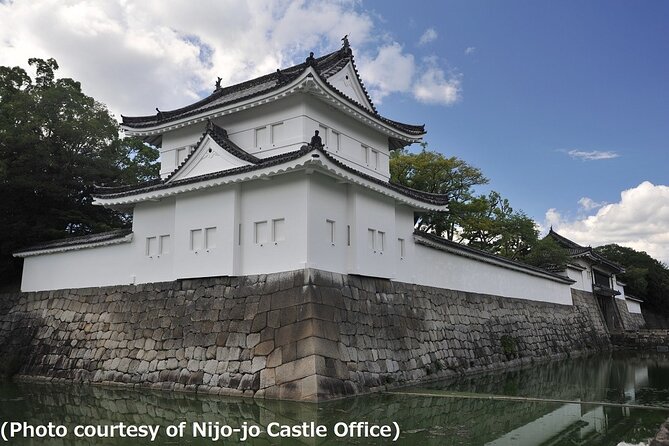
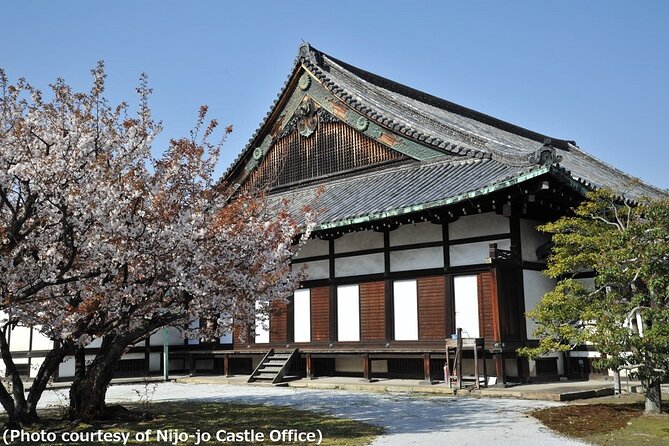
Nijō Castle is your first major Kyoto stop. It’s a World Heritage site, completed in 1626, and it was used as lodging for the Tokugawa shogun while also relating to Kyoto’s imperial world. Even before you reach the interior, you get the sense that this is architecture built for control: firm symmetry outside, then something more theatrical within.
Your visit time is about 50 minutes, and the format is guided with ticket included. That’s enough to appreciate the overall design and hit the key rooms, but not enough for slow, frame-by-frame exploration. If you love details, keep your eyes sharp for the kind of ornament and craftsmanship that makes Nijō Castle famous.
Practical tip: Nijō Castle is an indoor-and-corridor experience as much as a garden-and-views stop. Wear shoes you can walk in comfortably for a while, and keep your phone ready but don’t chase pictures so hard that you lose the guide’s explanation.
If Nijō Castle is closed on your day
Nijō Castle is closed on Tuesdays in certain months (January, July, August, December). When that happens, the tour visits Ryoan-ji instead. The refund-free swap matters because it changes the experience focus, so build a flexible mindset.
Kinkaku-ji Golden Pavilion: the pond-and-gold effect
Next up is Kinkaku-ji, the Golden Pavilion. It’s another World Heritage site, and the main visual is exactly what you hope it is: wooden architecture finished with thin layers of pure gold, framed by a pond setting. When the light hits, it’s the kind of view that makes the crowds feel worth it.
Your time here is about 45 minutes, again with admission included. You’ll want to use that time smartly:
- Start by taking in the full pavilion from the early viewpoint.
- Then move to catch the pond reflections if you can do it without getting stuck in a bottleneck.
This stop can feel packed, especially if you travel during peak school-trip seasons. Even so, the biggest advantage of going with a guide is that you’re less likely to wander in circles. You go where the views are, in the order that usually keeps things flowing.
Kyoto Imperial Palace: what you’ll see, and what changes
After Golden Pavilion, you head to Kyoto Imperial Palace, with about 40 minutes on the clock. Admission there is listed as free. The palace was used as the emperor’s residence until about 150 years ago, and the tour aims to explain the style and the rooms you’re allowed to enter.
Here’s the key thing for your planning: Kyoto Imperial Palace has closure rules. The tour swaps the visit if the palace isn’t open. In practice, that means your day may include:
- Kitano Tenmangu Shrine if the palace is closed (Mondays, or the following day if Monday is a holiday, plus certain Imperial Household Agency event days)
- Nishi Hongan-ji Temple if the closed day falls on the 25th
From a traveler perspective, this is a plus and a minus. It’s a plus because you still get a major Kyoto culture stop even on closure days. It’s a minus if Kyoto Imperial Palace is the one place you were hoping to see no matter what. Either way, the tour is designed so you’re not left with an empty afternoon.
Practical tip: If you’re visiting in a month where closures are common, it’s worth mentally preparing for a shrine/temple replacement. Don’t anchor your whole day to one building.
Lunch in Kyoto: with lunch set menus or self-paced Kyoto Station time
Lunch depends entirely on the option you choose. If you book With Lunch, you’ll get a Western-style set menu. Vegetarian requests are possible only if you tell the operator at reservation time. Other meal needs like halal and gluten-free are not available on this tour.
If you choose No Lunch, you get free time to eat on your own in the Kyoto Station area. That can be a smart move if you want something more Japanese and less set-menu. It also gives you a chance to reset before the Nara leg of the day.
Two things to keep in mind:
- You’re still on a fixed schedule, so lunch is best treated as fuel, not a slow gastronomic break.
- Some days are busy, and splitting time for lunch is easier when everyone stays in the same meal flow.
Nara start: Kasuga Grand Shrine and its sacred messenger vibe
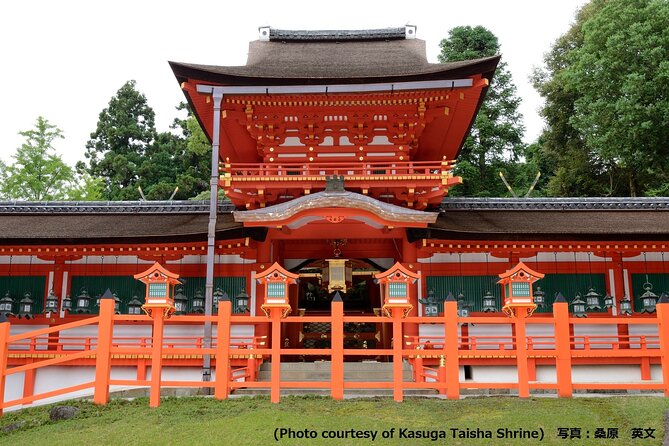
You head to Nara next. The first stop is Kasuga Grand Shrine. It’s a Nara Period shrine and another World Heritage site. What makes Kasuga memorable isn’t just its age—it’s the way the shrine connects to the deer mythology of Nara. The deer in Nara are considered messengers of the shrine.
Your visit is about 1 hour, and admission is included. The tour also includes entry into the Main Sanctuary special visit area starting January 2025, but there’s a backup plan if that area can’t be entered due to events or operations. If it’s unavailable, you’ll visit the Kasuga Taisha Museum or Todaiji Museum instead.
This matters because it changes what you do with your hour. Special sanctuary access feels more direct, while museum time is more about artifacts and indoor perspective. Either way, you’ll still get a structured, guided stop, not random wandering.
Practical tip: Kasuga is outdoors in parts and can involve walking on uneven ground. Keep your pace steady and don’t plan to sprint for photos. The guide’s timing is what keeps you from getting left behind.
Todai-ji Temple: Great Buddha scale that hits fast
Then comes the heavy hitter: Todai-ji Temple, also a World Heritage site. It represents the Nara Period, and it’s one of the world’s largest wooden-structure complexes. The main hall holds the famous bronze Great Buddha, and the sheer scale is the point.
Your visit time is about 1 hour 10 minutes, with admission included. This is where you’ll feel the tour’s pace the most. Todai-ji can take over your attention, and it’s not a site you want to race. But the trade-off is you get enough time to see the Great Buddha area, understand the significance, and still make the schedule for your return.
One smart approach: don’t just shoot photos. Stand, look, and let your eyes adjust to the hall size. The room’s proportions are the whole show.
Nara and deer etiquette: fun, photos, and boundaries
Even though the itinerary time is focused on shrine and temple stops, Nara is still Nara. Kasuga is closely tied to the deer-world of the region, and you should be ready for deer encounters during stroll time nearby.
Here’s the deal for a good experience: don’t treat deer like props. Keep a bit of distance and stay in control of your space. If one comes close, stay calm and don’t do sudden moves. The goal is simple: enjoy the moment without turning it into a stressful feeding circle.
You’ll also likely see plenty of people trying to coax selfies. If you want cleaner photos, wait a minute, move slightly aside, and let the busy flow pass. Your guide’s direction helps here—follow it, don’t freestyle.
Price and value: what $198 buys you (and where it can feel tight)
At $198.15 per person, this tour is priced as a premium day because you’re paying for three big conveniences:
- An English-speaking professional guide
- Included admissions and transportation costs
- Time-saving intercity travel via shinkansen-style routing
If you were to DIY both cities with guided explanations and pre-booked tickets, you’d spend time and effort. The “value” comes from buying back mental energy and logistics stress.
So when does it feel overpriced? Usually when you want more time per site. This tour is built around a snapshot approach. Your stop times are about 50 minutes at Nijō Castle, 45 at Kinkaku-ji, 40 at Kyoto Imperial Palace, 1 hour at Kasuga, and 1 hour 10 minutes at Todai-ji. That’s a lot of movement for people who like slow travel.
Also, your seats on trains are non-reserved and not guaranteed. That doesn’t usually ruin the day, but it does affect comfort on long rides. If you hate the uncertainty of station boarding, this could annoy you even if the sights are great.
My practical verdict: it’s worth the price if you’re new to Japan or you only have one full day. It’s less worth it if you already know Kyoto well and want deeper time at fewer places.
Logistics that matter: non-reserved trains, meeting point, and evening end
The tour starts at 7:15 am from Hotel Granvia Osaka. You return around 6:30 pm to Osaka-Namba Station. There’s no hotel drop-off, so you’ll need to handle the final ride yourself.
Also important: the tour uses public transportation, so expect walking in train corridors and around stations. Osaka’s transit hubs are huge. If you’re the type who likes clear turn-by-turn guidance, take a screenshot of the meeting/end locations and keep it handy on your phone.
You’ll meet the main guide setup in Osaka, then the day continues with city transfers by bus as needed. The tour also includes an assistant at two key transfer points: from the Granvia area to the Kyoto desk, and from Kintetsu Nara Station back toward Osaka Namba Station.
Who should book this Kyoto and Nara day trip from Osaka?
This tour is a strong fit if:
- You have one day and want Kyoto and Nara highlights
- You want guided context rather than reading everything on your own
- You’d rather not manage intercity transit and admission logistics
It may not be your best match if:
- You prefer slow browsing and lots of time for questions and wandering
- You get frustrated by tight schedules and quick stop changes
- You know you want to revisit one place deeply (Kyoto in particular deserves repeat visits)
If you’re traveling as a couple, this can be a great “orientation day.” If you’re traveling with kids, the pace can work, but it’s not a gentle crawl. For older travelers, it’s doable, but you’ll want to plan for walking and crowd flow.
Should you book this Kyoto and Nara day trip from Osaka?
If your goal is to see Nijō Castle, Kinkaku-ji, Kyoto’s imperial-era sites, Kasuga Grand Shrine, and Todai-ji in one day, this is a practical way to do it. The included admissions, guided explanations, and transit planning help a lot—especially when you’re short on time.
I’d book it if you’re comfortable with a structured pace and you’re okay with train seating that isn’t reserved. I’d skip it if you want long, unhurried time inside the places, or if you want total control over lunch and timing.
If you’re on the fence, the deciding question is simple: do you want a guided highlights day, or do you want a slow, self-paced Kyoto and Nara?
FAQ
What time does the Kyoto and Nara day trip run?
The tour starts at 7:15 am and ends around 6:30 pm at Osaka-Namba Station. There is no hotel drop-off.
Is lunch included?
Lunch is only included if you choose the With Lunch option. If you choose No Lunch, you’ll have free time to eat on your own in the Kyoto Station area.
How do you travel between Osaka, Kyoto, and Nara?
You’ll use public transportation. The tour includes comfortable shinkansen travel between Shin-Osaka and Kyoto and a return by Kintetsu with non-reserved seating. Seating is not guaranteed.
Are admission tickets included?
Yes. The tour includes admission fees and transportation costs for the listed stops. Kyoto Imperial Palace is listed as admission ticket free.
What happens if Kyoto Imperial Palace is closed?
If the palace is closed, the tour visits Kitano Tenmangu Shrine instead. If the closed day falls on the 25th, the tour visits Nishi Hongan-ji Temple.
What happens if Nijō Castle is closed?
Nijō Castle is closed on Tuesdays in January, July, August, and December. If closed, the tour visits Ryoan-ji instead. Refunds aren’t issued for these alternative destination swaps.