REVIEW · TAORMINA
From Taormina: Syracuse and Noto Guided Day Trip by Bus
Book on GetYourGuide →Operated by Noema Viaggi Srl - Sicilyexcursions · Bookable on GetYourGuide
Syracuse and Noto in one packed day. I love how the route tells the story of Sicily in layers, from Neapolis’s Greek monuments to Sicilian Baroque on the streets of Noto. You also get real guidance, with an onboard guide and a local guide on site, so you’re not just sightseeing plaques.
The trade-off is pace. It’s a long day with early pickups and multiple short stops, so you’ll want comfortable shoes and patience, especially if the schedule feels tight for your group.
In This Review
- Key highlights you’ll feel right away
- Two Towns in One Long Day: Syracuse first, then Noto
- Morning bus ride and early pickups from the Taormina area
- Neapolis Archaeological Park: Greek Theatre to the Ear of Dionysius
- Island of Ortigia: Arethusa, papyrus, and a sea-view pause
- The Cathedral of Syracuse slot: quick but meaningful
- Noto, the Baroque “capital”: walking Corso Vittorio Emanuele
- Budget and tickets: what $68 covers and what you’ll pay extra
- Pace, weather, and how to set expectations
- Who this day trip is best for
- Should you book Syracuse and Noto from Taormina?
- FAQ
- How long is the Taormina to Syracuse and Noto guided day trip?
- What is included in the price?
- Do I need separate tickets for Neapolis Park and the Duomo of Ortigia?
- What time are pickups in the Taormina area?
- What languages are offered for the guides?
- Is this tour suitable for wheelchair users or limited mobility?
Key highlights you’ll feel right away
- Neapolis Archaeological Park: Greek Theatre, Latomia del Paradiso, the Ear of Dionysius, and the Roman Amphitheatre in one guided sweep
- Ortigia walk along the Foro Italico: Fountain of Arethusa and that seaside terrace view
- Baroque “showstopper” moments: Cathedral area in Ortigia, then Noto’s UNESCO-recognized historic center
- A guide who explains the why: expect history tied to what you’re looking at, with Christy a common name you’ll hear praised
- Photo stops plus free time: enough slack to reset, shop, and breathe, even if it’s not a slow tour
Two Towns in One Long Day: Syracuse first, then Noto
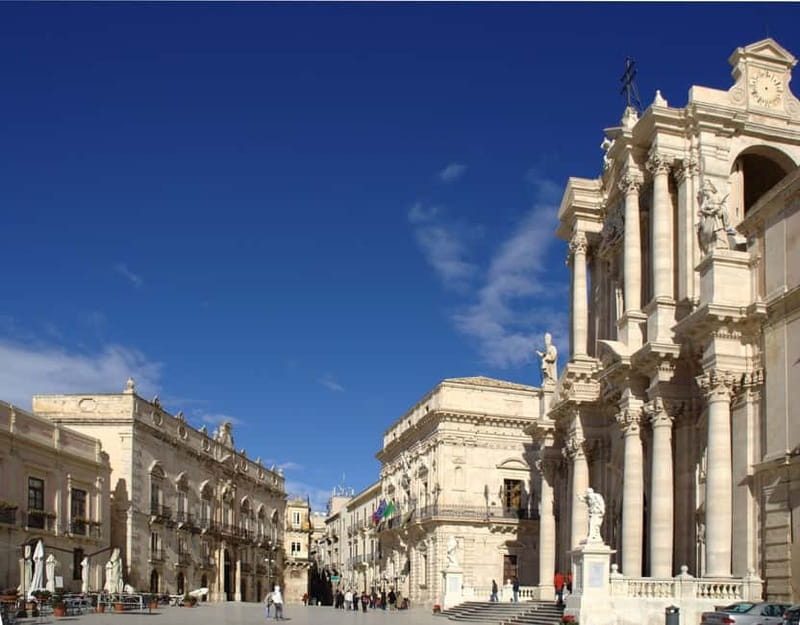
This is one of those Sicily days that gives you a lot of texture in 10 hours. You start in Syracuse with its ancient Greek backbone, then you pivot to Ortigia, and finally you roll into Noto, the famous Baroque town with a UNESCO-listed historic center.
What I like about this format is that it doesn’t treat Syracuse and Noto like two separate stops. It treats them like two chapters of the same book: Greek roots, Roman-era pieces, then Baroque artistry showing off after centuries of change.
You can also read our reviews of more tours and experiences in Taormina.



Morning bus ride and early pickups from the Taormina area
The day runs on a bus schedule, not a sleepy start. Pickups begin early—around 7:00 to 7:45 depending on which Taormina-area meeting point you choose (Taormina terminal bus is listed at 7:20). The bus will be recognizable with an orange sign reading SIRACUSA NOTO.
You’ll also have a short stop for services on the way. That’s helpful because the coaching time to Syracuse is about two hours, and once you’re there, the walking starts.
If you’re sensitive to long travel days, plan your energy like you would for a hiking day: water, a snack, and a light rain layer just in case.
Neapolis Archaeological Park: Greek Theatre to the Ear of Dionysius
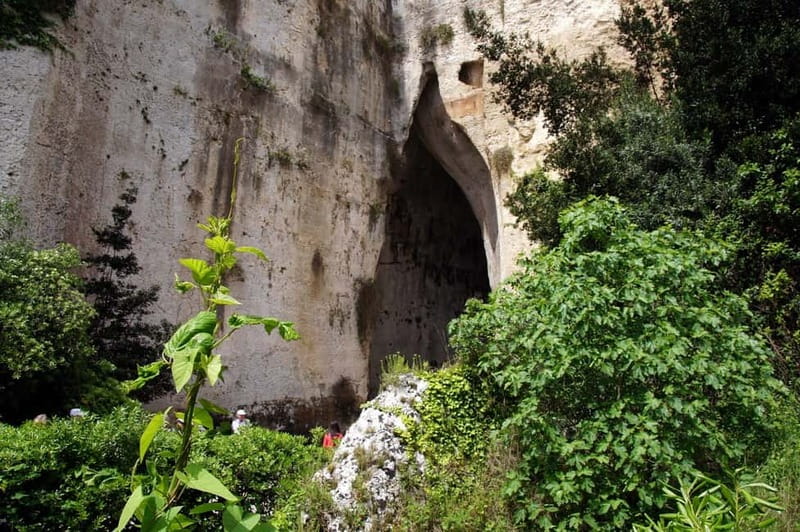
Once you reach Syracuse, the first “real wow” comes from Neapolis Archaeological Park, which is the most characteristic part of the old Greek city. You’ll get a guided tour of about two hours, and the big names here are the ones you’ve probably heard in school books—now explained in place.
Here’s what you’re looking at and why it matters:
- Greek Theatre: Not just seating and stone—this is where Syracuse’s Greek identity becomes physical. The guide helps connect the structure to the kind of public life the city once supported.
- Latomia del Paradiso: Quarry landscapes with a darker edge. The setting itself adds atmosphere; the explanations help you understand what you’re seeing beyond the scenery.
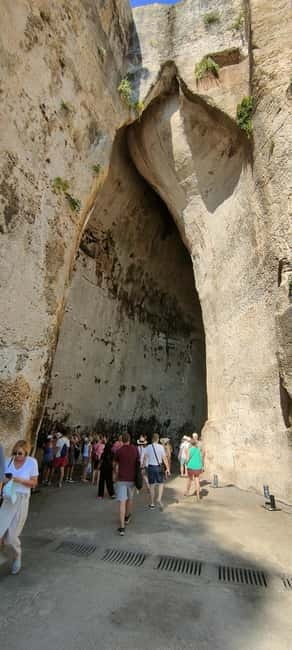
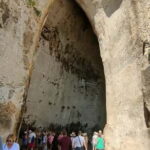
- Ear of Dionysius: That famous acoustics spot. Even if you’ve heard the legend, you’ll get more out of it when someone places it in context.
- Roman Amphitheatre: A reminder that Syracuse didn’t stop at Greek times. It shifted, adapted, and kept building.
One timing note: the visit to Neapolis is guided, but the day also uses shorter pacing blocks elsewhere. If you’re the kind of person who could linger in ruins for hours, go into Neapolis with the mindset of a curated highlights tour—then come back later if you want a second, slower pass.
Island of Ortigia: Arethusa, papyrus, and a sea-view pause
After the Neapolis visit, you head to Ortigia, the historic center of Syracuse, and the tone changes from monumental ruins to lived-in streets and sea air. You’ll have guided time here plus free time, giving you room to wander without a constant tour-pace.
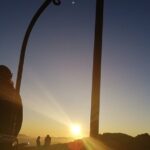
A walk along the Foro Italico brings you to the Fountain of Arethusa. This is a freshwater spring that forms a natural pool with papyrus plants, sitting on a terrace with sea views. It’s one of those stops that’s both peaceful and photogenic—good for a breather after stone-heavy archaeological zones.
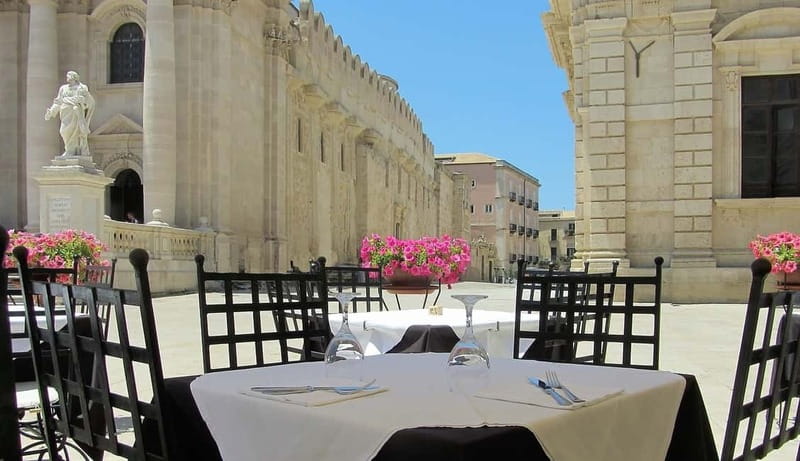
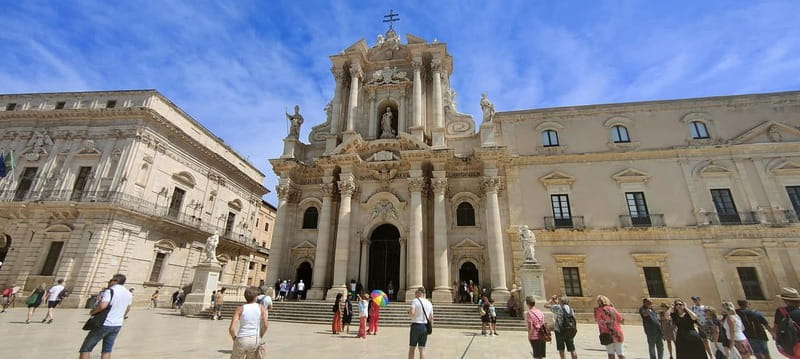
From there, you visit key sights around the cathedral area, including the Temple of Apollo (the Cathedral Temple of Apollo is part of what you’ll see in this zone). You’ll also spend time in the Baroque square where the cathedral stands—think elegant stonework, dramatic angles, and lots of “stop, look up, take another photo.”
Free time in Ortigia is valuable because you can pivot to what you actually feel like doing: coffee, browsing, or a casual window-shopping circuit through the local streets. Lunch and drinks aren’t included, so this is where you’ll want to choose your own plan.
The Cathedral of Syracuse slot: quick but meaningful
Your schedule includes a separate stop at the Cathedral of Syracuse area for around 30 minutes. This is brief, but it helps connect the dots between the earlier Greek-to-Roman story and the later religious and architectural layers you see on Ortigia.
Also keep in mind: church visits mean practical clothing matters. The tour recommends appropriate clothing for churches, and you’ll be walking enough that comfort is non-negotiable.

Noto, the Baroque “capital”: walking Corso Vittorio Emanuele
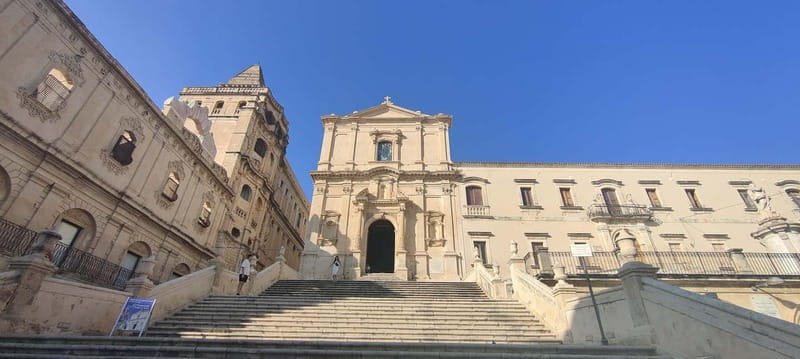
Then you head from Syracuse to Noto, often called the capital of Baroque. The historic center is UNESCO-listed, and the whole place feels like architecture that learned how to perform.
You get about an hour in Noto (including a photo stop, visit, and free time). After that, the walk through the center is the heart of the day: you’ll go through the Porta Reale (Royal Gate) and down Corso Vittorio Emanuele, which crosses the historic core.
Along the walking route, you’ll see a sequence of major buildings, including:
- Church of S. Chiara
- Palazzo Landolina
- Cathedral of S. Nicolò
- Church of S. Domenico
- Municipal Theatre
What’s nice here is that Noto isn’t presented as one “single must-see.” It’s presented as a corridor of details. Even if you can’t read every stone inscription, the buildings keep rewarding your eye as you walk.
One practical consideration: church exteriors and interiors can be stunning, but the time is limited. If you want a longer look inside, you’ll want to plan that on a separate day in Noto.
Budget and tickets: what $68 covers and what you’ll pay extra
The listed price is $68 per person, and what you get for that includes a private bus and a tour guide. That’s important value: you’re paying for transportation between two sizable towns plus guided interpretation on site.
But there are extras you should budget for:
- Neapolis Archaeological Park entry: about €16.50 per person
- Duomo Ortigia (cathedral area): about €2.00 per person
- Lunch and drinks: not included
So the real cost isn’t just the ticket. It’s the combination of transportation + guidance + monument entries + your food. A smart move is to carry cash and small bills for quick purchases while you’re on foot, and to treat the day as “pay as you go” once you arrive.
For lunch, I’d plan to eat in Ortigia during your free time. One practical tip from the people who’ve done this route is to grab something quick and local rather than assuming lunch will be solved for you by the tour.
Pace, weather, and how to set expectations
This is where the day can make or break your mood. The tour packs a lot in: guided time in Neapolis, a full block in Ortigia, then Noto with walking and photo moments. Even when timing is handled well, it still feels like a long day—especially if you’re picked up very early and dropped off very late.
Walking pace matters. If you’re traveling with someone who’s slower, tell the group to regroup at the start of each stop. And if you’re prone to getting tired in crowds, take advantage of the free time in Ortigia and Noto to step away from the main flow.
Weather is another real factor. Rain can change how enjoyable the ruins feel, and it can make walking in stone sites less pleasant. If you can, bring a light rain layer. You don’t need gear for a storm—just enough to stay comfortable while you keep moving.
Who this day trip is best for
This works best for you if:
- You want Greek + Roman + Baroque in one structured day
- You like guided context that makes monuments easier to understand
- You’re happy with a “highlights” style of sightseeing
- You can handle a full day of walking and time on the coach
It may not suit you if:
- You want lots of unstructured time at a single site
- You get frustrated by tight schedules or fast regrouping
- You need wheelchair accessibility or mobility accommodations (the tour is not suitable for people with mobility impairments and wheelchair users)
Should you book Syracuse and Noto from Taormina?
Yes, book it if you’re trying to make the most of limited time in eastern Sicily and you want a guided route that connects the big historical themes. For the price, the value comes from combining bus transport with on-site guidance and making sure you hit the standout parts of Syracuse and Noto without figuring it all out yourself.
Skip it—or at least consider whether you need a gentler plan—if you hate early mornings, long travel days, or lots of walking with short free time. For some people, the best approach is doing this once as a foundation, then returning later to linger.
FAQ
How long is the Taormina to Syracuse and Noto guided day trip?
The total duration is about 10 hours.
What is included in the price?
You get a tour guide and private bus transportation. Entry tickets for monuments are not included.
Do I need separate tickets for Neapolis Park and the Duomo of Ortigia?
Yes. Neapolis Archaeological Park costs about €16.50 per person, and the Duomo Ortigia is about €2.00 per person.
What time are pickups in the Taormina area?
Pickups start around 7:00 to 7:45 depending on the meeting point (for example, Taormina terminal bus is listed at 7:20).
What languages are offered for the guides?
The live tour guide is available in Italian, English, French, and German.
Is this tour suitable for wheelchair users or limited mobility?
No. The tour is not suitable for people with mobility impairments or wheelchair users.