REVIEW · SIEM REAP
From Siem Reap: Angkor Wat and Floating Village 3-Day Trip
Book on Viator →Operated by Asean Angkor Guide · Bookable on Viator
Sunrise at Angkor Wat starts early. This 3-day Siem Reap trip mixes the big-ticket temples with quieter outposts and a real look at life on Tonle Sap.
I really like the practical setup: hotel pickup/drop-off plus air-conditioned transport means you’re not piecing together logistics in the heat. I also like the pacing choices, especially the chance to slow down for sunrise on Day 3 and to spend time at temples beyond the obvious photo stops.
One thing to think about up front: the tour price does not include the big ticket temple and lake passes (and lunch/dinner), so your total cost will be higher once you budget those add-ons.
In This Review
- Key things to know before you go
- Price and logistics: what you’re really paying for
- Your guide + driver setup (and why it matters at Angkor)
- Temple etiquette and heat survival tips that actually help
- Day 1: South Gate of Angkor Thom, Angkor Wat, and a sunset option
- South Gate of Angkor Thom
- Angkor Archaeological Park break
- Angkor Wat
- Phnom Bakheng or Pre Rup at sunset
- Day 2: Banteay Srei, Beng Mealea’s jungle feel, and Kampong Phluk
- Banteay Srei
- Beng Mealea (the jungle-temple experience)
- Bakong (and a rare free-entry note)
- Angkor Archaeological Park lunch break
- Kampong Phluk floating village on Tonle Sap
- Day 3: sunrise at Angkor Wat, Ta Prohm, and the quieter temple loop
- Angkor Wat sunrise (and why it’s worth planning for)
- Ta Prohm: the jungle-temple stop
- Pre Rup and the smaller Angkor details
- Packing and pacing: how to get the most from a 3-day schedule
- Who this tour fits best (and who should consider another plan)
- Should you book this Angkor Wat and Floating Village 3-day trip?
- FAQ
- What is included in the tour price?
- What extra tickets or passes do I need to pay for?
- Does the tour include airport pickup and drop-off?
- How long is the trip?
- What happens on Day 1?
- Do I need to arrange my own hotel?
- What should I wear to the temples?
Key things to know before you go
- Cold water and towels are included during the tour, which helps a lot when the sun is doing its thing.
- Angkor pass + Tonle Sap pass cost extra, and they’re the main items that change the true price.
- A private, air-conditioned vehicle keeps transit comfortable between temple clusters and lake stops.
- Day 3 includes a village-style breakfast after a possible sunrise wait.
- Sunset is weather-based, with Phnom Bakheng or Pre Rup offered if conditions cooperate.
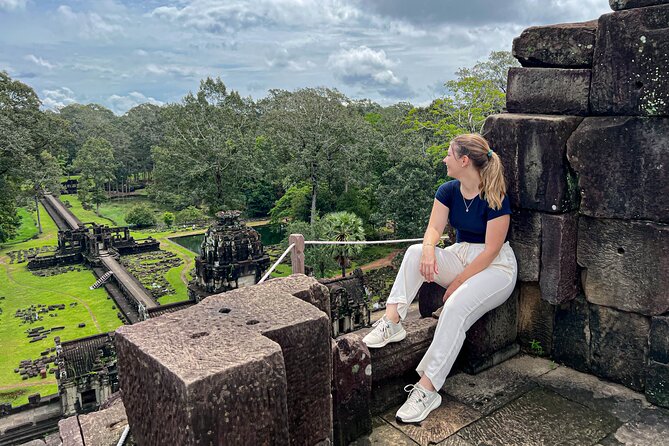
- Dress rules are real: shoulders and knees should be covered, or entry can be refused.
Price and logistics: what you’re really paying for
At $199 per person for about 3 days, this tour is fairly priced if you value a guided route and comfortable transport. The “gotcha” is that the Angkor 3-day pass and the Tonle Sap pass with a private boat ride are not included, and the same goes for temple admissions in general. In other words, your first cost is only part of the full Angkor experience.
Here’s how to think about value:
- You’re paying for an English-speaking guide who connects temple design to Khmer culture and how the sites functioned.
- You’re paying for private transport so you’re not stuck negotiating rides between scattered stops.
- You’re getting small but helpful inclusions like cool water and towels, plus breakfast on Day 3.
What you’ll still need to budget:
- Angkor 3-day pass: $62 per person
- Tonle Sap pass + private boat ride: $15 per person
- Lunch and dinner plus soft drinks (not included)
If your goal is to see a lot of ground without turning the trip into a spreadsheet of tickets and timing, this format usually works well. If you’re the type who loves planning every step yourself, you might find a cheaper DIY path—but you’ll likely spend more energy coordinating.
You can also read our reviews of more tours and experiences in Siem Reap.
Your guide + driver setup (and why it matters at Angkor)
This is an English-speaking tour with private transport, and that changes the experience. You can ask questions, get context on what you’re looking at, and keep moving without long pauses for sorting out directions.
Past groups have been guided by people like Sean and Mr. Sam, with drivers such as Mr. Sophon. The consistent theme from that kind of team is simple: you get professional, kind service, and the car is there when the day gets long.
Also, because it’s a private activity, it’s only your group. That matters at Angkor where crowds can feel like a tide. A good guide helps you focus on the details that make each stop different, not just follow other people’s footsteps.
Temple etiquette and heat survival tips that actually help
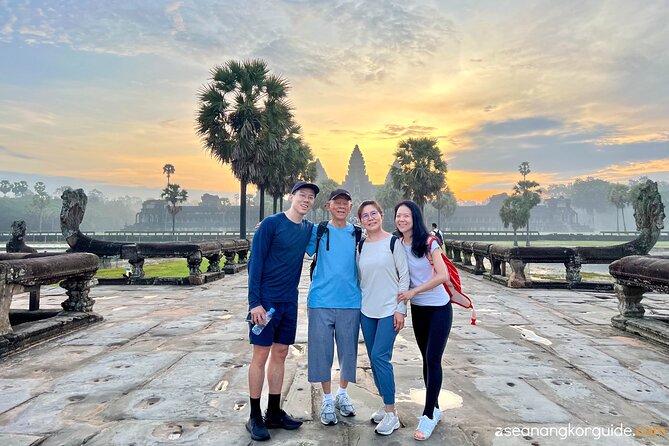
Angkor can be brutally hot, and the itinerary is built around long walks between sites. The tour includes cool water and towels, but you still need to plan like you’re going to be outside for hours.
Here’s what you should do before the day gets sweaty:
- Carry sunscreen and mosquito spray. You can buy both in town, and you’ll be grateful you did.
- Wear modest, lightweight, breathable clothing that covers shoulders and knees. Loose, long layers tend to work best in the Cambodian heat.
- Bring comfortable shoes. Temple grounds involve uneven paths, and flip-flops don’t help.
- Expect that the Apsara Authority can refuse entry to areas if clothing is considered immodest.
The humor-free truth: if your outfit is too short or too exposed, you might lose time right when you want to be exploring.
Day 1: South Gate of Angkor Thom, Angkor Wat, and a sunset option
Day 1 starts with a hotel meet around 8:00 am, then you head to pick up the required Angkor 3-day pass before you start sightseeing. Getting the pass taken care of early is smart because Angkor days are about momentum.
South Gate of Angkor Thom
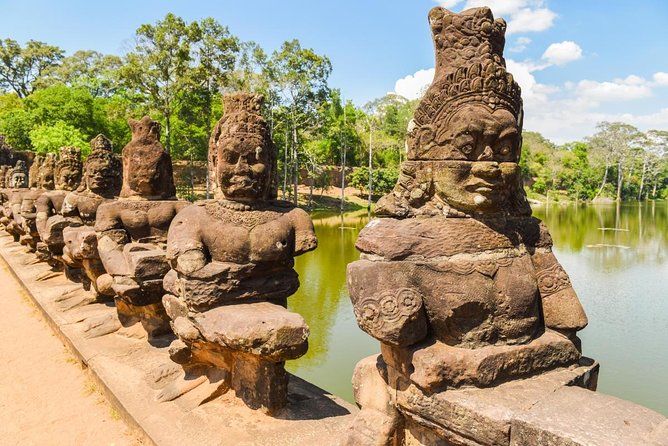
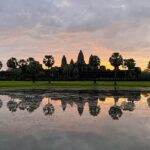
Your first temple moment is South Gate of Angkor Thom, linked to the ancient Khmer city. It’s a strong way to begin because it frames what you’re looking at: Angkor wasn’t one temple. It was an entire urban-religious system.
Angkor Archaeological Park break
Then comes a lunch break in the Angkor Park area—about 45 to 60 minutes. You pay for food yourself here, so plan for it. This pause is useful because it stops you from cooking in the middle of the day.
Angkor Wat
Next is Angkor Wat, with about 1 hour 30 minutes on site. This is Cambodia’s most famous complex for a reason: size, layout, and symbolism. If you want the trip to feel more than just a checklist, give yourself enough time to take in the cause-and-effect of the architecture—how you move, what you see as you approach, and how the design guides the eye.
Phnom Bakheng or Pre Rup at sunset
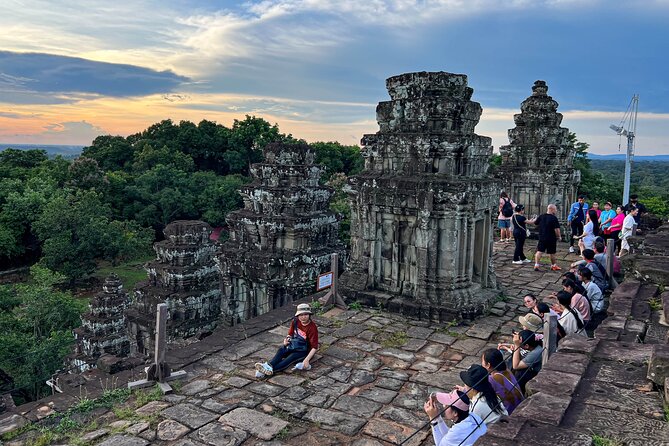
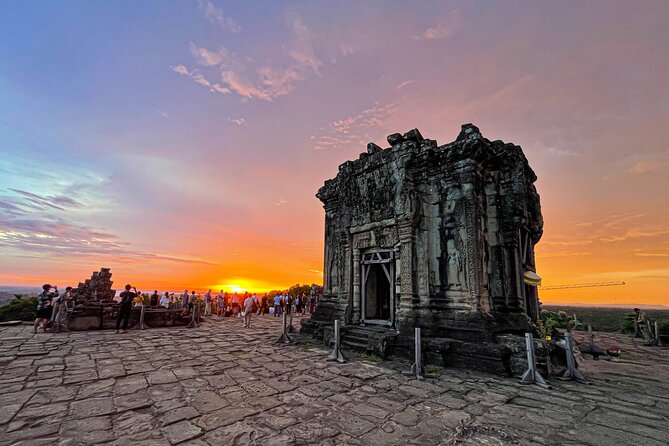
In the late day window (weather permitting), you can head for sunset at Phnom Bakheng or Pre Rup. The tour notes this depends on weather and your energy level, which is exactly right. Sunset at these sites can be spectacular, but you also don’t want to arrive exhausted and then rush through the viewpoints.
Consideration: if skies don’t cooperate or you’re tired, the day still delivers plenty—Angkor Wat and Angkor Thom are major hitters on their own.
Day 2: Banteay Srei, Beng Mealea’s jungle feel, and Kampong Phluk
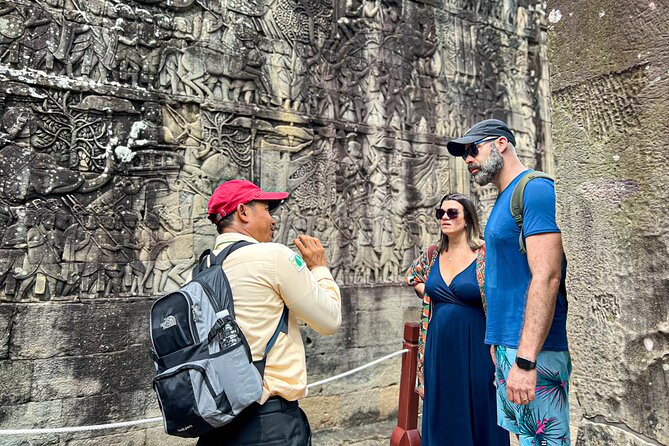
Day 2 shifts the tone from the main Angkor circuit into more varied temple types—smaller, rougher, and more scattered.
Banteay Srei
You start at Banteay Srei, dedicated to Shiva. This stop runs about 45 minutes. What makes it special is that it feels more delicate and human-scaled compared to some of the bigger complexes. If you’re interested in how Khmer craftsmen carved smaller details, this is a good place to focus.
Beng Mealea (the jungle-temple experience)
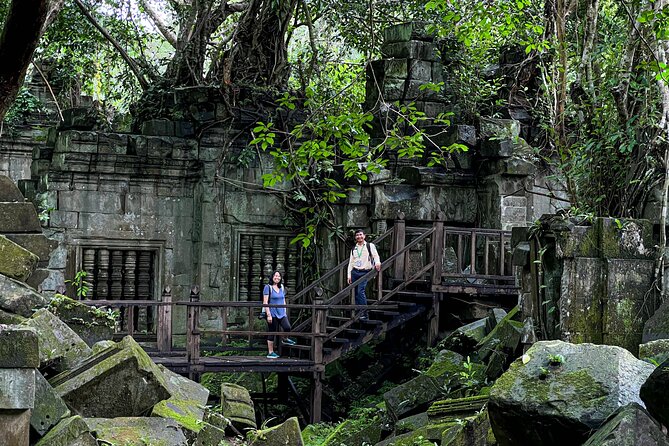
Then you go to Prasat Beng Mealea, often called the jungle-temple style site. It’s about 40 km east of the main Angkor group, and you’ll spend about 1 hour here. The appeal is the atmosphere: nature presses in around the stone, so it feels less like a polished showpiece and more like ruins with a story you can sense.
Trade-off: walking around a less-restored site takes more attention. Wear proper shoes and keep an eye on where you step.
Bakong (and a rare free-entry note)
Next is Prasat Bakong for about 45 minutes. It’s noted as free for entry on this tour. Bakong is described as the first temple mountain of sandstone constructed by Khmer rulers at Angkor, near modern Siem Reap. This gives you a bit of “early Angkor” context before you return to broader Angkor sites.
Angkor Archaeological Park lunch break
You’ll again have a 45 to 60 minute lunch break in the Angkor Park area, with meals paid by you.
Kampong Phluk floating village on Tonle Sap
In the afternoon you head to Kampong Phluk Floating Village on Tonle Sap Lake. You’ll spend about 1 hour here, including time for the stilt-house view of fishermen’s families. The tour notes there are more than 1000 fishermen families, and it references a Buddhist monastery as part of the village landscape.
A key point: the Tonle Sap pass and private boat ride are extra. If you want the full floating-village perspective, budget for that add-on. Even if you mainly just want the stilt-house viewpoint from the shore, the boat ride is usually the part that makes it feel like you’re actually on the lake’s rhythm.
Day 3: sunrise at Angkor Wat, Ta Prohm, and the quieter temple loop
Day 3 is your “big visuals” day, but also your “temples with mood” day. It starts with a potential sunrise wait (up to about 1 hour), then you head to Angkor Wat again, with time after for a short break and local breakfast in the village.
Angkor Wat sunrise (and why it’s worth planning for)
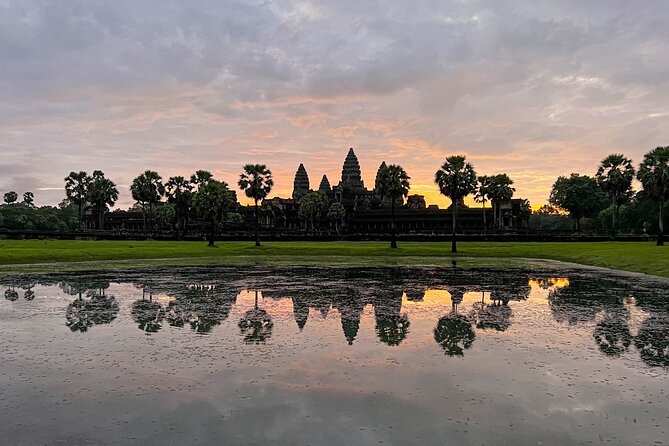
Seeing Angkor Wat at sunrise is one of those travel moments that’s more about atmosphere than bragging rights. The cooler morning light changes how stone textures show up, and the experience feels less like rushing through a monument and more like watching the day begin.
Ta Prohm: the jungle-temple stop
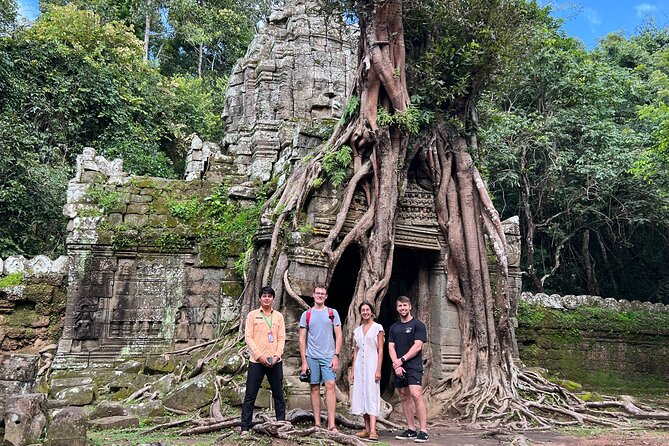
Next is Ta Prohm (about 1 hour). This is known as the jungle-temple and was used as a film location for Tomb Raider. Even if you don’t care about the movie connection, the point here is the feel: trees and stone share the space, so the site looks like it grew that way, not like it was built and then fenced off.
Pre Rup and the smaller Angkor details
Then you move through a sequence of temples with shorter time blocks:
- Pre Rup (about 35 minutes): a Hindu temple mountain tied to Khmer king Rajendravarman.
- Ta Som (about 25 minutes): smaller, built for King Jayavarman VII.
- Neak Pean (about 25 minutes): an artificial island with a Buddhist temple on a circular island tied to Jayatataka Baray.
- Preah Khan (about 1 hour): built in the 12th century for Jayavarman VII to honor his father.
I like this kind of day because it keeps variety high. You get big “headline” sights without spending every minute on the same kind of stone or layout. It’s also a good way to learn how different Khmer rulers and periods expressed beliefs through temple design.
Consideration: these shorter stops still add up to walking time. If you pace yourself well, you’ll enjoy them. If you rush, you’ll lose the value of having a guide interpreting what you’re seeing.
Packing and pacing: how to get the most from a 3-day schedule
Even with air-conditioned transport, you should treat these days as outdoor days. The itinerary includes multiple temple stops per day, with a lunch break and no promise of long downtime.
My practical advice:
- Pack for heat even if the sky looks friendly. You’ll still be walking.
- Plan one solid pair of shoes, not two half-pairs.
- Bring light clothing that meets the shoulders-and-knees rule, because dressing changes what you can do on the day.
Also, think about your priorities. If you want the classic Angkor hits, you’ll get them. If you like more offbeat structures and places that feel less curated, Day 2 and Day 3 deliver that angle.
Who this tour fits best (and who should consider another plan)
This trip is a strong fit if:
- You want an English-speaking guide to explain what you’re seeing.
- You want private transport to save time and hassle between distant stops.
- You like a mix of major sights (Angkor Wat) and more atmospheric visits (like Beng Mealea and Ta Prohm).
- You’re okay paying for passes and meals on top of the tour price.
It may be less ideal if:
- You want everything included in one price with no extra temple or lake fees.
- You hate walking and standing outdoors for long stretches.
- You’re planning around tight mobility needs (the tour involves temple walking and uneven ground).
Should you book this Angkor Wat and Floating Village 3-day trip?
I’d book it if you want a guided, efficient way to cover Angkor and Tonle Sap without doing the heavy lifting yourself. The combination of hotel pickup/drop-off, air-conditioned private transport, included water and towels, and a schedule that hits both famous and less-famous sites makes it a good value for many visitors.
Before you click confirm, do two quick checks:
- Add the Angkor pass ($62) and Tonle Sap pass + private boat ride ($15) to your budget, plus lunches and dinners.
- Pack for heat and temple rules so you don’t lose time to clothing issues.
If you handle those, you’ll get a trip that feels grounded in the real geography—temples, lake life, and the rhythm of Siem Reap—not just a photo sprint.
FAQ
What is included in the tour price?
The tour includes an English speaking tour guide, private air-conditioned transport, free cool water and towels during the tour, hotel pickup and drop-off, and breakfast for Day 3.
What extra tickets or passes do I need to pay for?
You need to pay for the Angkor 3-day pass (listed as $62 per person) and the Tonle Sap pass plus a private boat ride (listed as $15 per person). Lunch and dinner are also not included.
Does the tour include airport pickup and drop-off?
Yes, airport pickup and drop-off is included.
How long is the trip?
The trip is about 3 days.
What happens on Day 1?
You start around 8:00 am, visit South Gate of Angkor Thom, stop at Angkor Archaeological Park for lunch time, see Angkor Wat, and then have an optional sunset stop at Phnom Bakheng or Pre Rup if weather allows.
Do I need to arrange my own hotel?
Yes. Accommodation is not included.
What should I wear to the temples?
You should dress respectfully, covering shoulders and knees. Loose, lightweight long clothing is recommended, and comfortable shoes are a must. The park authority can refuse entry to areas if clothing is considered immodest.