REVIEW · MUNICH
From Munich: Nuremberg Day Trip by Train
Book on GetYourGuide →Operated by Radius Tours GmbH · Bookable on GetYourGuide
Medieval walls meet dark history in one day. This Munich-to-Nuremberg trip stands out because you get both the medieval city story and a guided visit to the Nazi rally grounds, all in one organized day.
I like that the English-speaking guide doesn’t just point at buildings, but helps you connect them to how power, religion, and industry shaped the city. And I really like the balance: Gothic churches and fortress walls in the morning, then an honest look at the machinery of the Third Reich later.
One consideration: you’ll be walking and standing for a long stretch, with limited chances to break away on your own.
You’re on the rails for about 2 hours each way, and once you’re in Nuremberg you’ll have a 4-hour guided block to cover the key sights—so it works best as a focused history day, not a slow wandering one.
In This Review
- Key highlights you’ll care about
- Munich to Nuremberg by train: simple, but expect a full day
- Old Town Nuremberg: fortress walls, churches, and market streets
- The Holy Roman Empire story: why Nuremberg mattered
- Hilltop castle time: the view is part of the lesson
- Nazi rally grounds: heavy history, carefully guided
- Lunch not included: how to eat without breaking the rhythm
- Comfort and pacing: the real “gotcha” is how much you stand
- Price check: what you’re paying for at $93
- Who should book this day trip from Munich?
- Should you book this Munich to Nuremberg day trip?
- FAQ
- How long is the Munich to Nuremberg day trip?
- What is included in the price?
- Is lunch included?
- Where do I meet for the tour in Munich?
- Do I get hotel pickup or drop-off?
- Is the tour guide English-speaking?
- Can I cancel for a refund?
- Is there a reserve now, pay later option?
Key highlights you’ll care about
- Old Town fortifications and castle views give you an instant sense of why Nuremberg mattered for centuries
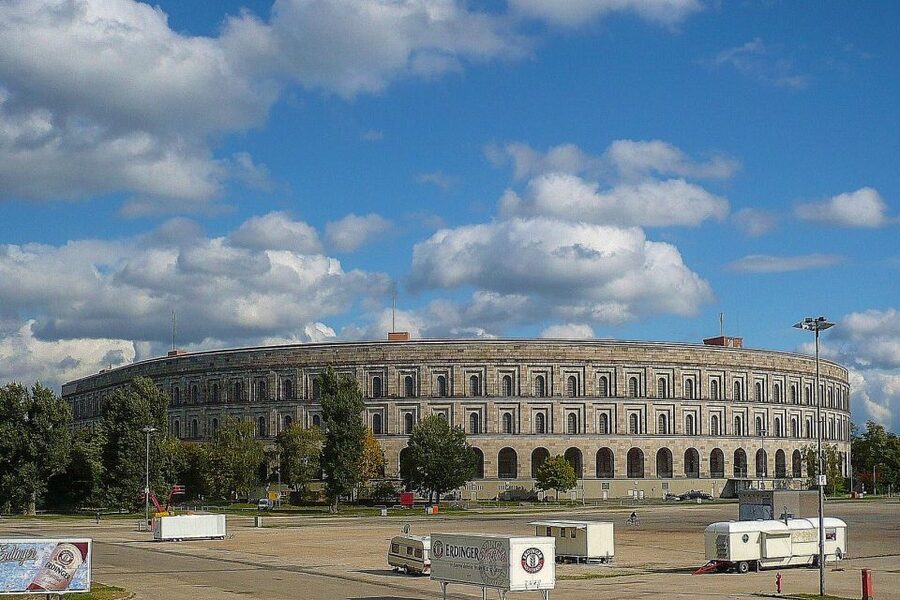
- A fully guided Nazi rally grounds visit turns a difficult topic into specific, explainable places
- Reformation and early-modern city life show up in the stories tied to Luther and printing/science revolutions
- Experienced English guides often add local color; guides named Paul, Elizabeth, Achim, and Suzanne have been praised for making the material click
- One long day of movement means you’ll plan for comfort more than you plan for lounging
Munich to Nuremberg by train: simple, but expect a full day
The day starts with a clear meeting spot: Dachauer Straße 4 in Munich, at the local operator’s office. From there, you head out on the train, with about 2 hours each way. This is one of those trips where the travel is part of the experience. You’re not renting anything, not wrestling transit maps, and you don’t have to stress about finding your way between neighborhoods.
In practice, the train ride can vary. One common note is that it may feel crowded on the way in—so if you’re sensitive to tight seating, consider traveling lighter and being ready to stand if needed. Once you reach Nuremberg, the structure takes over: you’re met, you’re guided, and you’re moving through a set route.
The schedule is built for momentum. You’ll spend most of the day doing the two things that are hardest to pull off solo in one shot: seeing the medieval city core efficiently and getting a guided, context-heavy tour of the Nazi rally grounds.
You can also read our reviews of more tours and experiences in Munich.



Old Town Nuremberg: fortress walls, churches, and market streets
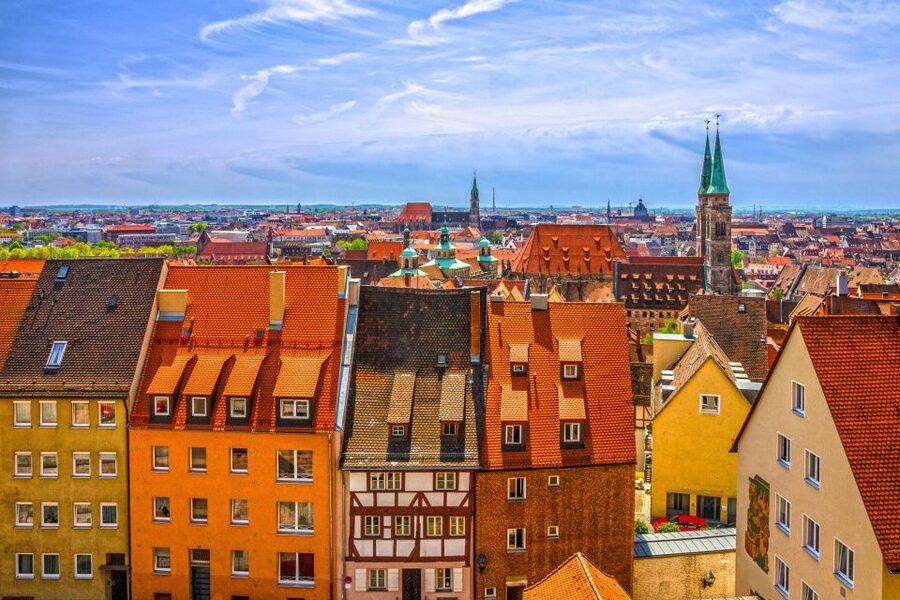
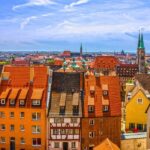
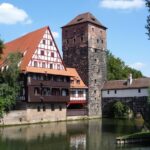
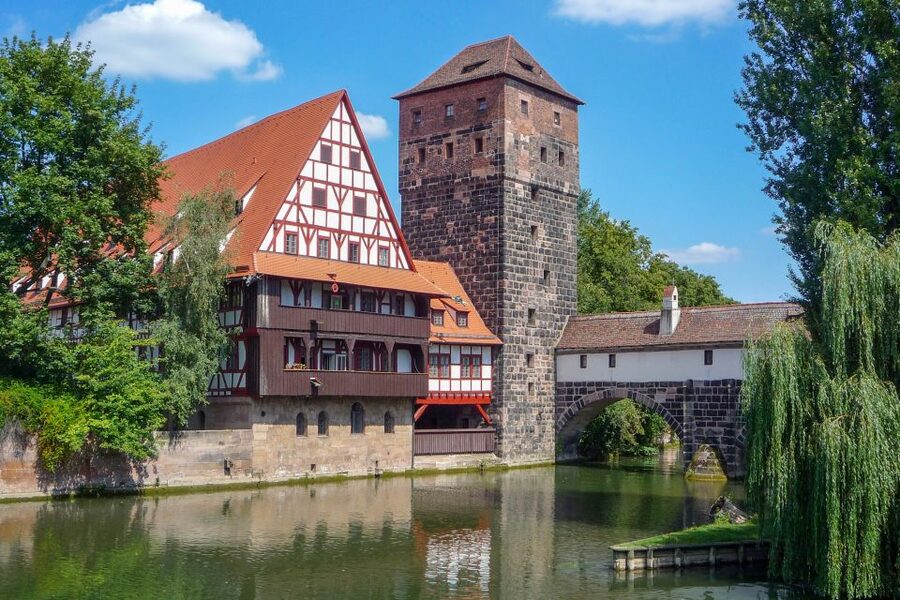
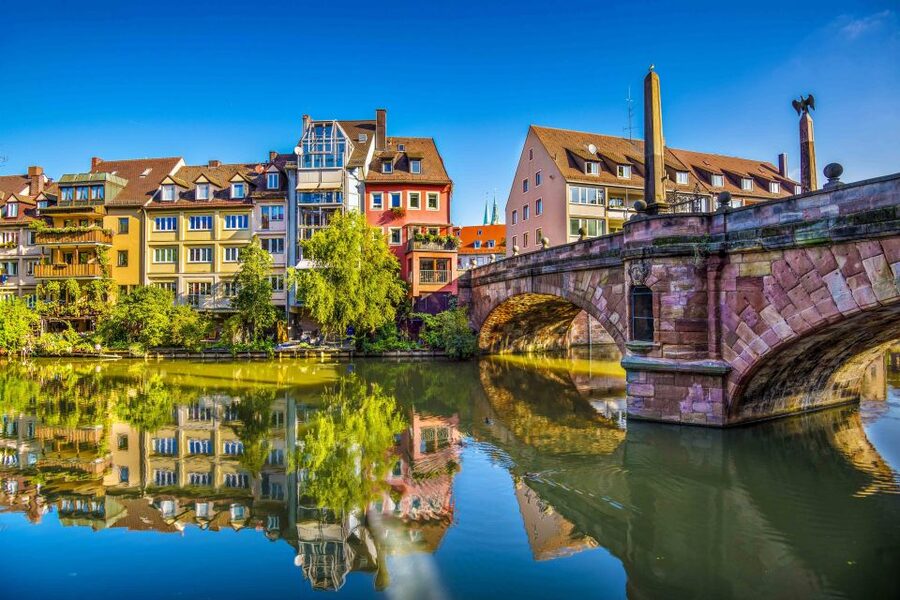
The first guided block focuses on the historic center, and it’s a smart choice. Nuremberg doesn’t feel like a museum-in-a-box. It feels like a city that kept rebuilding itself—so when your guide points out massive medieval fortifications, you can actually understand what they were protecting and why.
You’ll look at:
- Large medieval fortifications that frame the old core
- Gothic churches, which give the skyline that serious, upward reach
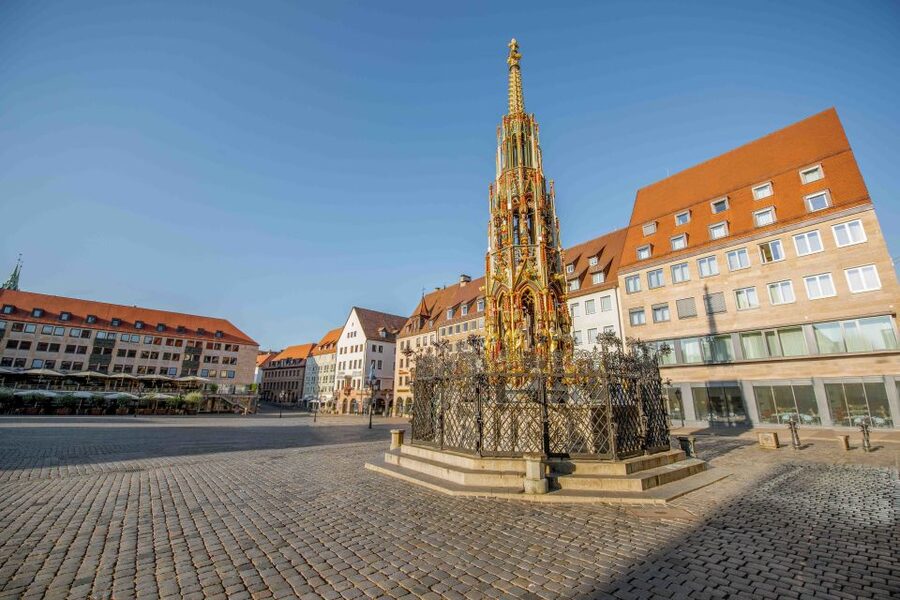
- Colorful marketplaces, where the city’s everyday energy has always mattered
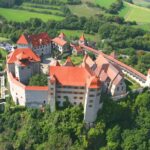
- A hilltop imperial castle experience, tied to how Nuremberg operated as an old center of power
This part of the day is where you get your bearings. Even if your history knowledge is basic, the walking route helps you see connections. Why were these churches placed where they were? Why did the city invest in walls? Why does the old town feel dense and intentional? Your guide helps you read the city like a map of decisions.
Also, don’t underestimate how much your feet help your understanding here. When you climb and move through tight streets and look out from higher ground, the “why” lands faster than if you were only reading plaques.
The Holy Roman Empire story: why Nuremberg mattered
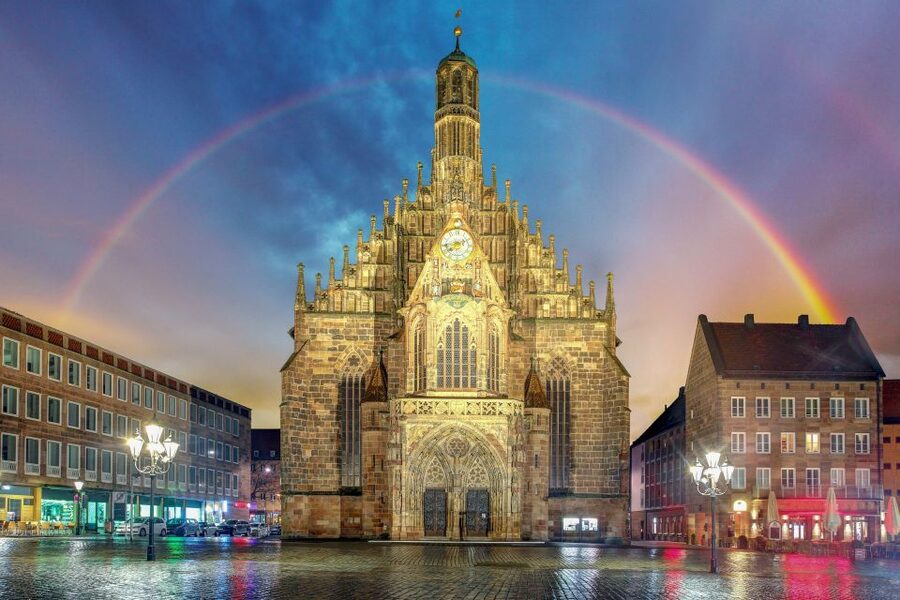
After you’ve got your old-town visual footing, the guide shifts to the bigger story. Nuremberg was an unofficial capital for the First Reich (the first Germanic Empire) for a long stretch, and it hosted major sessions like the Imperial Diet of the Holy Roman Empire.
That matters because it helps explain why the city isn’t just about medieval scenery. It was a crossroads—politically, culturally, and economically. Your guide connects Nuremberg to major trade routes, and you’ll hear how that position fed cultural and intellectual vitality, not only wealth.
You’ll also learn how the city connects to later turning points:
- it played a key role in the Reformation
- it was involved in the printing and scientific revolutions that shaped the modern world
This is where a good guide earns their pay. Some guides—like Paul and Elizabeth in the groups I’ve seen mentioned—are praised for delivering these connections with enthusiasm and local pride. If you get that kind of guide, the information doesn’t feel like a lecture. It feels like you’re following a thread: place to place, idea to idea.
Hilltop castle time: the view is part of the lesson
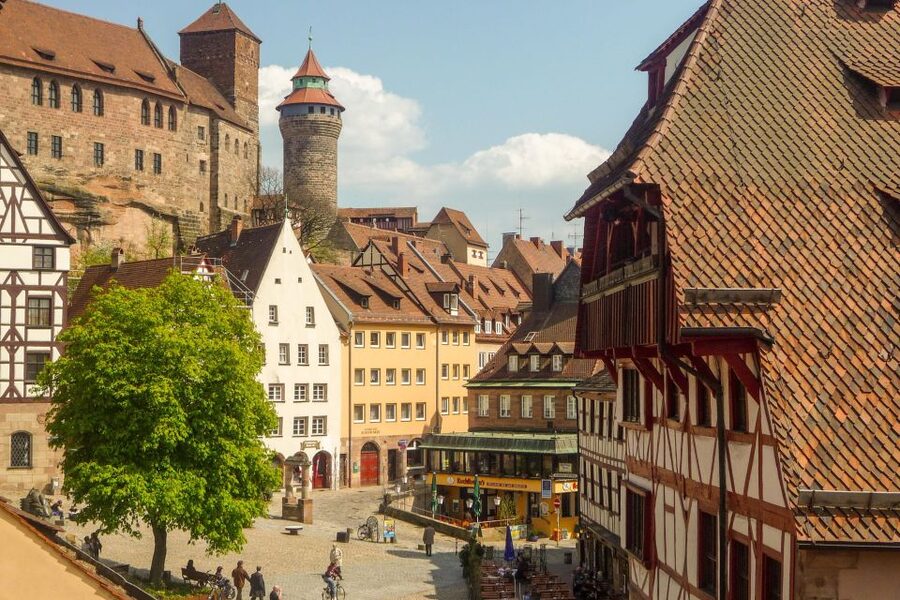
The old imperial city has a hilltop castle element, and this is one of those “take it in” moments. Even if you don’t spend ages inside museums, you’ll benefit from simply seeing how high ground and fortification shaped the city’s power.
I like hilltop stops on day trips because they do two things fast:
1) they give you a geographic reset after a couple hours of walking through streets, and
2) they make the politics feel physical. You can see the “control point” logic.
If you’re the type who enjoys photos, this is where you’ll want to slow down for a minute—even for just a few pictures—so you don’t rush past the only elevated perspective of the day.
Weather matters here. If the sky’s gray or it’s windy, dress for it. Your feet might be hot, but your hands might get cold while you look out. A light layer is usually a good call.
Nazi rally grounds: heavy history, carefully guided
The second half is the hardest part, and it’s handled as its own guided experience. This is where the trip becomes more than sightseeing: the Third Reich showcased its power through grandiose marching grounds in Nuremberg, and years later international war crimes accountability was pursued for the leadership.
Your guide gives the context you’ll need to make sense of what you’re looking at. Without that framing, these places can feel like big outdoor structures with no emotional meaning. With guidance, you start to understand the design intent and how public space was used to amplify ideology.
You should plan for this segment to feel intense. It’s not a “quick stop” kind of visit. Even when the tour moves efficiently, you’re still standing and walking in an outdoor setting while hearing explanations about atrocities and accountability.
A practical note from experience on day trips like this: it’s smart to use any bathroom chance you get before the rally grounds time. One frequent comfort issue mentioned is that toilet options can be limited during the day. You’ll thank yourself later.
Lunch not included: how to eat without breaking the rhythm
Lunch isn’t included in the price, so you need to budget time and money for a meal on your own. The good news is that the day is structured enough that you won’t feel totally lost—your guide can help with where to go next.
A few guides mentioned in feedback add real-world snack and food tips. One example: a guide named Achim is noted for recommending a grab-and-go option of three sausages in a bun, which is exactly the kind of quick, filling fuel that keeps a history day from turning into a hangry day.
Because the day involves lots of standing, think of lunch as energy, not as a long sit-down restaurant plan. If you want a full sit-down meal, you may find the day timing doesn’t stretch that far.
Comfort and pacing: the real “gotcha” is how much you stand
This is a 9-hour day trip, and most of that time is active. Even though there’s guided time that helps the day move fast mentally, you’re still on your feet.
Expect:
- walking in and around old streets
- standing for explanations and viewpoints
- outdoor time at the rally grounds
To stay comfortable, I’d plan around four basics:
- wear shoes you trust for long hours
- bring a light layer for castle and rally grounds weather
- keep water in mind (even if you buy it separately)
- don’t count on frequent restroom opportunities
If you’re traveling with someone who needs lots of downtime, this might be harder than a typical city tour. It’s better suited to people who want a structured history day and can handle constant movement.
Train reliability can also affect the flow. Some guides have handled delays with flexibility, but it’s still worth traveling with patience, because rail schedules are a real variable on any given day.
Price check: what you’re paying for at $93
At about $93 per person for a 9-hour outing, you’re paying for three key things:
- round-trip train transport between Munich and Nuremberg
- an English-speaking guide
- fully guided time that covers both the old town area and the Nazi rally grounds
Lunch isn’t included, and there’s no hotel pickup/drop-off, so your personal budget needs to cover your meal and local walking from the meeting point.
Is it good value? For me, the value comes from the pairing: medieval Nuremberg plus guided interpretation of the Nazi rally grounds. If you tried to DIY this with just tickets and a generic audio guide, you’d likely lose the context that makes the places mean something.
The cost also makes sense when you consider how much guided time you get—4 hours in Nuremberg with structured coverage, plus the rail time organized for a one-day format.
Who should book this day trip from Munich?
Book it if:
- you want a one-day hit of Nuremberg that doesn’t require planning and routing
- you care about history connections beyond the headlines (Holy Roman Empire role, Reformation links, printing and science revolutions)
- you’re comfortable with a guided visit that includes difficult content
- you prefer an English guide and a clear schedule
Skip or rethink it if:
- you hate long periods of walking and standing
- you need lots of breaks on your own
- you’re looking for a leisurely city day with flexible free time
This trip works especially well for couples, solo travelers, and anyone who’s curious but doesn’t want to piece together multiple transport steps and interpretation stops.
Should you book this Munich to Nuremberg day trip?
Yes, if you want an efficient, guided day that explains why Nuremberg mattered—first as an imperial crossroads and later as the stage for Nazi power—then holds that history up for accountability. The best part is that you’re not just looking at monuments; you’re learning how to read the city in layers.
I’d book it with two expectations locked in: (1) you’ll be active on foot, and (2) the rally grounds segment is emotionally serious. If that fits your travel style, this is the kind of day trip that gives you more understanding than souvenirs.
FAQ
How long is the Munich to Nuremberg day trip?
The total duration is 9 hours.
What is included in the price?
You get an English-speaking guide, a fully guided tour of the historic city center and the Nazi Party rally grounds, and train transport from Munich to Nuremberg and back.
Is lunch included?
No, lunch is not included.
Where do I meet for the tour in Munich?
Meet at the local operator’s office at Dachauer Straße 4, 80335 Munich.
Do I get hotel pickup or drop-off?
No, hotel pickup and drop-off are not included.
Is the tour guide English-speaking?
Yes, the live tour guide speaks English.
Can I cancel for a refund?
Yes. You can cancel up to 24 hours in advance for a full refund.
Is there a reserve now, pay later option?
Yes, you can reserve now and pay later.