REVIEW · ST MORITZ
From Milan: Bernina Train and St. Moritz Day Trip
Book on GetYourGuide →Operated by AUTOSTRADALE VIAGGI SRL · Bookable on GetYourGuide
Glaciers, trains, and St. Moritz in one long day. This trip strings together the famous Bernina Red Train with a stylish alpine stop, plus a scenic return drive that keeps the views coming even after the train ride ends.
I love the photo-friendly setup: you’re in 2nd class with windows you can open, and the guide keeps you pointed at what’s coming next. I also like the balance of “organized” and “free,” with a walking moment in St. Moritz and then time to wander shops and streets at your own pace.
One possible drawback: it’s a long day, and your time in St. Moritz is capped at about 1.5 hours—great for a first look, but not enough if you want a slow, detailed town day.
In This Review
- Key highlights you’ll feel right away
- From Milan to the Alps: a day trip that moves fast but makes sense
- The Bernina Red Train ride: the bucket-list part that’s also practical
- What to watch for on the route: Poschiavo, Diavolezza, and Morteratsch
- Tirano to St. Moritz: border-town Italy, then Swiss glamour
- St. Moritz time: 90 minutes to get oriented, then wander your way
- The return by bus: Maloja Pass keeps the day moving
- Groups, seats, and photo chaos: the trade-offs of shared sightseeing
- What’s included, and what you’ll pay for separately
- Who this tour fits best (and who should skip it)
- What to bring (so the day doesn’t feel colder than it looks)
- Should you book the Bernina Train and St. Moritz day trip?
- FAQ
- How long is the day trip?
- Where do we meet in Milan?
- Is the Bernina train included?
- Will we ride in 1st class?
- What stops or areas do we pass during the train ride?
- How much time do we get in St. Moritz?
- Are meals included?
- Do we need a passport?
- What languages is the guide?
- Is the tour wheelchair accessible, and are pets allowed?
Key highlights you’ll feel right away
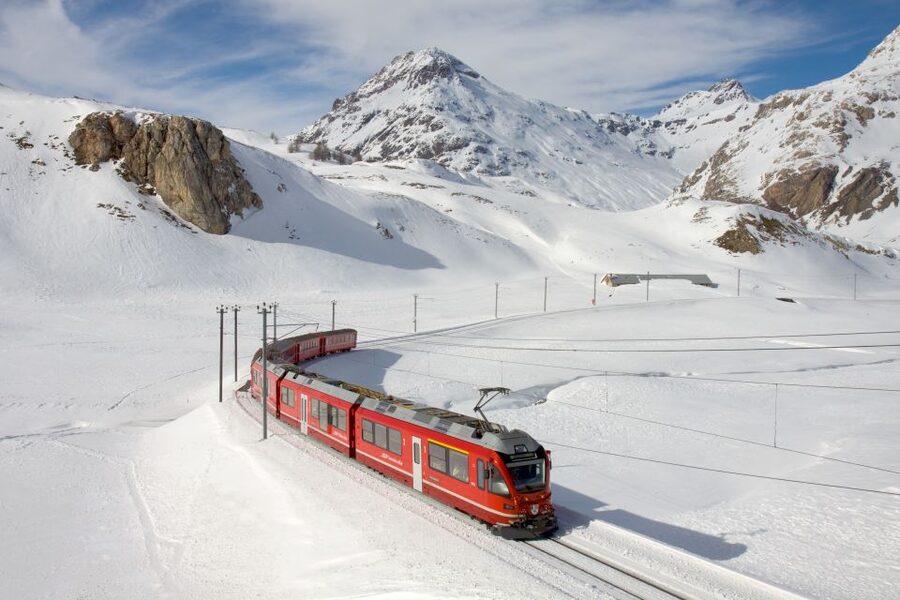
- Bernina Red Train viewing from 2nd class with windows you can open for photos
- Glacier and mountain passes you pass by en route, including Morteratsch Glacier
- St. Moritz walking tour + free time (about 90 minutes) to explore and shop
- Maloja Pass scenic drive on the return bus leg
- Live guide in English or Spanish with an audio system so you don’t strain to hear
From Milan to the Alps: a day trip that moves fast but makes sense
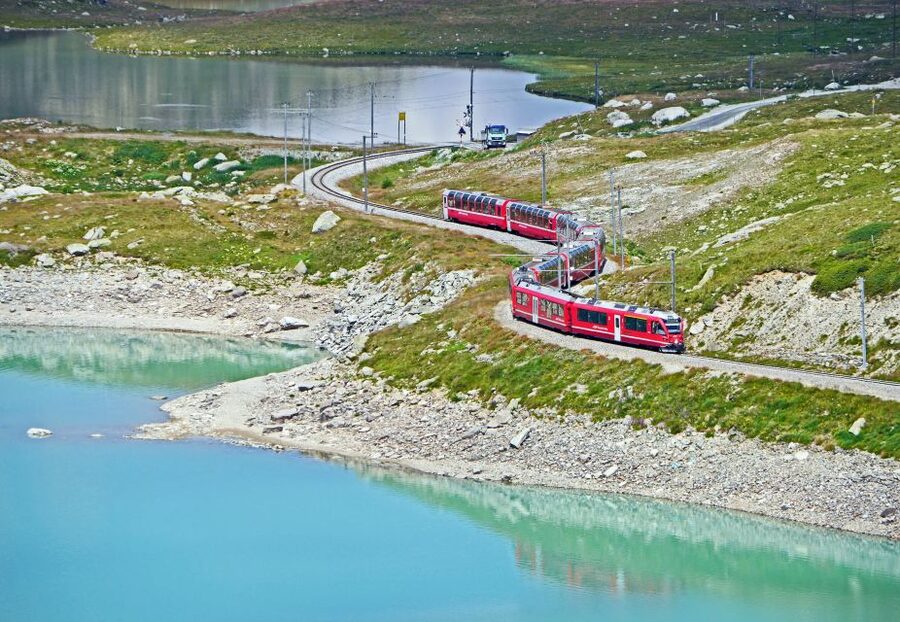
This is one of those trips that works because the logistics are handled for you. You start at the BusForFun stop at Piazza 4 Novembre (corner of Hotel Gallia), and you stay on a tight rhythm all day: bus to the rail, rail through the mountains, then bus back with another big scenery hit.
The value here is not just the train. The Bernina route is the star, sure, but you’re also getting a guided day that coordinates timing, audio (earphones/radio), and the St. Moritz walk so you’re not standing around wondering what to do next.
You’ll want to treat it like an outing built for your eyes. The schedule is structured, not restful.
The Bernina Red Train ride: the bucket-list part that’s also practical
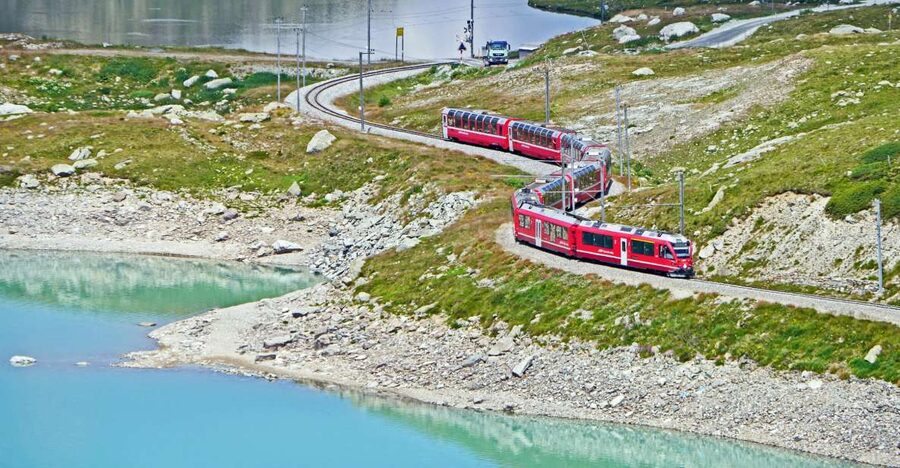
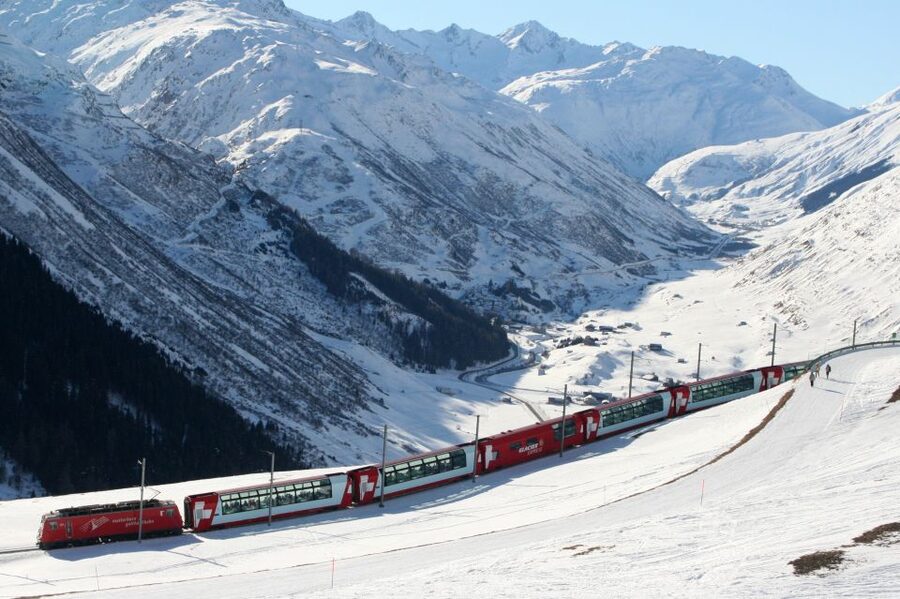
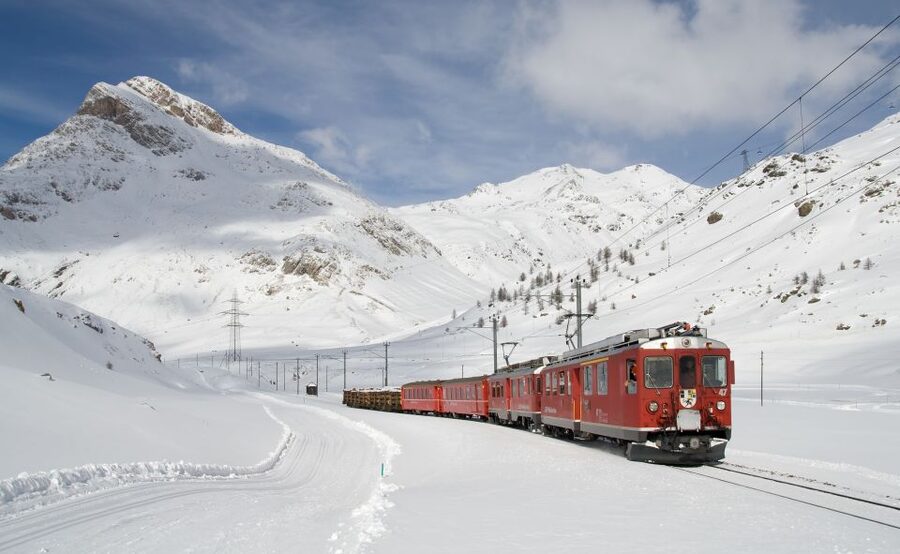
The heart of the experience is the Bernina Red Train, timed as a roughly 2-hour rail segment with nonstop alpine scenery outside the windows. The day climbs as it goes, heading up toward glistening glacier country (up to 2256 meters above sea level, per the tour notes). That altitude shift is part of why the views look so dramatic—thin air, sharper light, and rugged slopes stacked one above another.
You’re seated in 2nd class (not the panoramic 1st class). The upside: you can open the windows for photos, and that matters because you’re trying to capture angles—curving tracks, distant peaks, and village layouts that look almost model-like from the train window.
Also, since this is a guided group, you get help spotting what you’re seeing. The guide’s job isn’t just commentary; it’s turning the ride into something you can actually follow instead of just watching scenery drift by.
What to watch for on the route: Poschiavo, Diavolezza, and Morteratsch
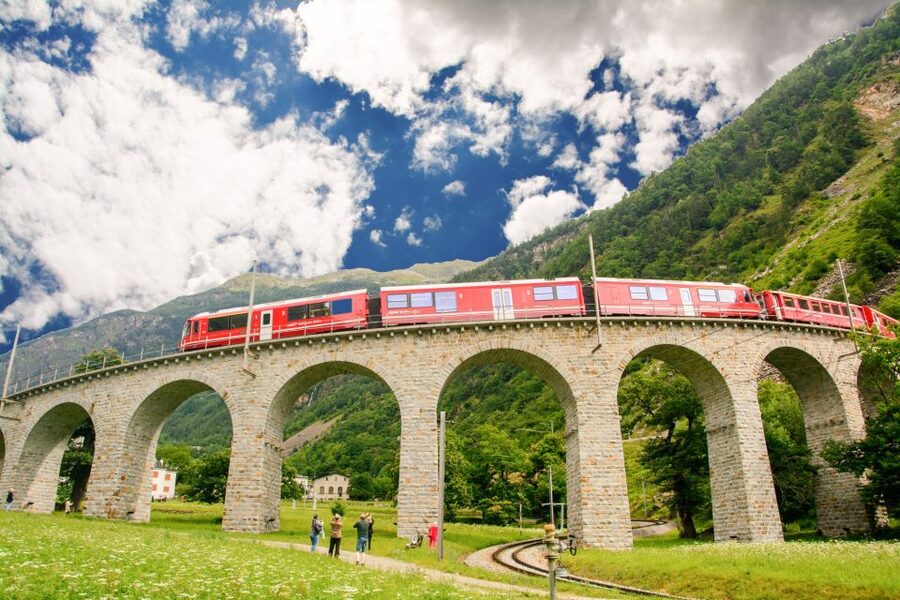
Your rail ride is framed by specific stops and pass-by points, and each one signals a different “type” of scenery.
- Val Poschiavo (pass by): This is your early cue that you’re moving through valley-and-peak country. When you spot broader valley views from the train, you’ll understand why the Bernina line looks so cinematic.
- Bernina Diavolezza (pass by): This area tends to read as steep, dramatic mountain geometry from the rails. Expect the kind of rocky slopes that make you understand why people come to the Alps with a camera strap ready.
- Morteratsch Glacier (pass by): This is the one tied to glacier visuals. If your main goal is “I want to see glacier scale from a close distance,” this is the point to watch for during the ride.
A quick practical note: since you’re in a shared carriage, it’s wise to keep your window photos quick and clean. People will want the same angles, and seats aren’t customized for the perfect photo positions. Bring patience and you’ll get more good shots.
Tirano to St. Moritz: border-town Italy, then Swiss glamour
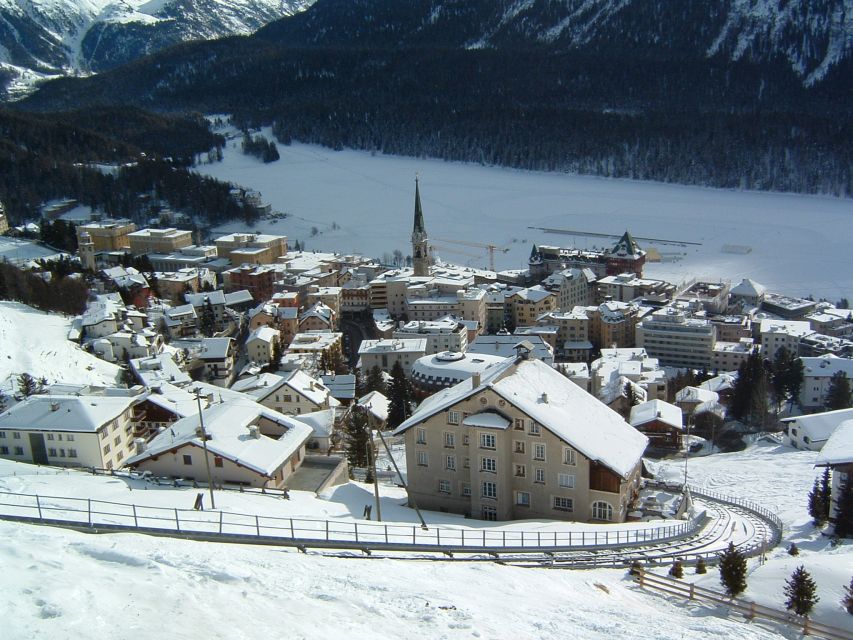
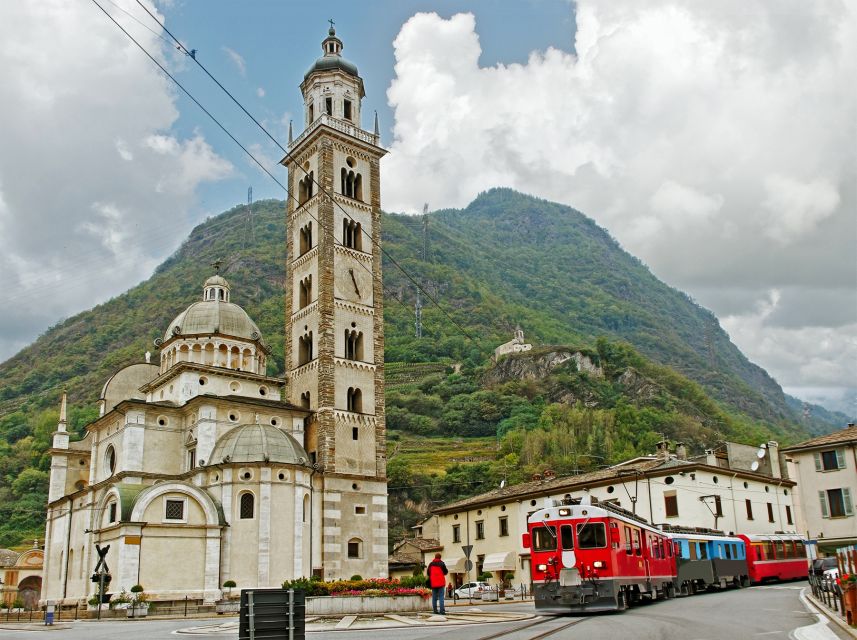
Before the train, the day connects through Italy. You hop on the bus and head to Tirano in the Valtellina region, then you transition into the Bernina portion that leads you toward St. Moritz.
St. Moritz is a different vibe from what most people picture when they imagine just mountains. It’s polished and upscale—more resort town than rough-and-wild. That contrast is fun. You go from dramatic rail lines and glacier cues to a place where you can actually slow down for an hour, grab a drink if you want, and stroll without feeling like you’re rushing for the next stop.
The tour doesn’t include meals or drinks, so plan on treating that time as flexible. If you’re hungry, you’ll have to choose what you can fit into the available time.
St. Moritz time: 90 minutes to get oriented, then wander your way
Your St. Moritz window is about 1.5 hours, and it’s designed as a two-part visit: a walking tour plus free time. That structure is smart for a first visit because it helps you learn the “shape” of the place fast—where the main lanes feel walkable, where you can drift for photos, and what to look for.
In the free time portion, you can shop and explore. St. Moritz is known for its resort shopping feel, but you’ll get the most satisfaction if you treat shopping as optional. The real win is walking a few streets, looking up at the slopes, and taking in how quickly the scenery changes once you’re in town rather than in transit.
One thing to keep your expectations realistic: 90 minutes is just enough to enjoy the town’s character. If you want museum time, long lake walks, or multiple neighborhoods, you’ll likely feel the clock.
The return by bus: Maloja Pass keeps the day moving
After St. Moritz, the day continues by bus. You get a scenic drive over Maloja Pass, which is where the tour earns a second round of “oh wow” moments. Even if you’re already saturated with Alps after the train, Maloja tends to hit differently because you’re seeing it from road height with sweeping views as the bus winds through.
This is also where you’ll notice the trade-off of day trips: you’re adding scenery time, but you’re also adding sitting time. If you’re the type who gets stiff on long rides, plan to bring something simple like water (not provided) and a light layer. And yes, bring a jacket—this is alpine elevation weather territory.
Groups, seats, and photo chaos: the trade-offs of shared sightseeing
This trip is well organized, but it’s still a group day. That means:
- You don’t get to pick the best photo seat.
- People leaning for photos can become a real thing.
- The day runs on a schedule, so “just one more photo” can be harder than you’d expect.
The most important mindset shift: treat the windows like a moving gallery, not a single perfect shot opportunity. You’ll usually get better results by taking a few quick photos at each “visual highlight moment,” then adjusting as the scenery changes.
Also, since you’ll be wearing an audio device, you’ll want to keep it secure and return it at the end. If it’s lost or not returned, there’s a 50 euro fee noted for the device. Small detail, big annoyance if it happens to you.
What’s included, and what you’ll pay for separately
You’re paying for coordination and the main scenic segments, not for meals.
Included:
- Round-trip transportation by air-conditioned bus
- Tour guide
- Earphones (so you can hear clearly)
- Walking tour and free time in St. Moritz
- Pre-booked Bernina Red Train ticket from or to St. Moritz in 2nd class
Not included:
- Meals and drinks
For value, this matters because it prevents the common “I need to figure out everything” headache. You’re not trying to match train times, manage the route, or interpret where to stand in St. Moritz. You’re guided through the sequence that makes the Bernina experience work as a single-day trip from Milan.
At $122 per person for a 12-hour day that includes bus + guide + pre-booked train ticket, it’s priced like an organized Alps day, not like an independent DIY plan. If you were building this from scratch, you’d likely spend time and money coordinating pieces. For many people, that time savings is the value.
Who this tour fits best (and who should skip it)
This is a great match if you want:
- a serious Alps viewing day without extra planning
- the Bernina experience as a highlight, with guidance so you know what you’re seeing
- a short, high-impact St. Moritz stop instead of a full day commitment
It’s less ideal if you:
- need long free time in one place
- dislike group pacing
- have mobility needs that make getting around difficult (the tour notes it’s not suitable for wheelchair users)
If you’re traveling with kids: infants under 2 are free but must sit on a parent’s lap, so it can work, but it’s still a long day.
What to bring (so the day doesn’t feel colder than it looks)
Plan for changing mountain weather. The tour notes a jacket and rain gear. Even if the skies look friendly in Milan, the Alps can surprise you with chill and quick drops.
Also bring:
- your passport or a valid European ID (required on travel day)
- your camera (you’ll want it for the glacier and pass views)
- your patience for group movement during photo moments
Pets aren’t allowed (assistance dogs are allowed), so plan accordingly if you’re traveling with an animal.
Should you book the Bernina Train and St. Moritz day trip?
If you’re visiting Milan and you want one high-impact Alps day, I’d lean yes. You get the Bernina Red Train experience with glacier-area visuals, plus a real St. Moritz town moment and a second scenery hit over Maloja Pass. For $122, the “included coordination” is a big part of the payoff.
I’d think twice if your dream day is slow and relaxing, because this is a structured, long 12 hours. Also, if St. Moritz is your main obsession and you need more than 1.5 hours, you may want a different plan that gives the town time to breathe.
FAQ
How long is the day trip?
The total duration is 12 hours.
Where do we meet in Milan?
Departure is from Piazza 4 Novembre, at the corner of Hotel Gallia, looking for the Autostradale bus stop.
Is the Bernina train included?
Yes. A pre-booked Bernina red train ticket is included from or to St. Moritz in 2nd class.
Will we ride in 1st class?
No. The notes specify 2nd class (not the panoramic 1st class). Windows can be opened for photos.
What stops or areas do we pass during the train ride?
You’ll pass by Val Poschiavo, Bernina Diavolezza, and Morteratsch Glacier.
How much time do we get in St. Moritz?
The tour provides about 1.5 hours for a walking tour and free time, including shopping and walking.
Are meals included?
No. Meals and drinks are not included.
Do we need a passport?
A current valid passport or a European ID is required on the day of travel.
What languages is the guide?
The live tour guide is available in English and Spanish.
Is the tour wheelchair accessible, and are pets allowed?
The tour is not suitable for wheelchair users. Pets are not allowed, but assistance dogs are allowed.