REVIEW · NEW DELHI
From Delhi: Taj Mahal Day Trip by Fast Train with Transfers
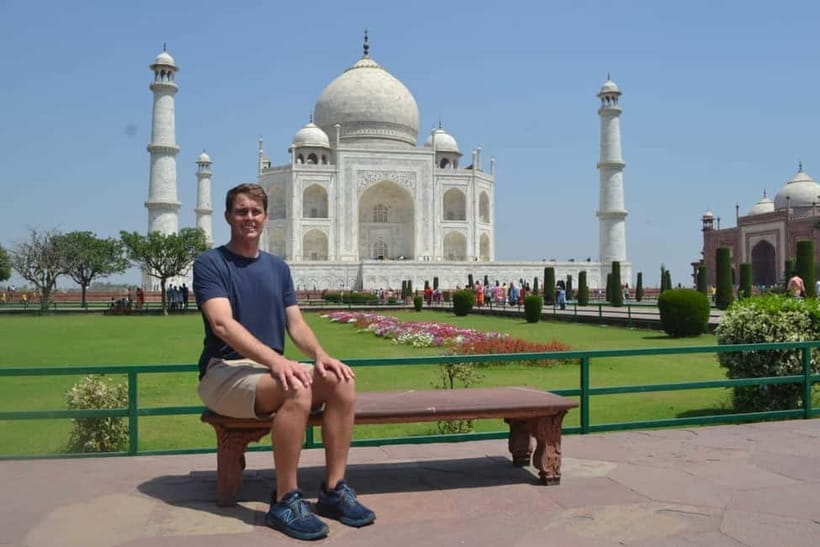
Book on GetYourGuide →Operated by Delight Tours · Bookable on GetYourGuide
A day trip to the Taj Mahal without the long drive. This fast train plan makes the route between Delhi and Agra feel manageable, and the guided stops keep you from wandering in the wrong direction. You’ll see the Taj Mahal, then hit Agra Fort and Itimad-Ud-Daulah (Baby Taj) in one tight loop.
Two things I really like: you get hotel pickup and drop-off, so the trip starts and ends with less hassle, and the day is built around a guided flow instead of an all-day free-for-all. I also like that guides help you with practical stuff like where to go, what to watch for, and how to get great photos—people even mention guide Islam taking standout pictures.
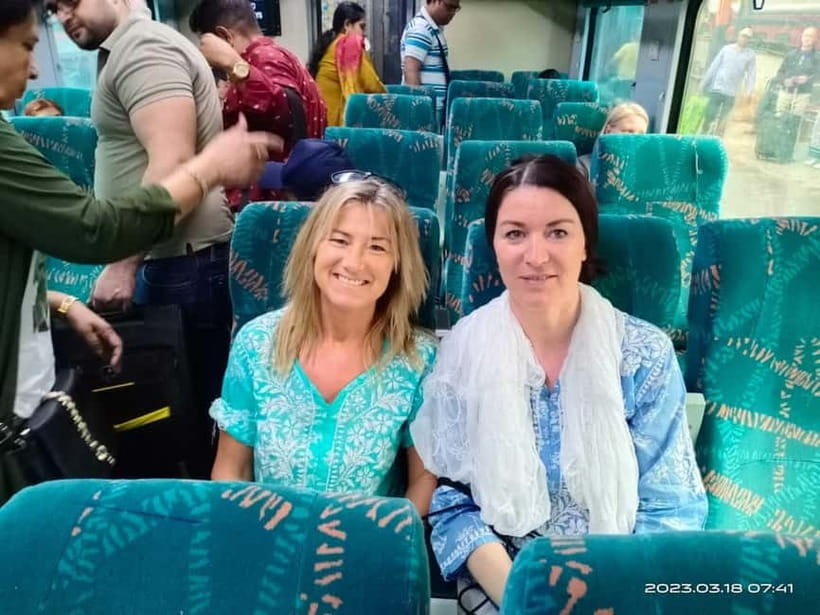
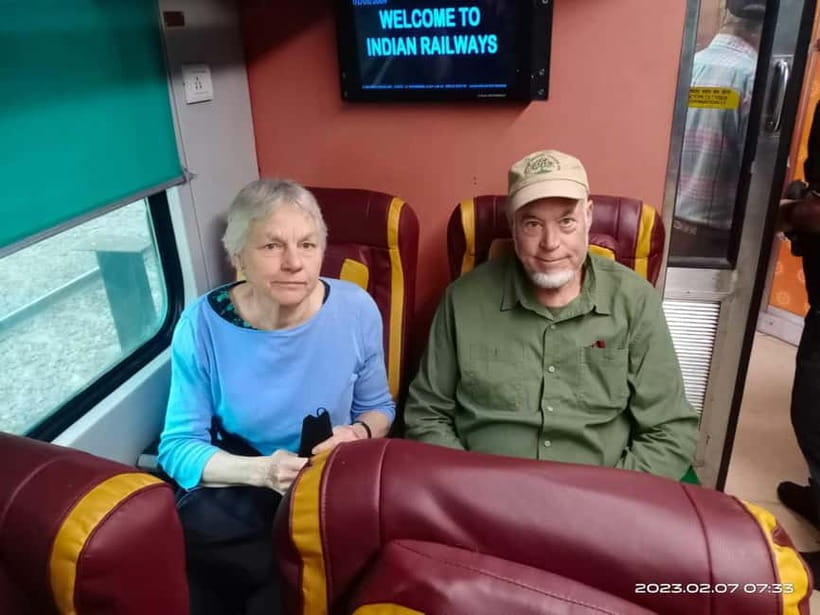
One drawback to keep in mind: train comfort can vary. A few folks noted issues like seats facing the wrong direction for motion sickness, and train food service wasn’t consistent for everyone, so if you’re picky about train meals, plan to be flexible.
In This Review
- Key highlights you’ll feel fast
- Delhi to Agra by fast train: the best kind of shortcut
- Pickup, transfers, and getting to Nizamuddin without drama
- Taj Mahal with a guide: how to make 3 hours count
- Small practical tips for the Taj
- Agra Fort: 1 hour that actually changes your perspective
- The tradeoff
- Baby Taj (Itimad-Ud-Daulah): the compact finale
- Lunch in Agra: what’s included, what to watch for
- What’s not included
- Train meals: breakfast and dinner on board
- Price value: why the $15 matters (and where you may spend extra)
- Guides and drivers: the human part that makes the day smooth
- Who this trip suits best (and who should be cautious)
- What to pack and how to pace yourself
- Should you book this Taj Mahal + Agra Fort day trip?
Key highlights you’ll feel fast

- Fast train saves hours compared with road travel, and it keeps the day from dragging.
- Skip-the-line entry helps you spend more time inside the monuments.
- Guides do the heavy lifting for timing, explanations, and photo stops (I’ve seen names like Islam, Aamir, Faizan, and Rafik mentioned).
- Agra Fort plus Baby Taj means you see more than just the Taj Mahal.
- Lunch options include halal and the break is planned (not random).
- Train meals included if you choose them, plus water during the day.
Delhi to Agra by fast train: the best kind of shortcut
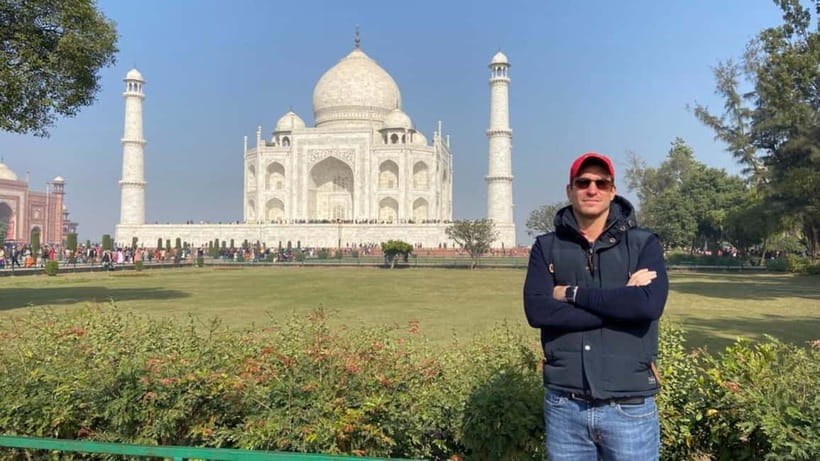
The big idea here is simple: use the superfast train so you spend your time seeing Agra instead of stuck in traffic. The train time is about 1.5 hours each way, which is the difference between enjoying a day and feeling worn out before you even reach the monuments.
This is also one of those trips where logistics matter. Delhi to Agra by road can be chaotic and unpredictable. By contrast, the train route is straightforward, and it’s built into the itinerary as the core transport—so you don’t have to play ticket-game or negotiate schedules while you’re tired.
If you’re a first-timer, this matters even more. Taj Mahal visits go from magical to stressful fast if you’re figuring out entry lines, meeting points, and timing on your own. Here, the day is structured around guided stops and timed transport.
You can also read our reviews of more tours and experiences in New Delhi.



Pickup, transfers, and getting to Nizamuddin without drama

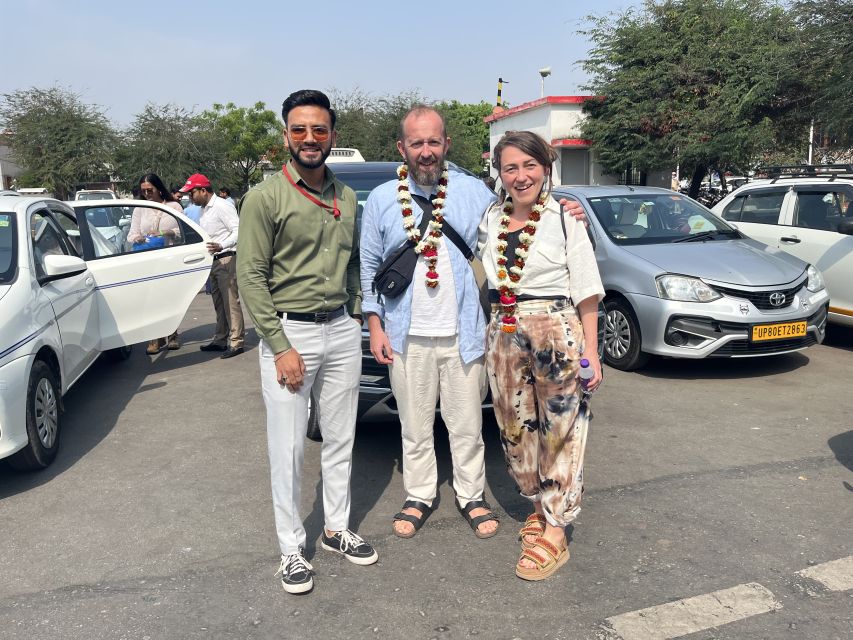
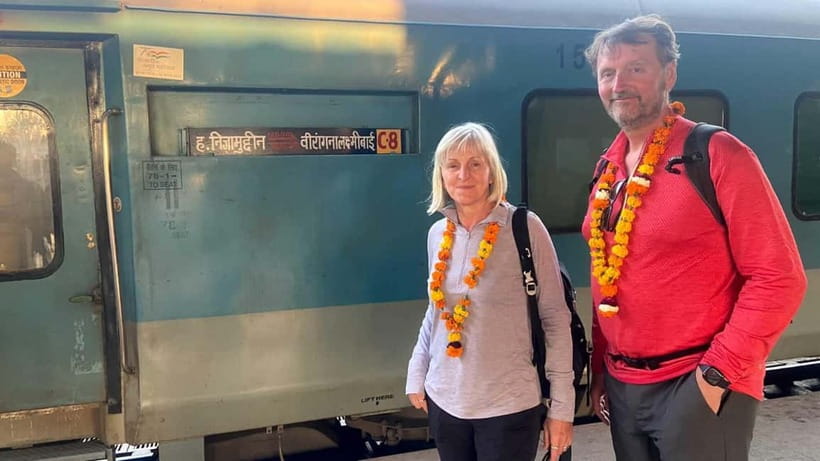
Your day starts with pickup from multiple locations around Delhi/NCR, including New Delhi, Delhi, Noida, Ghaziabad, and also Gurgaon/Faridabad/Greater Noida. A driver collects you and gets you to Nizamuddin Railway Station, where you board the superfast train.
One practical plus: people specifically mention that the driver helps them find their train seats. That sounds minor until you’ve tried to locate your carriage on a busy platform with unfamiliar signage. The tour team’s job is basically to remove those little decision points so you can focus on the day ahead.
Also, the transportation is air-conditioned. That matters on hot days and especially on a schedule like this, where you go straight from train station to monuments without a long decompression moment.
Taj Mahal with a guide: how to make 3 hours count
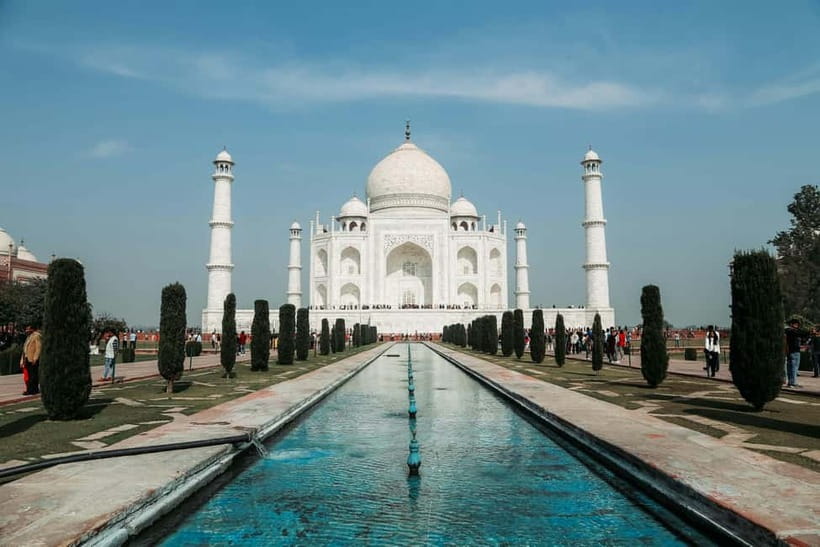
The Taj Mahal visit is scheduled for up to 3 hours with a live English guide, plus guided sightseeing and time to walk. That’s a good amount of time: long enough to slow down, look closely, and take photos, but not so long that you start checking your phone every 10 minutes just to stay sane.
A key feature is skip-the-line entry via a separate entrance. Lines at the Taj can eat your time. Cutting that friction usually means you’re not arriving at the first viewpoint already annoyed.
What you gain from the guide isn’t just facts on a wall. People mention guides pointing out the rules before you step in, and helping you avoid common hustles. Some guides also take an active role in photography—getting you into better angles and making sure you’re not stuck behind random groups.
I also like how the guide work shows up in different ways depending on the person. One group credited guide Islam for detailed explanations and safety, while others highlighted guides like Faizan, Aamir, and Rafik for strong English and a smooth, flexible pace. If you’re the type who asks questions, this kind of guided format helps you get answers in real time instead of guessing.
Small practical tips for the Taj
Bring what you’d expect for sun + walking: passport/ID, sunscreen, and a sun hat. The tour description also suggests a halal option for lunch later, which signals they’re thinking about the day beyond just sightseeing.
Also, wear shoes you can walk in for extended periods. Even with a guide, you’re still covering a fair amount of ground inside the Taj complex.
Agra Fort: 1 hour that actually changes your perspective
After lunch, you head to Agra Fort, described as a major 16th-century red sandstone fortress. Your time here is about 1 hour with a guided visit and walking.
Is 1 hour enough? For many people, yes—because Forts reward focus. If you try to do Agra Fort like it’s a museum where you read every plaque, you’ll feel rushed. With a guide-led hour, you get the structure: what matters, what to look for, and how the fort connects to the broader Agra story.
Also, Agra Fort is a nice contrast after the Taj. The Taj is about symmetry, marble light, and emotional impact. The fort is heavy, defensive, and practical-feeling. Seeing both in one day helps your brain build a fuller picture of the city, not just the postcard moments.






The tradeoff
The time is tight, by design. If you’re the kind of traveler who wants slow, lingering photo sessions at every corner, you might feel like you could spend more time. But that’s the deal with a one-day loop: you trade extra hours for avoiding travel fatigue.
Baby Taj (Itimad-Ud-Daulah): the compact finale
The final monument stop is Itimad-Ud-Daulah, often called Baby Taj. You’ll get about 30 minutes with guided sightseeing and walking.
This stop is short, but it’s smart. Baby Taj is easier to absorb at the end of a long day, and it gives you a different architectural vibe from the main Taj—more intimate, more detailed, and less overwhelming to process after you’ve already seen the big one.
If you’re thinking about photography: people mention guides helping with phone camera angles across the day. That kind of coaching is especially useful at the Baby Taj stop because you’ll likely want close, detailed shots and clean backgrounds without needing to scramble around.
Lunch in Agra: what’s included, what to watch for

Lunch is planned for about 1 hour at a restaurant (and in some options, lunch is at a higher-end place). The tour description notes that a halal option is available, which is a real convenience when you’re not trying to solve food preferences mid-tour.
One common pattern in the reviews is that lunch is viewed positively—called delicious and well-timed—and that it’s a proper rest point, not just a quick snack stop. That timing matters for your energy. After Taj Mahal walking and heat, you want food and a calm reset.
What’s not included
Drinks aren’t included (so plan on paying for water beyond what the tour provides, or just budget a little). A few notes also mention that some train-food service may be inconsistent by carriage, so if you’re hungry at specific times, keep a flexible mindset.
Train meals: breakfast and dinner on board
Depending on the option you choose, you may get breakfast and dinner on the train, along with drinking water.
A practical note from real experiences: one person said train food wasn’t served evenly for the whole carriage, as they fed half the train car and then stopped. That’s not guaranteed for every trip, but it’s enough to keep you from assuming the service pattern will match your expectations.
If you’re the type who loves having a full meal at predictable times, I’d treat train meals as a bonus rather than your only nutrition plan. You’ll still be eating lunch on solid ground in Agra, so it’s not like you’re gambling your day on train catering.
Price value: why the $15 matters (and where you may spend extra)
The advertised price is around $15 per person for a 1-day experience. That’s low enough that it’s worth thinking through what’s actually included and what might not be.
Here’s what adds value for your money:
- Roundtrip superfast train tickets (this alone can be a big chunk of cost on your own)
- Hotel pickup and drop-off
- A live English guide during the monument stops
- Air-conditioned transport in Delhi/Agra during transfers
- Monument entrance tickets if your option includes them
- Skip-the-line entry when that’s part of your ticket setup
- Lunch and train meals if you choose those options
- Drinking water during the day
Where you might spend extra:
- Drinks aren’t included
- If you didn’t choose the option that includes entrance tickets or meals, you’ll need to budget separately
- Photos, shopping stops, or any extra stops you request could cost time or money (and the itinerary may limit how many you can fit)
When a trip includes both transport and guided entry, you’re buying convenience plus savings in time and decision-making. For many visitors, that’s the real value—especially when you’re doing only one day and you can’t afford logistical mistakes.
Guides and drivers: the human part that makes the day smooth
A lot of tours list guides. This one is different in how guides show up in the day-to-day experience: helping with rules, explaining what you’re seeing, and guiding photo moments.
Names that came up with strong praise include:
- Rajni Kant for excellent English and smooth, well-accommodated customization
- Hyder Ali for solid communication during the Taj and day flow
- Faizan for being helpful, safe-feeling, and fun company
- Islam for detailed explanations, strong photo help, and practical advice about avoiding Agra hustles when possible
- Aamir, Moon, Rafik, Nabeel, and Azad for attentive pacing and good explanations
Also, drivers get credit, especially for helping with station timing and keeping you moving reliably through traffic. One review even highlighted a driver getting passengers safely through the day’s chaos—exactly the kind of “invisible work” that makes you feel confident when you’re far from home.
Who this trip suits best (and who should be cautious)
This tour is a great fit if:
- You want a structured one-day plan without researching train stations and monument entry details
- You prefer guided explanations instead of random sightseeing
- You’re doing Agra as a must-see day while keeping your base in Delhi/NCR
- You like having photo help so you don’t spend half your time asking strangers to take pictures
You might think twice if:
- You’re sensitive to train motion. One person noted a seat orientation issue (facing backward) that can be uncomfortable if you get motion sickness.
- You’re extremely picky about train meals. Service can vary by carriage, and drinks aren’t included.
- You want to spend a lot more time inside the Taj. This day gives 3 hours at the Taj, then moves on. You can’t treat it like a slow half-day linger.
What to pack and how to pace yourself
Even with a plan, you’ll still be walking and standing in the sun. Pack:
- ID/passport
- Sunscreen
- Sun hat
Pacing tip: treat Taj Mahal time as your main focus and let Agra Fort and Baby Taj be your bonus chapters. The itinerary is designed so you leave with a full Agra picture, but your emotional highlight is almost certainly the Taj.
Also, stay hydrated. The tour includes drinking water, and you’ll likely want more on top of that depending on heat and personal needs.
Should you book this Taj Mahal + Agra Fort day trip?
If you want a low-stress, high-structure day, I’d say yes. The combo of door-to-door pickup, fast train, skip-the-line entry, and a guide-led route through Taj Mahal → Agra Fort → Baby Taj is built for people who’d rather spend their energy looking at Agra than solving logistics.
Book it especially if you’re traveling solo, as a couple, or with mixed ages and you want a steady pace with someone keeping the day organized. The consistent praise for smooth pickup, solid guide communication, and good photo help is exactly what you want on a one-day plan.
Skip it (or at least be cautious) if train comfort issues like seat orientation could ruin your day. Also, if you’re the type who needs a long, unhurried Taj Mahal experience, you may feel the schedule is tight.
If you want one day in Agra that doesn’t steal your time with transport problems, this is a strong choice.