REVIEW · MADRID
From Madrid: Ávila and Segovia Guided Day Trip
Book on GetYourGuide →Operated by Big Bus Tours - Madrid · Bookable on GetYourGuide
Ávila and Segovia make a strong one-day pair. I especially love Ávila’s 11th-century walls for the views, and Segovia’s Roman aqueduct for how real ancient engineering still feels. The main thing to weigh is that this is a bilingual tour (English and Spanish), and in larger groups it can mean less audio clarity and shorter-sounding explanations.
Still, it’s a smart value for people short on time. You get round-trip bus transport from central Madrid plus structured guided walks in both towns, then you’re released to wander and take photos on your own. If you’re very picky about hearing every detail, consider bringing your patience (and your comfortable shoes).
In This Review
- Key highlights worth your attention
- Why Ávila and Segovia work so well in one day from Madrid
- The Big Bus Madrid start: what the meeting point means for your morning
- Ávila’s walls and cathedral: the medieval highlights that feel worth the climb
- Ávila photo stop and walking time: where you’ll likely spend your attention
- Segovia’s Old Town: aqueduct-first and cathedral-next in a walkable order
- Navigating Segovia’s free time: how to actually use it
- The Alcázar option: when the castle is worth paying for
- Bilingual tours in the real world: what to expect in your ears, not just your itinerary
- Price and value at about $59 per person: what you’re really buying
- Who this tour suits best (and who should skip it)
- Should you book this Madrid day trip to Ávila and Segovia?
- FAQ
- How long is the Ávila and Segovia day trip from Madrid?
- What is the price per person?
- What locations does the tour visit?
- Does the tour include transportation from Madrid?
- Is the Alcázar of Segovia included?
- How long are the guided walking tours in each town?
- What language is the guide?
- Where do I meet the group?
- What should I bring?
Key highlights worth your attention
- UNESCO in one day: Two World Heritage towns without the hassle of renting a car
- Ávila’s wall-walk views: Classic skyline photos from the ramparts
- Gothic cathedral stops: Intricate architecture and stained-glass highlights in Ávila
- Roman aqueduct moment: Segovia’s first-century-BC engineering as a walking focal point
- Optional Alcázar Castle visit: A timed castle experience that’s easy to justify
- Guides who keep it moving: Examples like Mariano and Ramiro have been praised for clarity and keeping energy up
Why Ávila and Segovia work so well in one day from Madrid
This tour is built around a simple idea: both towns feel old in a way you can actually experience on foot, yet they’re close enough to pair with bus travel. Ávila delivers fortress-town atmosphere—stone, religion, and those famous wall panoramas. Segovia gives you the full mix of medieval lanes plus a Roman landmark that still functions as a visual anchor.
I also like the day’s structure. You’re not dumped into two cities with no plan. You get guided time where it matters most—major sights and the stories that help you read what you’re seeing—then you have personal time to wander, snack, and follow your curiosity.
The timing isn’t meant to be slow travel. It’s more like good pace, good priorities, and room to breathe. If you want to linger for hours in one chapel or shop, you’ll need to accept that you’re on a scheduled route.
You can also read our reviews of more tours and experiences in Madrid.


The Big Bus Madrid start: what the meeting point means for your morning

You depart from the Big Bus Madrid Welcome Centre inside Centro Comercial Gran Galeria on Calle de San Bernardo 5. The nearest metro station is Santo Domingo, which is convenient if you’re already moving around central Madrid.
Here’s the practical value: you’re not figuring out regional trains or local connections while you’re tired. You show up, you meet the group, and the bus handles the between-town logistics. That alone is why these day trips can feel worth it even when you know you could technically DIY them.
A small but real tip: plan to arrive early. Even when operations run smoothly, any late start can compress the walk-and-photo portion of the day. The itinerary includes a photo stop viewpoint in Ávila and two guided walking segments, so minutes add up fast.
Ávila’s walls and cathedral: the medieval highlights that feel worth the climb
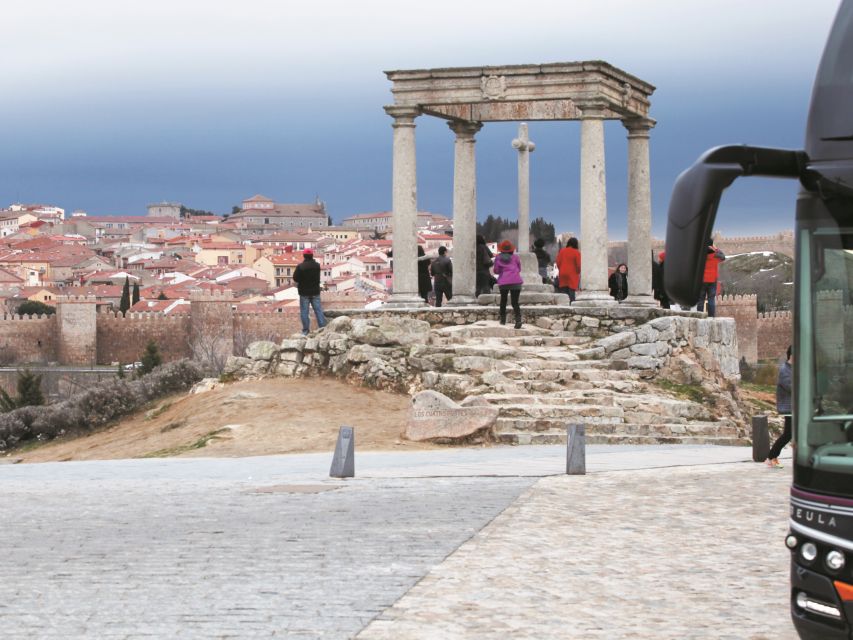
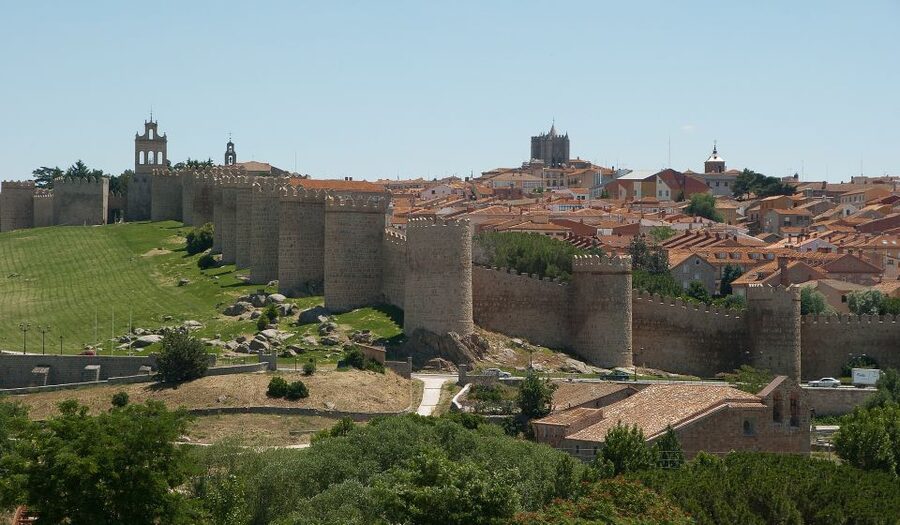
Ávila’s first “wow” comes from the wall walk. The city walls date back to the 11th century, and the best part is how intact they feel. This isn’t just a wall you look at from one angle. You walk along a defensive ring and then look outward—over the rooftops and countryside—like you’re borrowing the perspective of the people who once watched for approaching threats.
Then comes the Ávila Cathedral. It’s Gothic, and what you’ll notice (if you take a moment to slow down) is the detailed stonework and the stained-glass effect. In a town where so much is medieval stone, the cathedral’s window light helps it feel alive rather than frozen behind metal doors.
You also get multiple religious and historic stops beyond the cathedral experience, including the Basilica of San Vicente and the Convent of Santa Teresa. You don’t need to be a religious history buff to enjoy these. They’re part of what gives Ávila its identity—this sense that faith shaped the town’s geography and architecture.
My practical advice: wear shoes that can handle uneven stone and curving medieval streets. Even if the tour stays on main paths, you’ll still be walking a lot, and your knees will thank you later.
Ávila photo stop and walking time: where you’ll likely spend your attention
You’ll have a viewpoint photo stop before you even reach the main town focus. It’s brief (about 15 minutes), but it’s useful because it gives you context. You start the day seeing the town’s shape, then you arrive and it all lines up.
The guided walk in Ávila is scheduled around an hour, which usually works well for orientation: where to stand, what to notice, and which details are easiest to miss if you’re wandering without a reference point. After that, you get additional time to see things on your own.
Here’s the potential drawback to keep in mind: some days feel a little tight in Ávila because the walk sections are popular and the group moves as one. If you want extra time to buy tickets for optional interiors or to linger at a favorite viewpoint, plan to treat the guided portion as your anchor and be flexible after.
If you love photography, set a simple target: one wall panorama plus one cathedral-detail moment. That keeps your wandering from turning into a frantic checklist.
Segovia’s Old Town: aqueduct-first and cathedral-next in a walkable order
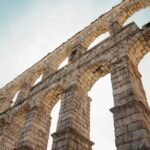
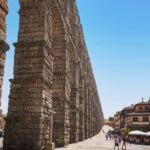
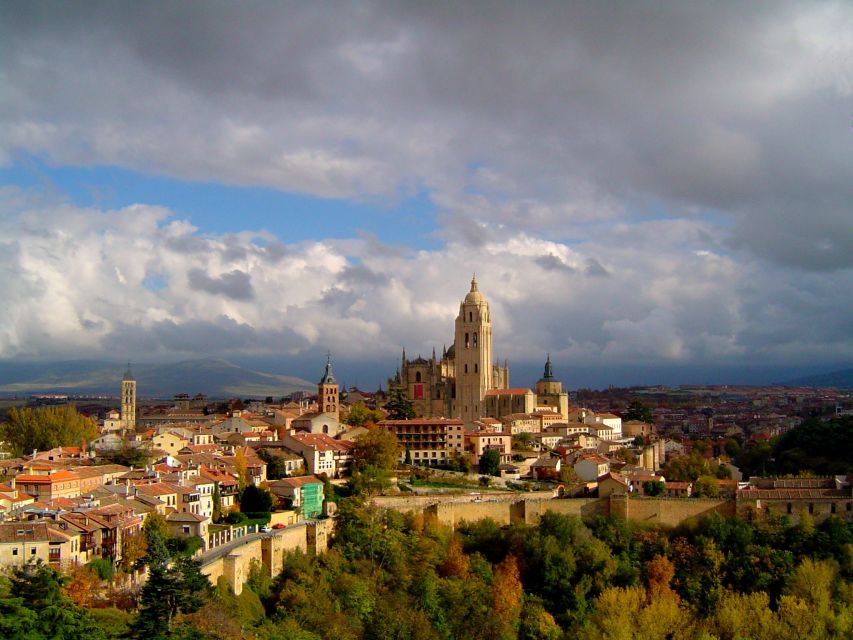
Segovia is the kind of place where the order of sights helps you understand the city. The Roman aqueduct comes into play early as a landmark you can’t really ignore. It dates back to the first century BC, and seeing it in the context of today’s streets makes it feel less like “ruins” and more like ancient infrastructure that shaped how people built around it.
After the aqueduct learning moment, you head into the medieval Old Town. The lanes narrow, and the buildings press close. You’ll be walking through that classic Segovia rhythm: turn a corner, spot a viewpoint, then keep going because there’s usually another angle right around the bend.
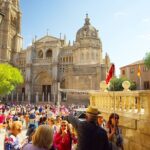
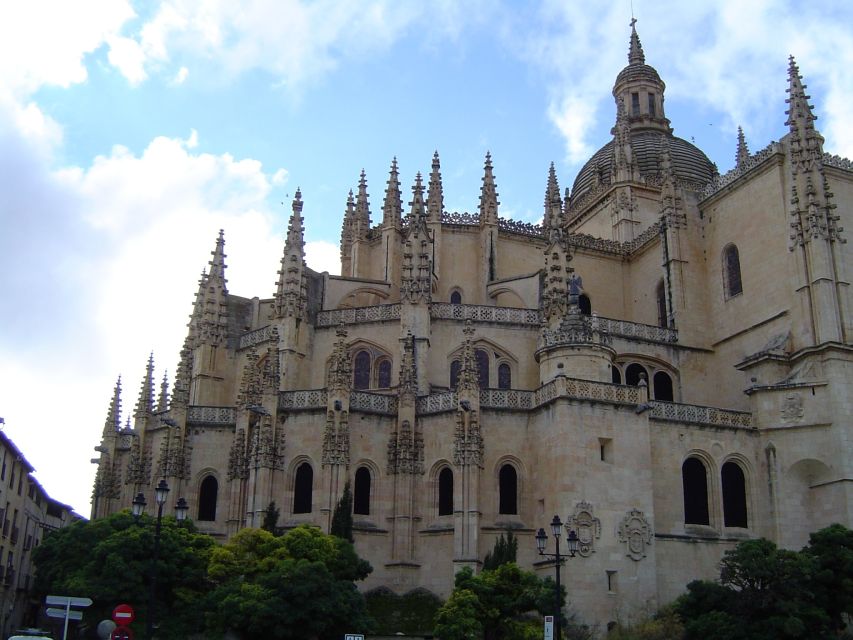
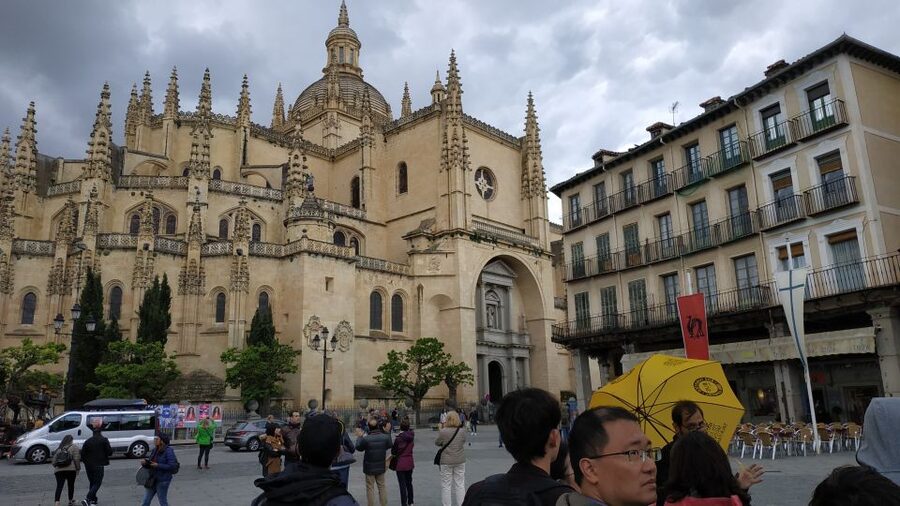
A couple of focal points you’ll cover with your guide include the Plaza Mayor. From there, the Segovia Cathedral rises with real presence. It’s a big sight and it works best if you pause for a minute instead of walking past it while your mind is already moving to the next stop.





Navigating Segovia’s free time: how to actually use it
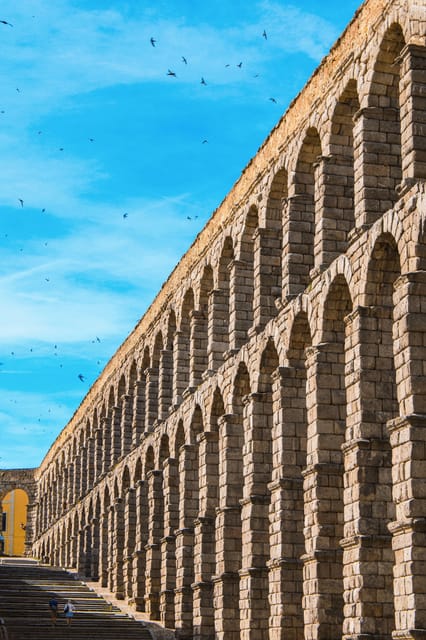
Segovia’s schedule includes guided walking time, then free time for sightseeing. This is where the tour either feels perfect or feels rushed—depending on how you use it.
If you’re hungry, treat the free time as your opportunity to eat local instead of thinking you’ll “grab something later.” If you’re focused on photos, pick two: one aqueduct angle and one Old Town street scene near a plaza or major landmark.
Also, don’t assume you’ll hear every detail perfectly over a group. With a bilingual setup, explanations may get split, repeated, or delivered in a way that makes the story feel shorter even when the guide is excellent. I’d rather you hear only the essentials and use your energy to look closely than chase every spoken detail.
One more real-world note: Segovia’s free time often gets “spent” quickly because there’s so much to see around the cathedral area and along those twisting streets. When you feel time compressing, go back to your two-photo plan and stop trying to do everything.
The Alcázar option: when the castle is worth paying for
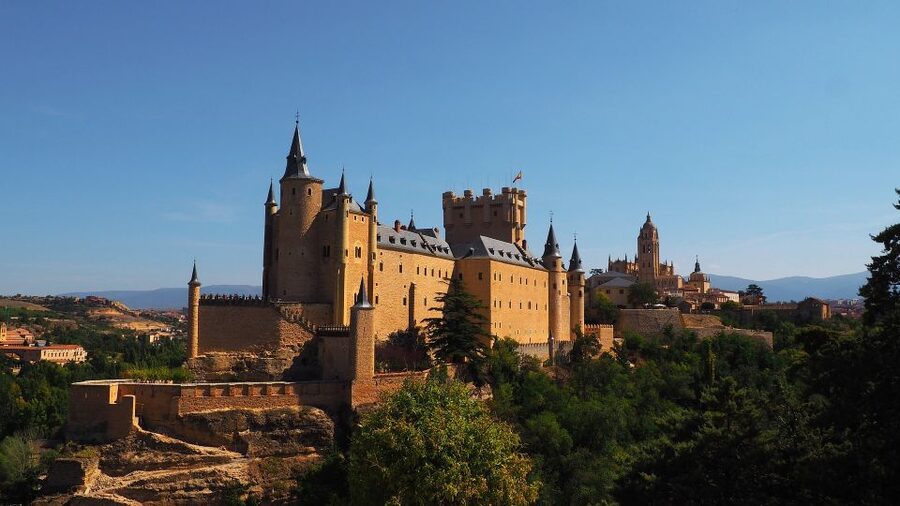
If you choose the package that includes the Alcázar of Segovia, you get entry and a guided visit of about 30 minutes (for the option). That time window matters: it’s long enough for key storytelling and important angles, but short enough that you don’t lose the whole afternoon.
Why I think it’s often worth it: the Alcázar isn’t just a pretty castle. It was a fortified residence of the kings of Spain, so it carries political weight, not just “tourist castle” vibes. Plus, the castle fits Segovia visually; it feels like it belongs to the same stage as the aqueduct and cathedral.
Still, here’s the balancing thought: if you’re the type who hates being rushed through interiors, the timed castle stop can feel like you’re watching it through a window rather than spending real time inside. On days where the schedule runs tightly, your best move is to decide before you arrive: do you want the main views quickly, or do you want extra lingering?
If you can only choose one “icon” moment in Segovia, the Alcázar is the one that usually converts first-time visitors into lifelong fans.
Bilingual tours in the real world: what to expect in your ears, not just your itinerary
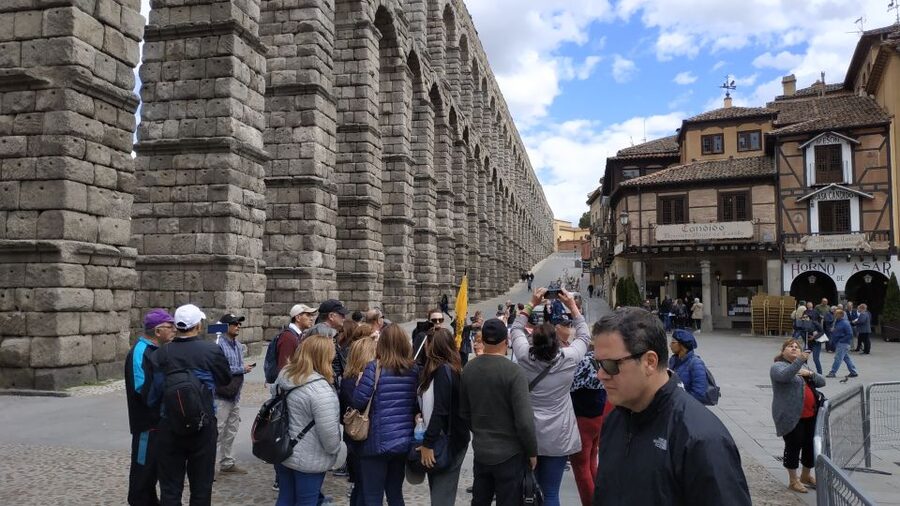
This tour runs with a local bilingual guide in English and Spanish. In theory, that’s great for mixed groups. In practice, it can be tricky. Some departures run smoothly and the guide manages language flow well. Other times, your understanding can feel like it depends on the moment—especially in a bigger group where there’s road noise, people talking, and the guide trying to be fair to everyone.
I’ve also seen how sensitive this can be for hearing on walking segments. Cathedral steps, plazas, and crowded streets don’t naturally help sound carry. So if you’re the person who stops and listens to every fact, bring a “good enough” mindset for the walking parts. You’ll get the key points, and then you can use your own eyes for the rest.
One more approach that works: ask yourself what you want from the guide. For example, I’d rather you use the guide to learn the “what and why” of each landmark, then use the free time to learn the “how it looks from here.”
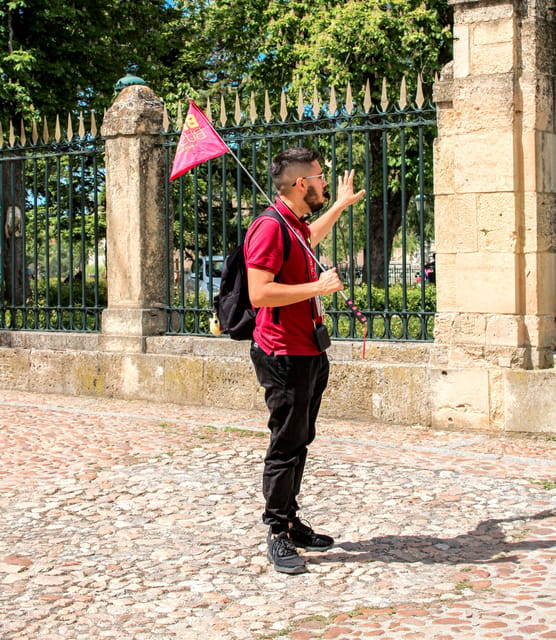
Guides like Sara and Dora have been praised for kindness and patience, and guides such as Ramiro have been singled out for making language flow easier even when the group isn’t perfectly split. That’s exactly what you want from a bilingual setup.
Price and value at about $59 per person: what you’re really buying
At roughly $59 per person for an 11-hour day, the price isn’t just about walking. You’re also paying for the bus transfer from central Madrid and the structure of two guided city walks, plus the optional Alcázar entry if you pick that version.
Here’s the value logic: Ávila and Segovia both take time to reach comfortably without a car. If you factor in transit hassle, parking stress, and the effort of arranging two separate half-days, a guided day trip becomes easier to justify. Also, the guided hours are useful for orientation—especially in walled towns where you can easily wander “the right direction” and still miss what makes the place click.
The only “watch-out” is that part of the day is walking and part is free time, and free time can shrink in practice when the group has to regroup quickly. If you’re the type who wants a slow, detailed cathedral and museum day, you may feel the tour is more efficient than in-depth.
But if you want a first taste of both UNESCO towns with a guide and a predictable schedule, this price-to-time ratio makes sense.
Who this tour suits best (and who should skip it)
This is a great fit for you if:
- You have limited time in Madrid and want the “must-see” UNESCO experience in one day
- You like walking with a guide who can point out what matters and explain the context
- You want the convenience of round-trip bus transport without planning logistics
It might be less ideal if:
- You need long, quiet stops inside monuments
- You’re very sensitive to hearing guides in bilingual format with group noise
- You hate tight schedules and would rather build a slower route on your own
If you’re in the second group, consider doing Ávila and Segovia independently so you can control pace, ticket timing, and where you pause to read and photograph.
Should you book this Madrid day trip to Ávila and Segovia?
I think you should book this tour if you want a high-success day: two UNESCO towns, major landmarks, and guided walking that gives you meaning quickly. Choose the Alcázar option if you want the castle moment without guessing whether you’ll make it a priority later.
I’d book with one mindset: treat the guided time as your roadmap, then use free time for your personal favorites. That way, even if the schedule feels a bit tight in one town, you still leave with strong images and a clear understanding of what you saw.
If you tell me your travel dates and whether you’re considering the Alcázar option, I can help you decide which version fits your style and how to plan your must-see moments inside the day.
FAQ
How long is the Ávila and Segovia day trip from Madrid?
The tour duration is approximately 11 hours.
What is the price per person?
The price is $59 per person.
What locations does the tour visit?
You visit Ávila and Segovia, both UNESCO World Heritage towns.
Does the tour include transportation from Madrid?
Yes. Round-trip transportation by bus is included.
Is the Alcázar of Segovia included?
Entry to the Alcázar of Segovia is included only if you select the option that includes the visit.
How long are the guided walking tours in each town?
The walking tour is 1 hour in Ávila and 1 hour in Segovia.
What language is the guide?
The guide is bilingual, with English and Spanish.
Where do I meet the group?
The tour departs from the Big Bus Madrid Welcome Centre inside Centro Comercial Gran Galeria on Calle de San Bernardo 5, 28013 Madrid (nearest metro: Santo Domingo).
What should I bring?
Wear comfortable shoes since there’s walking in both cities.