REVIEW · THESSALONIKI
Discover Vergina and Pella: Day Trip to Macedonian Kingdom
Book on Viator →Operated by Ammon Express · Bookable on Viator
Mosaics and royal tombs in one long day. I love the way this trip puts Pella mosaics and the Vergina Royal Tombs front and center, with strong history talk from the trip attendant along the way. The one thing to watch is the pace: it’s museum-focused and time-boxed, so if you want to read every label and linger, you may feel a bit rushed.
The day starts early and runs about 8 hours 30 minutes, capped at a maximum group size of 50. Expect an English-speaking trip attendant you can spot by their Ammon Express clothing, and don’t be surprised if your guide’s style feels very knowledgeable and story-driven—names like Lazarus, Eleni, Eva, Konstantina, and Stavros have been called out for excellent explanations.
You’ll also want to plan for entrance fees and lunch separately. The tour price is $59.65 per person, but museum/site tickets (including Pella and Vergina) and your meal aren’t included, so your final cost depends on what you spend on food and entry.
In This Review
- Quick take: what I think you’ll remember most
- From Thessaloniki at 8:00 to Macedonian sites: how the day actually flows
- Stop 1 in Pella: Museum time plus mosaic viewing at the archaeological site
- Vergina’s Royal Tombs: the Golden Larnax, Philip II, and the Sun of Vergina
- Lunch in Vergina: where to slow down and eat like a local
- New Museum of Aigai (Polycentric Museum): what you see after the tombs
- The guide setup: English commentary, then you explore at your own speed
- Price and value: what $59.65 really turns into
- Pacing tips: how to get through without hating it
- Who this day trip suits best (and who should rethink it)
- Should you book Discover Vergina and Pella?
- FAQ
- What time does the day trip start and where do I meet?
- What’s included in the tour price?
- Are museum and archaeological site entrance fees included?
- Is lunch included?
- Is the tour guided inside the museums?
- Can I get a full refund if I cancel?
Quick take: what I think you’ll remember most
- Pella’s mosaic highlights like the Abduction of Helen and Amazonomachy, shown where they belong.
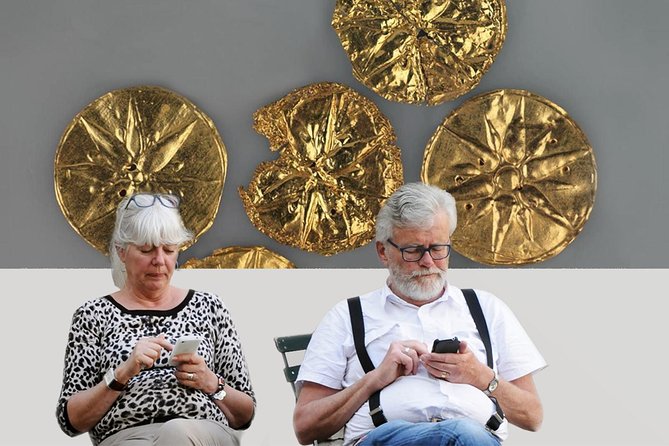
- Philip II’s funerary finds in Vergina, including the Golden Larnax and the Sun of Vergina symbolism.
- A strong museum schedule that prioritizes what’s preserved and interpret-able, not long outdoor wandering.
- Self-paced time inside museums, with the guide more focused on context and timing than walking you through every room.
- A long day with a clear structure, so you’ll cover a lot without needing to plan transport yourself.
From Thessaloniki at 8:00 to Macedonian sites: how the day actually flows
This is an all-in-one day trip that starts at 8:00 am from the Eleftherios Venizelos Statue at Egnatia 78 (near Aristotelous Square & Egnatia Street). You’re best off arriving about 10 minutes early because the bus can’t linger at stops except for boarding.
The drive is around 45 minutes for the 50 km to Pella. Then you spend the day bouncing between museums and archaeological spaces in Pella and Vergina, with time set aside for lunch in between.
The big practical point: you’re not on a slow, strolling itinerary. It’s a “see the highlights, then have time to explore on your own” format—ideal if you want real value without needing to rent a car or stitch together tickets.
You can also read our reviews of more tours and experiences in Thessaloniki.


Stop 1 in Pella: Museum time plus mosaic viewing at the archaeological site
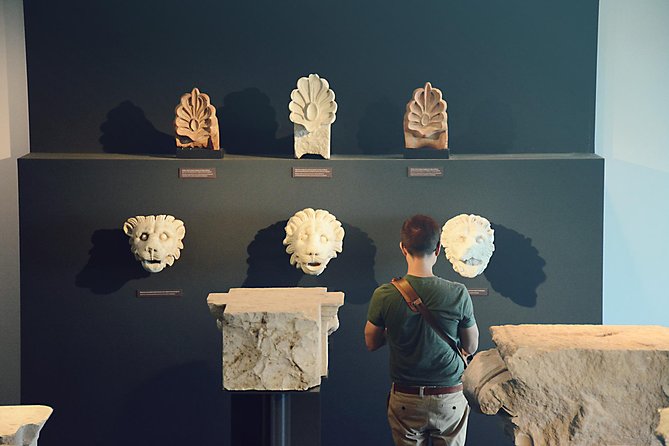
The first major stop is the Archaeological Museum of Pella. You’ll get about 2 hours here, and admission is not included in the tour price.
Inside the museum, you’re looking at a modern setting that helps you process what you’re seeing at the site: mosaics, artifacts, and everyday objects that explain how people lived. Two mosaic names are especially worth keeping in mind before you arrive: Abduction of Helen and Amazonomachy. These aren’t just decorative; they give you a window into the kinds of stories and themes ancient communities chose to display in everyday public spaces.
What I like about this stop for your planning: it’s structured so you can do both—museum context first, then site atmosphere. If mosaics are your thing, this is one of the best uses of a half-day you’ll get around Thessaloniki.
A drawback to consider: 2 hours can feel tight if you love reading every label and want to stop at every exhibit. That’s not a dealbreaker—it just means you should prioritize what matters most to you.
Vergina’s Royal Tombs: the Golden Larnax, Philip II, and the Sun of Vergina
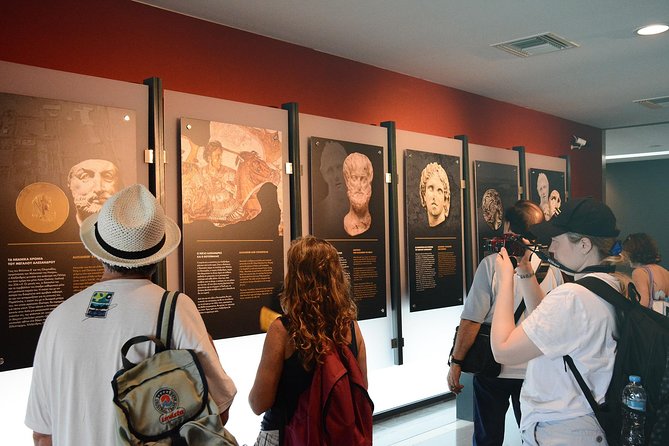
After Pella, the day pivots to Vergina for the Museum of the Royal Tombs of Aigai. This is where the trip earns its reputation as a must-do for anyone interested in Macedonian royalty.
This museum centers on the Golden Larnax, a funerary casket: an urn marked with the 16-rayed sun, using the symbol of Macedonia. The piece is linked to the cremated remains of Philip II, father of Alexander the Great, and the interpretation gets very specific: four rays represent the classical elements, and the other twelve represent the Olympian gods.
Then there’s the symbolism of the Sun of Vergina (Star of Vergina), described as characteristic of the Argead Dynasty. You don’t need to be a scholar to get why that matters. It’s a clear visual way of connecting art, power, and belief—exactly the kind of detail that makes museum time feel purposeful instead of passive.
You’ll also see funeral imagery tied to Philip II, including a golden oak wreath and military armors. In practical terms, this stop can be emotionally intense in a quiet way: you’re staring at objects that were made for ritual and status, preserved through a level of accident and discovery that only happens very rarely.
Lunch in Vergina: where to slow down and eat like a local
Lunch is at a restaurant in Vergina with Greek traditional flavors, but it’s on your own expense. This is one of those “good problem” situations: the schedule is packed, so lunch time matters.
If you want a smoother afternoon, plan to eat steadily rather than rushing. Most people leave museum time with sore feet and dry mouths—so take advantage of the break, refuel, and don’t save all your questions for the bus again.
New Museum of Aigai (Polycentric Museum): what you see after the tombs
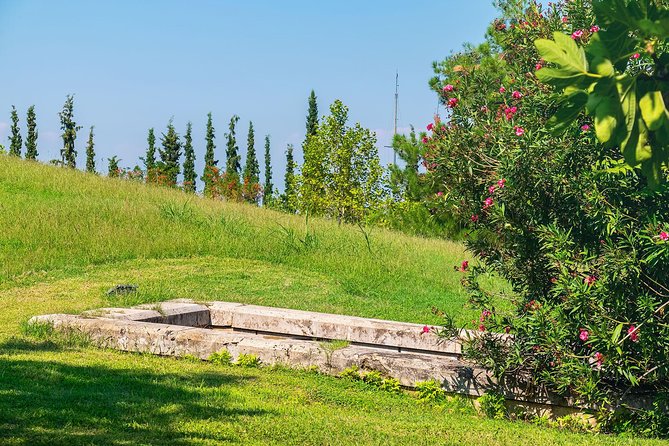
Before you head back, you visit the grand New Museum of Aigai, which hosts findings and artifacts unearthed from the soil of the old capital. You’ll have about 2 hours 30 minutes here, and admission is not included.
This portion of the day tends to work well if you like museum variety. One reviewer noted that the museums are modern but each one has a different curating style, and that variety helps keep the information from feeling repetitive.
The key value here is “continuity.” After the Royal Tombs stop—where the story is intensely focused—you get the broader archaeological material: objects that help you picture daily life and the bigger setting around the Macedonian era.

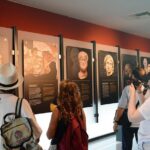
The guide setup: English commentary, then you explore at your own speed
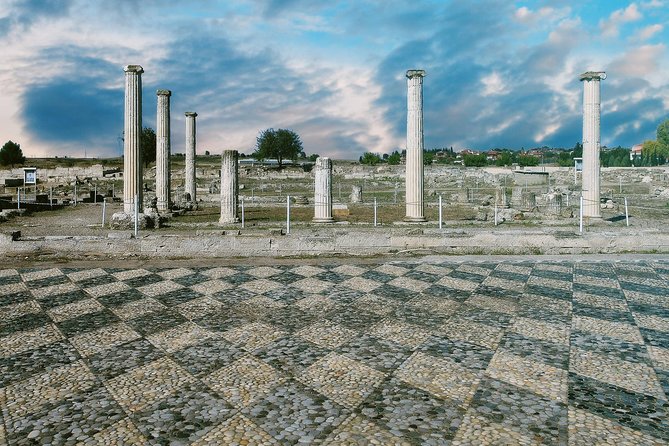
Even though there’s an English-speaking trip attendant, this tour is not built like a room-by-room guided walkthrough inside museums and sites. You’ll hear context—often a lot of it—then you’re given time windows to explore on your own, returning to the bus when instructed.
That structure showed up in multiple guide mentions. People specifically praised guides for history explanations and factual clarity, with some named guides standing out (Lazarus, Eleni, Eva, Konstantina, Stavros). So what you’re paying for here is not constant hand-holding—it’s interpretation plus logistics, so you can spend your limited time looking, not waiting.
One more practical note: you might not see everything at the Aigai area. At least one person wished they’d had more time to see additional ruins beyond the tomb-focused highlight. If your dream day is outdoors, wandering through more of the archaeological remains (not only museums), mentally budget for that possibility.
Price and value: what $59.65 really turns into
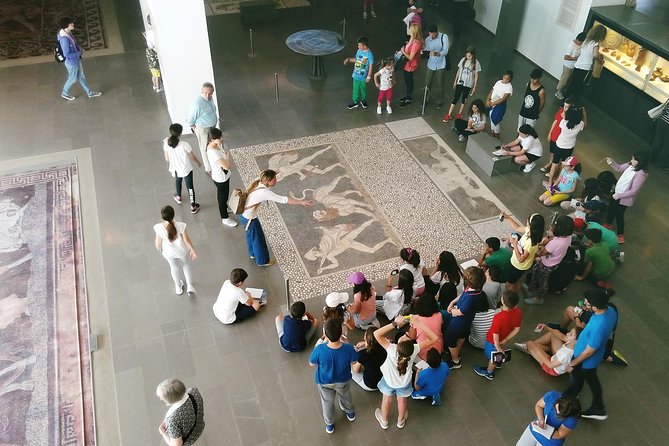
The tour is priced at $59.65 per person. Transportation and an English-speaking trip attendant are included, along with basic travel insurance during transportation. You also get a mobile ticket.
But don’t ignore the add-ons:
- Archaeological site of Pella: €8.00 per person
- Museum of the Royal Tombs of Aigai (Vergina): €10.00 per person
- Polycentric Museum of Aigai (New Museum of Aigai): €10.00 per person
So you should plan on about €28 total in entrance fees on top of the tour price, plus lunch.
Now the “value” angle: if you’d otherwise try to do Pella and Vergina by yourself, you’d still be buying museum tickets, then dealing with transport and timing. This tour packages the driving and the day flow, while keeping group size capped at 50.
Also check for discounts/free entry based on age or EU status with ID. The data provided includes:
- Free entry to Museum of Vergina for EU university/technological institute students (student ID) and young people up to age 19 (ID card).
- Reduced entry to Museum of Vergina (€6) for EU citizens 65+ (ID/passport).
- Free entry to Museum of Pella for EU university/technological institute students and young people up to age 18.
If that applies to you, the math gets noticeably better.
Pacing tips: how to get through without hating it
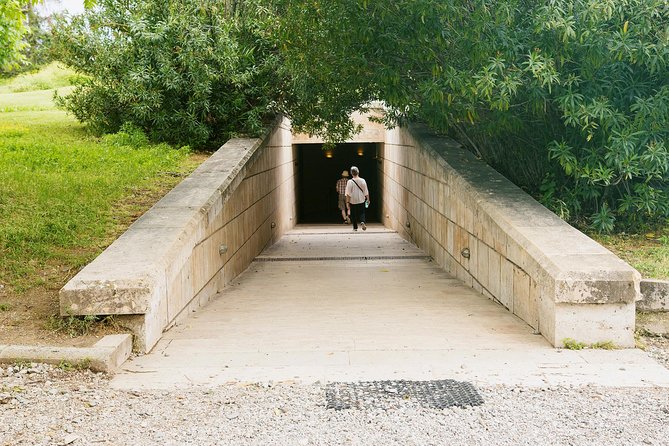
This is a full day. Expect museum intensity and a bit of motion time between stops. One mild complaint that came up: it can feel like a lot of moving, and time may run tight if you want to read everything slowly.
My advice if you hate feeling rushed:
- Pick 2–3 themes you care about most (mosaics, Philip II, symbolism of the Sun of Vergina, etc.).
- Treat the museum rooms like a guided checklist: see the big objects, then decide whether to go deeper.
- If you’re coming in winter, you may enjoy fewer crowds; one person specifically recommended winter for avoiding the crush.
Who this day trip suits best (and who should rethink it)
Book this if you:
- Want a strong history-focused day without planning transport.
- Care about Macedonian royal tombs and symbolism, not just general ancient Greece sightseeing.
- Like the idea of context on the bus, then self-paced time inside museums.
You might rethink it if you:
- Want long outdoor ruin time and lots of unstructured wandering.
- Need frequent rest breaks beyond what a normal museum day allows.
- Are extremely sensitive to schedule pressure and reading time.
Should you book Discover Vergina and Pella?
If you like seeing real artifacts and you want Macedonian history to feel concrete, I think this is a high-value day trip. The combination of Pella mosaics and the Royal Tombs of Aigai gives you both everyday visual culture (at Pella) and royal ritual power (at Vergina) in one itinerary.
I’d book it if you’re comfortable with museum-heavy pacing and you’re okay budgeting for entrance fees and lunch. If you hate time-boxed tours or you’re hoping for a massive outdoor ruins crawl at Aigai, then look for something with more time at fewer locations.
FAQ
What time does the day trip start and where do I meet?
It starts at 8:00 am. You meet at the Eleftherios Venizelos Statue, Egnatia 78, Thessaloniki.
What’s included in the tour price?
Transportation to and from Pella and Vergina, an English-speaking trip attendant, and basic travel insurance during transportation.
Are museum and archaeological site entrance fees included?
No. You’ll need to pay entrance fees on site: €8 for Pella, €10 for the Museum of the Royal Tombs of Aigai, and €10 for the Polycentric Museum of Aigai.
Is lunch included?
Lunch is not included. There’s a lunch break in Vergina at a restaurant with Greek traditional flavors, but you pay separately.
Is the tour guided inside the museums?
A guided tour inside the monasteries and museums is not included. The format is more about commentary and timing, with time for you to explore.
Can I get a full refund if I cancel?
Yes—free cancellation is available up to 24 hours in advance for a full refund. If you cancel less than 24 hours before the start time, the amount paid won’t be refunded.