REVIEW · OVIEDO
Day trip to Luarca, Cudillero and Avilés from Oviedo and Gijón
Book on Viator →Operated by Buendía · Bookable on Viator
Four seaside towns in one easy day. This Buendía day trip strings together Luarca, Cudillero, and Avilés with a mix of cliff views, historic streets, and one very modern stop in Asturias. You get an organized route so you can enjoy the coast without white-knuckling your way through it.
What I like is how the day balances guidance with time to wander. You’ll walk with local context in places like Luarca and Cudillero, then you get free time to take photos, read the town at your own pace, and choose where and what to eat (lunch is on your own). The transport also helps: an air-conditioned vehicle and a route that keeps coach time reasonable.
One thing to consider: the tour is listed as English, but the real-world experience can vary by guide. If you need full English delivery every minute, plan a little flexibility for how much is interpreted or repeated.
In This Review
- Quick hits before you go
- Why this Luarca–Cudillero–Avilés loop is worth doing
- Luarca’s sea-mountain town walk: Severo Ochoa and Plaza Miares
- Ermita de la Regalina: short stop, big cliff payoff
- Cudillero: steep fishing-village streets and how to use the free time
- Avilés: historic quarter plus the Niemeyer Centre contrast
- Timing and logistics: about 10 hours, max 45, and a comfortable bus
- Price value: what you get for about $50.69
- Guides and language: what to expect if you booked English
- Best way to enjoy each stop (without feeling rushed)
- Who this day trip suits best
- Should you book this Luarca–Cudillero–Avilés day trip?
- FAQ
- Is lunch included on this tour?
- How long is the Luarca, Cudillero, and Avilés day trip?
- Is the tour offered in English?
- What stops are included?
- Are there entrance fees for the stops?
- How big is the group?
- Do I need to print a ticket?
- Where does the tour start?
Quick hits before you go
- Scenic coast, not a road-trip marathon: you cover multiple towns in about 10 hours without driving yourself.
- Luarca’s sea-mountain mix: walk streets tied to Nobel Prize winner Severo Ochoa and stop at Plaza Miares.
- A cliff chapel with big views: the Ermita de la Regalina is short and dramatic.
- Cudillero’s steep fishing-village streets: expect slopes and lots of photo angles, plus food suggestions.
- Avilés adds contrast: you’ll see the historic quarter and the modern Niemeyer area.
- Small-ish group: capped at 45 travelers, so stops don’t feel like a stampede.
Why this Luarca–Cudillero–Avilés loop is worth doing
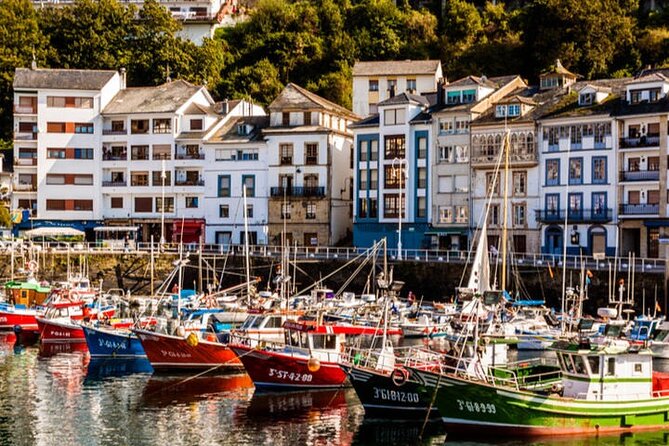
This itinerary works because it strings together three very different sides of Asturias in one shot. Luarca and Cudillero give you rugged coast and tight hillside streets. Avilés then shifts gears into a more urban, modern feel, with the Niemeyer Centre area and major historic landmarks.
If you’re using Oviedo or Gijón as your base, this is a smart way to see coastal Asturias without committing a full day to logistics. It’s also one of those trips where the planning does some of the heavy lifting: you show up, ride, park your brain during transit, then let guided walking points get your attention focused.
You’ll also notice the pacing: key sightseeing blocks come with dedicated time to explore. That matters on the north coast, where the view is part of the attraction, and you’ll want a few minutes here and there to actually look.
You can also read our reviews of more tours and experiences in Oviedo.
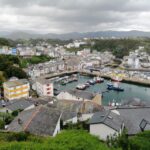
Luarca’s sea-mountain town walk: Severo Ochoa and Plaza Miares
Luarca sits in the council of Valdés, in that classic Asturias setting where the sea and the mountains meet. On this stop, you’re guided through streets tied to local identity, including the connection to Severo Ochoa, the Nobel Prize winner born here. It’s a nice change from the usual coastal-town spiel, because it gives you a local anchor beyond just scenery.
You’ll also get to Plaza Miares, a standout spot for settling your bearings and watching town life. From there, the stop continues toward the hermitage area of La Regalina, depending on the flow of the day.
Practical note: Luarca’s streets can include some slopes and steps. If you’re comfortable walking but not thrilled by uneven cobblestones, wear supportive shoes and give yourself a slower pace than you might on a flat city.
What you’ll like most in Luarca is the feeling of a town shaped by both nature and daily life. It isn’t staged. You’re there to walk, look, and absorb how the coastline actually sits against the town.
Ermita de la Regalina: short stop, big cliff payoff
The Ermita de la Regalina stop is brief but memorable: you’ll reach a chapel perched dramatically on the cliffs above the Cantabrian Sea. Even with limited time, the point is clear. This is one of those Asturias moments where you quickly understand why people build houses and chapels at the edge of the world.
Expect views first, photos second, and a little history in the background. Since admission here is listed as free, you’re not getting charged for the privilege of standing where the sea takes up most of your frame.
This stop also helps you connect the dots between Luarca and the broader coastline. You see the line of cliffs and the way the coast changes character in short distances. That makes Cudillero feel less like a random extra and more like the next chapter.
Cudillero: steep fishing-village streets and how to use the free time
Cudillero is the stop that often becomes the favorite for people who love walking towns. It’s built on a slope, with peculiar steep paths and roads that funnel you down toward the sea. The town’s identity is tied to fishing life, and the walking route is designed to show how residents move through the village.
You’ll have expert local guidance for the main sights, and then you get free time to explore. The tour also includes a nice practical touch: your guides provide a recommendation for where to eat before you head toward lunch plans on your own. That’s especially helpful in a town like this, where one wrong turn can send you hunting for food with half your energy gone.
Two things to plan for:
- The terrain is not flat. If you have any mobility limits, this is the part of the day that may test your comfort.
- Lunch can get crowded in peak hours. Even with guidance, you might find it easier to choose a spot and commit rather than trying to keep shopping around.
Cudillero is often where you’ll find the best photo variety in the day: tight street angles, sea views that pop between buildings, and the dramatic sense of a working coastal village.
Avilés: historic quarter plus the Niemeyer Centre contrast
Avilés is the change-of-pace stop. It’s described as modern and avant-garde in feel, and the Niemeyer Centre area is the headline you’ll hear about. But you’ll also get time for the older heart of town, which is what makes Avilés work as a pairing with the smaller coastal villages.
In the historic quarter, you’ll visit:
- Sabugo Church (Santo Tomás de Canterbury), facing the Avilés estuary
- Plaza de la Merced, with the monumental Church of Santo Tomás
- Time built around understanding the story tied to the important industrial sector in Asturias, with the estuary as the backdrop
This is a smart pairing for anyone who thinks Asturias is only about beaches. The estuary and the industrial history add context for why cities like Avilés matter, not just as scenery, but as places where work and trade shaped the region.
If you’re the kind of person who enjoys architectural contrast, Avilés is your payoff. You go from fishing-village slopes to a city built for a different rhythm.
Timing and logistics: about 10 hours, max 45, and a comfortable bus
The day runs for about 10 hours. That length is typical for a loop that includes multiple stops and a bit of walking, but it’s also long enough that you should pack for comfort. Bring a light layer, a refillable water bottle, and a snack you can keep for later if you get hungry before you find your lunch plan in Cudillero.
Group size is capped at 45, which is small enough that your day won’t feel like a cattle call at every stop. It also helps with getting back on the bus when it’s time to move on.
Transport is in an air-conditioned vehicle, and the experience is generally praised for being organized and punctual. Still, it’s wise to treat pickup as a best-case scenario, not a guarantee. If timing matters to you, plan to be ready a little early at the meeting point.
One more practical point: this is a day-trip format. The tour is not trying to slow down for deep, hour-long museum style visits. It’s set up for seeing the highlights efficiently, then letting you decide where to spend your energy.
Price value: what you get for about $50.69
At around $50.69 per person, the value comes from three things:
- You’re paying for transportation plus guiding across multiple towns.
- Several stops include free admission, so you’re not constantly paying entry fees.
- Lunch is on you, which keeps the tour price lower and gives you flexibility to choose what you want to eat.
You don’t get lunch included, so budget that extra cost separately. The trade-off is that you can follow the local recommendations in Cudillero and pick your own meal style. If you’re the type who likes to explore food choices rather than follow a set menu, that’s a win.
For many people, this ends up being one of the best-cost ways to see coastal Asturias from inland bases like Oviedo and Gijón. It’s not a luxury private tour, but it’s also not trying to nickel-and-dime you with constant fees.
Guides and language: what to expect if you booked English
The tour is offered in English, and that matters. But language can be a human thing, not a button you press.
From the information you have, you can expect a tour guide who may also work with Spanish and possibly translate for English speakers at times. Some guides have been praised for explanations in both English and Spanish, and others have been described as doing their best for English-speaking guests even when the flow wasn’t fully English.
My advice: if English is critical, come with a small buffer. Learn a few basics in Spanish so you can understand meeting points and key directions, and don’t rely on perfect one-to-one translation for every minute. The best moments in this kind of trip are often visual anyway: the cliffs, the streets, the estuary views.
If you speak Spanish, you’ll likely feel even more at home. And if you don’t, the tone of the day still tends to work because the towns do the talking.
Best way to enjoy each stop (without feeling rushed)
Here’s how I’d pace it if you want the day to feel rewarding, not frantic.
In Luarca, use the guided time to learn what to look for, especially street connections like Severo Ochoa and the Plaza Miares area. Then use free time to walk at your own pace and stop when the sea view pulls your attention.
For Ermita de la Regalina, treat it like a photo-and-view moment rather than a long sit-down visit. If it feels crowded in spots, step aside and let the view refill your focus.
In Cudillero, plan for slower steps. Take a few photos early, because the best angles often appear as you descend. When it’s time to eat, use your guide’s suggestion as your starting point, not as a guarantee that you’ll find the first option instantly.
In Avilés, shift your attention to contrast. The Niemeyer Centre area gives you a different kind of Asturias, and the historic quarter helps you understand the city’s deeper roots.
Who this day trip suits best
You’ll likely enjoy this tour if you want:
- A structured way to see coastal towns without driving
- Guided context, plus time to explore on your own
- A day that mixes small-town walking with a city stop
It may be less ideal if:
- You dislike any uphill walking or uneven steps
- You need fully English communication with no variation at all
- You want a long lunch with no schedule pressure, since lunch is not included and the day runs on set stop blocks
Should you book this Luarca–Cudillero–Avilés day trip?
Book it if you want a smart, cost-effective way to see three sides of Asturias in one day: Luarca’s cliff-and-town feel, Cudillero’s fishing-village streets, and Avilés’ modern-meets-historic contrast.
Skip it or consider another option if you’re very mobility-limited or you need strict, consistent English guide delivery for every minute. In that case, you might be happier with a private or fully confirmed language-specific tour.
If you do book, aim for comfortable walking shoes, go into Avilés ready for a different vibe than the coast, and treat Cudillero lunch as a choose-and-commit moment. Do those things, and this day trip is exactly the kind of itinerary that leaves you with photos, context, and that satisfied I-saw-a-lot feeling without the stress.
FAQ
Is lunch included on this tour?
No. Lunch is not included, so you’ll need to plan your own meal during the free time, especially during the Cudillero portion of the day.
How long is the Luarca, Cudillero, and Avilés day trip?
It runs for about 10 hours.
Is the tour offered in English?
The tour is offered in English and uses a mobile ticket. Still, the day-to-day language delivery can vary by guide, so it’s smart to be a bit flexible if you need 100% English for every moment.
What stops are included?
The tour includes Luarca, the Ermita de la Regalina, Cudillero, and Avilés, including the historic quarter and the Santo Tomás de Canterbury area.
Are there entrance fees for the stops?
Admission is listed as free for the stops described in the itinerary, including Luarca, the Ermita de la Regalina, Cudillero, and the Avilés historic church area.
How big is the group?
The tour has a maximum of 45 travelers.
Do I need to print a ticket?
No. You’ll receive a mobile ticket.
Where does the tour start?
This is a day trip from Oviedo and Gijón, based on the experience being offered for those starting areas.