REVIEW · NAPLES
Day Trip of Pompeii, Herculaneum and Vesuvius from Naples
Book on Viator →Operated by Di Sarno Car Service - Tours & Excursions · Bookable on Viator
A day-trip to Pompeii and Vesuvius is unforgettable, fast. This one strings together Herculaneum + Pompeii with a climb to Vesuvius crater rim in about 8 hours, with live commentary during the drive and comfortable round-trip transportation.
I like the format when you’re short on time: you get scheduled time blocks at each major site, plus the tour includes Vesuvius admission and even a bottle of water onboard. The main drawback is also the big one: it’s not a fully guided walk-through inside Pompeii and Herculaneum—you’ll be exploring on your own there, and you must buy those entrance tickets separately.
Three top sights in one day from Naples so you don’t spend your holiday planning logistics.
Onboard English commentary during the minibus ride while you travel between sites.
Vesuvius entrance is included, so you’re only paying extra for Pompeii and Herculaneum.
You’re on your own inside the ruins, which can be great for flexibility but not ideal if you want a guide at every step.
Air-conditioned premium minibus + water onboard, useful on a long, walking-heavy day.
The day can shift with conditions, especially around the Vesuvius hike.
In This Review
- A one-day Naples hit list: Pompeii, Herculaneum, Vesuvius
- Price and logistics: what the base tour covers (and what it doesn’t)
- Herculaneum first: walking streets sealed by the 79 AD eruption
- Pompeii tickets and 2 hours: how to see a lot without losing your mind
- Vesuvius National Park and the Good Giant climb
- The minibus ride: what the onboard commentary actually changes
- Site time feels short: how to make the most of free exploration
- Who this trip fits best (and who should pick something else)
- My booking checklist for a smoother day
- Should you book this Pompeii–Herculaneum–Vesuvius day trip?
- FAQ
- What is the total duration of the Naples day trip?
- Where does the tour pick you up in Naples?
- Is there live commentary during the trip?
- Is the Vesuvius admission included in the price?
- Are the entrance tickets for Pompeii and Herculaneum included?
- What about lunch?
- Is a licensed guide provided inside Pompeii and Herculaneum?
- Does the tour use a mobile ticket?
- Can the order of the stops change?
- What happens if the weather is bad or the minimum number of passengers isn’t met?
A one-day Naples hit list: Pompeii, Herculaneum, Vesuvius
If you want the big three—Pompeii, Herculaneum, and Mount Vesuvius—this is a practical way to do it without renting a car or juggling trains and buses all day.
The appeal is simple: one pick-up, one ride, and a schedule that gives you real time at each destination. Herculaneum gets about 2 hours, Vesuvius 1 hour 30 minutes, and Pompeii 2 hours. That’s not enough time to see everything in Pompeii—but it is enough time to see the parts that people travel here for.
This tour also leans into the idea that you’re visiting three UNESCO-level sites in a single day. It’s intense, but it beats the slow approach if you’re staying in Naples for only a couple of days.
Price and logistics: what the base tour covers (and what it doesn’t)
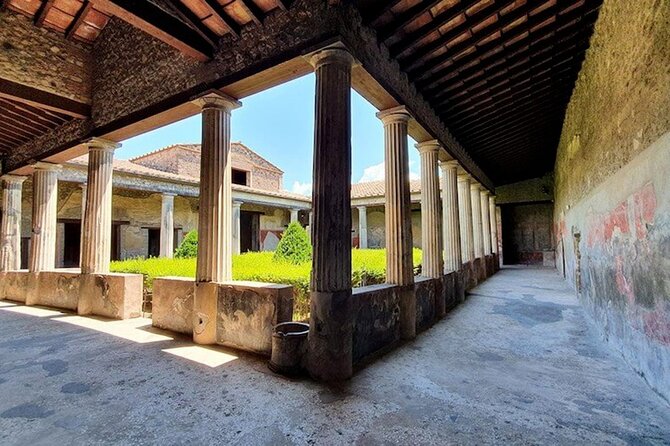
Here’s the straightforward way to think about the value.
You’re paying for:
- Round-trip transportation from Naples in a premium, air-conditioned minibus
- Live commentary on board in English
- An English-speaking driver/host
- Entrance to Vesuvius National Park (included)
- Fresh water onboard (a bottle per participant)
- All fees and taxes for the service itself
You’re also likely paying extra for:
- Entrance to Herculaneum: €13
- Entrance to Pompeii Archaeological Park: €18
- Lunch (not included)
- Any optional activities you add
- A licensed guide at the sites, if you choose one (the base experience does not include a licensed guide inside the ruins)
So the money question becomes: is it worth it to pay for a chauffeur-style day? For many people, yes—because it buys you time, reduces hassle, and keeps you from losing half your day to transportation snafus.
But if you expected a traditional guided tour inside each site, adjust your expectations first. Multiple experiences in the feedback boil down to the same theme: you’re getting guidance during the ride, then self-guided exploring on site.
You can also read our reviews of more tours and experiences in Naples.



Herculaneum first: walking streets sealed by the 79 AD eruption
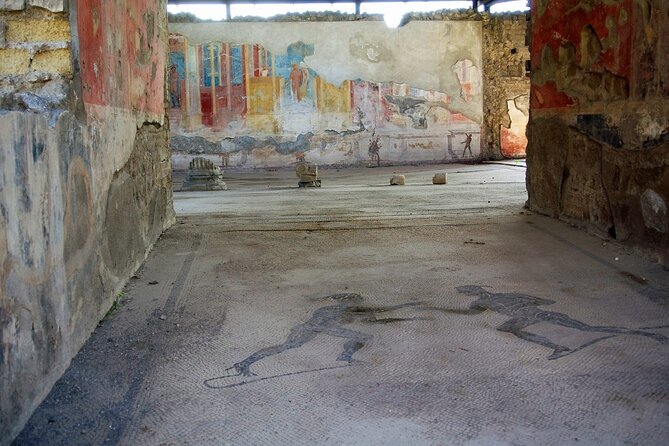
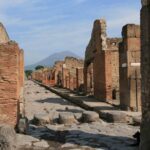
Starting with Herculaneum (Parco Acheologico di Ercolano) is smart. The site is smaller than Pompeii, and you tend to get more emotional impact per minute because the preservation is so striking.
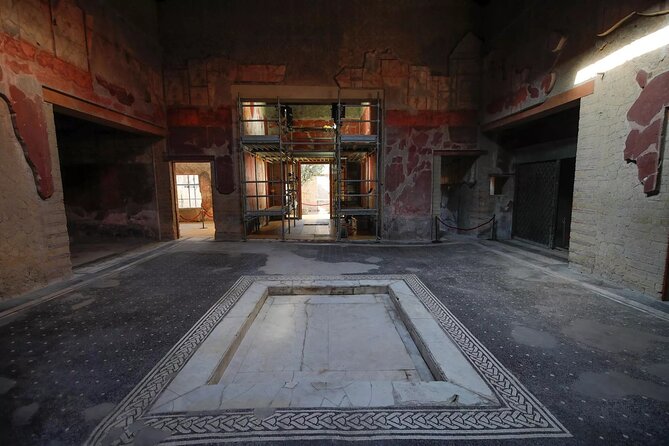
Herculaneum is known for being preserved under volcanic mud and conditions linked to the Vesuvius eruption in 79 AD. You’re walking through Roman life that feels less like ruins and more like a city that got interrupted. The tour’s highlighted stops here include:
- Villa of the Papyri and its ancient scrolls theme
- The House of the Deer and its sculpture setting
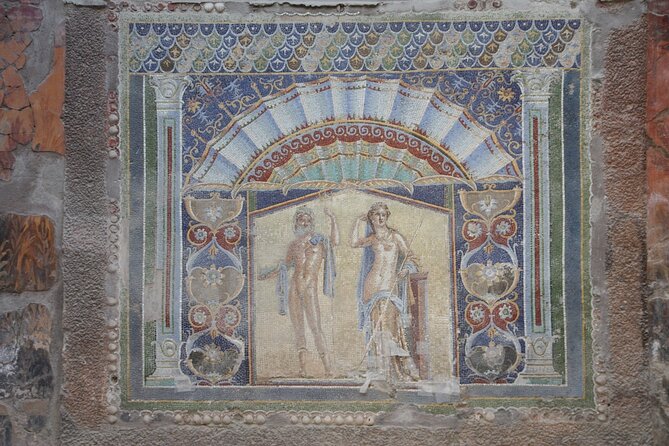
- Mosaics and frescoes
- Bath complexes and market spaces
The key practical point: you only have about 2 hours. That means you should go in with a priority list. If you want the most famous room types and the best-preserved areas, don’t let yourself wander randomly for 45 minutes. You’ll still have fun—but you’ll feel rushed.
If you do like self-guided strolling, Herculaneum is a great match. It’s easier to cover than Pompeii, and the detail is the draw.
Pompeii tickets and 2 hours: how to see a lot without losing your mind
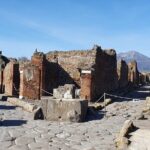
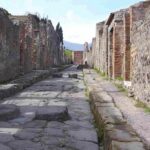
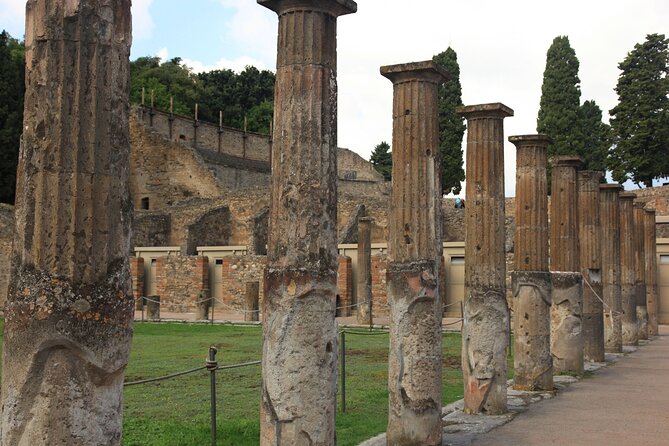
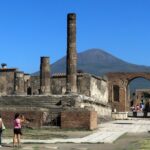
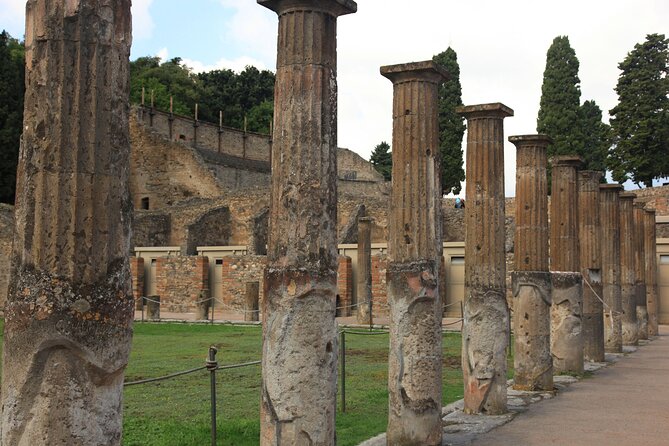
Then you head to Pompeii Archaeological Park. Pompeii is huge, and 2 hours is honestly both a blessing and a limitation. You’ll be able to hit major highlights—but you won’t see the whole city.
The tour description flags Pompeii must-sees like:
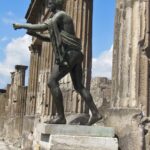
- The Temple of Apollo
- The Casa del Fauno
- The Amphitheater
- Mosaics and frescoes plus sculptures and everyday-life details
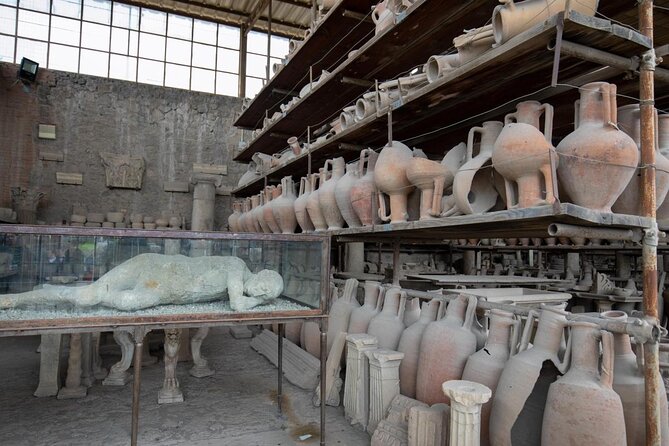
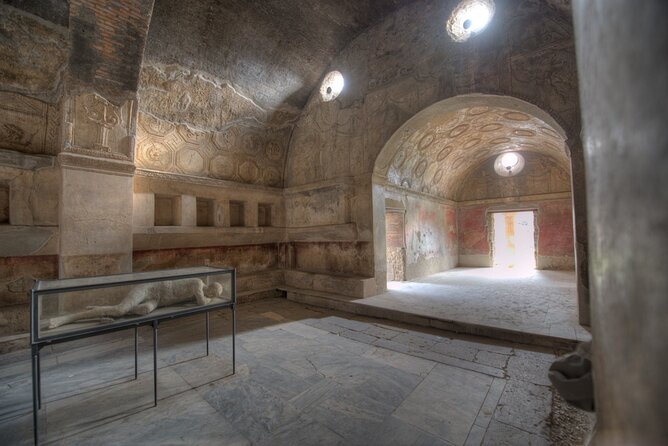
One caution from real-world timing: it’s easy to miss specific “headline” areas if you don’t plan. If you’re set on seeing the plaster casts of victims (often called the petrified people), don’t assume you’ll bump into them. Use your time block like a route, not like a stroll.
There’s also a modern touch mentioned in the experience: near the ruins, you can find traditional craftsmanship, including work connected to coral-style designs. It’s optional, and it’s not the reason you’re here—but it can be a nice way to end the day with something tactile instead of just stone.
The bottom line: Pompeii rewards focus. If you show up with a loose game plan—main forum area, one landmark building, and one museum-like concentration—you’ll feel like you did Pompeii right.
Vesuvius National Park and the Good Giant climb
Between the two archaeological stops is Mount Vesuvius in Vesuvius National Park. This part is the adventure and the payoff.
Locals call Vesuvius the Good Giant—a nickname that captures the relationship between the mountain and Naples. The tour also leans into the volcano’s central role: its 79 AD eruption is the reason Pompeii and Herculaneum are so dramatically preserved.
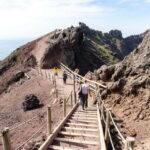
What you’re doing here is a climb:
- About 1 hour 30 minutes on site
- Walking along trails that feature volcanic artworks
- Reaching the area with views from the crater rim
- Taking in the Gulf of Naples, the city, and distant islands
This is where you should be honest about your fitness. Some people love it; others feel it in their legs. If you’re comfortable with uphill walking and uneven ground, you’re in the right mindset.
Also: the tour notes that the experience needs good weather. Even with good weather, you should expect the hike to be weather-sensitive—wind and heat can make the crater approach feel longer.
The minibus ride: what the onboard commentary actually changes
The transportation piece is more than just getting you from A to B. The tour includes live English commentary on board, so the drive time becomes part of your learning instead of dead time.
That’s the difference between:
- arriving at the ruins feeling like you’ve memorized a few facts, and
- arriving with a framework for what you’re seeing.
In the feedback, different teams and hosts are named—like Polly, Alfredo, Luca, Mary, Rosita, and Luigi—and the common thread is that they help the day feel organized and explain what to watch for while you’re moving between stops.
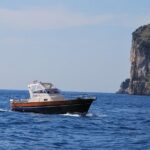
One more practical plus: you don’t just show up and hope. Several experiences describe that you’re given clear guidance about how to handle what’s needed for the sites. For example, there are specific reminders to buy tickets for Herculaneum and Pompeii separately, since the base price covers Vesuvius.

Site time feels short: how to make the most of free exploration
A lot of confusion in the feedback comes from one mismatch: people expected a licensed guide walking them around inside each ruin. The base format is different. You’re largely on your own once you enter the park.
That can still be a win, if you plan like this:
- Treat the time blocks as sprints, not sightseeing marathons
- Pick 3–5 “must-see” points before you arrive
- Use the official signage first, then check additional explanations if you want them
If you’re traveling with friends who all want different things—architecture for one person, mosaics for another, quick photos for the third—self-guided time can actually be kinder than being dragged as a single line.
If you need structure—because you want a narrative tour through each site—then consider adding a licensed guide at the archaeological sites. The base tour can get you there fast, but it’s not trying to replace that deep, inside-the-ruins interpretation.
Who this trip fits best (and who should pick something else)
This day trip works best for you if:
- You’re staying in Naples for a short time and want the big sights in one day
- You like flexibility, meaning you want to explore at your own pace rather than being locked into a group route
- You’re comfortable paying entrance fees at the sites you visit
- You enjoy the mix of a volcano hike plus two archaeological parks
It may frustrate you if:
- You expected a guided walk through Pompeii and Herculaneum included in the price
- You want someone to stand with you constantly inside the ruins and explain every major room and street
- Your group hates walking and climbing (Vesuvius in particular is physical)
Think of it like this: you’re buying transportation plus smart context during transit. The ruins are your hands-on time.
My booking checklist for a smoother day
This is how you avoid the most common stress points.
1) Buy Pompeii and Herculaneum tickets early.
Even if this is not explained perfectly for everyone, the practical message is clear: don’t wait until the last minute. Some people report it can get tight day-to-day.
2) Wear shoes for walking.
Pompeii and Herculaneum involve lots of uneven walking. Vesuvius involves an uphill climb.
3) Have a simple plan for Pompeii.
Pick a cluster of sights that match your interests. Pompeii is too big to “see it all” in 2 hours.
4) Expect the day to adapt if Vesuvius access is affected.
The experience is weather-dependent. On days when the volcano climb can’t happen as planned, schedules may shift to other nearby activities. That’s not guaranteed, but it’s part of how mountain days work.
5) Bring cashless payment readiness for extras.
Lunch isn’t included, and any optional guide or extra activity adds costs.
Should you book this Pompeii–Herculaneum–Vesuvius day trip?
If you want the fastest, most efficient Naples-based way to hit Pompeii, Herculaneum, and Vesuvius, I think this is a strong choice—especially when you value easy transport and onboard context.
Book it if you can live with self-guided ruins time and you’re okay with paying separate entrance fees for Pompeii and Herculaneum. In that case, you’ll get a packed day that hits the major emotional moments: Herculaneum’s preserved streets, Pompeii’s iconic public buildings and art, and Vesuvius’s crater views.
Skip it (or upgrade) if your top priority is being escorted by a licensed guide inside every park. For those days, you’ll be happier with a fully guided archaeological tour plan, even if it takes a bit more time to organize.
If you’re the “I have limited time and I want the highlights” traveler, this one-day combo is the right kind of intense.
FAQ
What is the total duration of the Naples day trip?
The tour runs for about 8 hours.
Where does the tour pick you up in Naples?
Pickup is available at either the Cruise Terminal (Stazione Marittima) or the Ramada by Wyndham Naples.
Is there live commentary during the trip?
Yes. You get live commentary on board during the minibus rides.
Is the Vesuvius admission included in the price?
Yes. Entrance to Vesuvius National Park is included.
Are the entrance tickets for Pompeii and Herculaneum included?
No. Admission tickets for Pompeii and Herculaneum are not included. The listed entrance fees are €18 for Pompeii and €13 for Herculaneum.
What about lunch?
Lunch is not included.
Is a licensed guide provided inside Pompeii and Herculaneum?
The base experience provides an English-speaking driver/host with onboard commentary, but it does not include a licensed guide at the sites. A licensed guide can be arranged for an additional cost if requested in advance.
Does the tour use a mobile ticket?
Yes. The tour includes a mobile ticket.
Can the order of the stops change?
Yes. The itinerary order can be adjusted based on conditions or group preferences.
What happens if the weather is bad or the minimum number of passengers isn’t met?
The experience requires good weather. If it’s canceled due to poor weather, you’ll be offered a different date or a full refund. It can also be canceled if the minimum number of travelers isn’t met, with the option to reschedule or get a refund.