REVIEW · SHARM EL SHEIKH
Day trip from Sharm el Sheikh to Cairo by plane
Book on Viator →Operated by Book Tour Egypt · Bookable on Viator
Cairo in one day feels like a magic trick. You’ll fly from Sharm el Sheikh, meet your guide in Cairo, and hit Egypt’s biggest headline stops: the Egyptian Museum and the Giza pyramids. In the right hands, the day can feel focused, funny, and fast—especially with guides like Ahmed steering the schedule.
I love two things most. First, the Egyptian Museum stop isn’t just a walk-through; it’s built around the most important pieces, including Tutankhamun’s gold coffin, so you get context instead of chaos. Second, the Giza circuit is tightly organized—Cheops, Chephren, Mykerinos, then the Sphinx—so you see the iconic stuff without wasting your daylight.
One consideration: this is a very long outing (about 16 to 18 hours) with an early pickup around 4 a.m., and the day can feel intense. Also, there are optional add-ons and shop stops that some people find less exciting than the monuments themselves.
In This Review
- Key takeaways before you go
- Sharm el Sheikh to Cairo by plane: the logistics that make this day trip work
- Egyptian Museum with Tutankhamun’s golden coffin: seeing the right things fast
- Giza’s three pyramids: Cheops, Chephren, Mykerinos without wasting daylight
- Great Sphinx and the temple area: the quarry story you’ll actually remember
- Optional felucca ride on the Nile: when the extra fee is worth it
- Lunch, bottled water, and what you’ll pay for later
- Papyrus museum and essential oil factory: useful context or wasted minutes
- Khan el-Khalili, Old Cairo, or a modern mall finish: how the day ends
- Price and value: is $257 per person a fair deal?
- Who should book this Cairo day trip from Sharm
- Should you book this Cairo day trip from Sharm el Sheikh?
- FAQ
- How long is the day trip from Sharm el Sheikh to Cairo?
- What time do you get picked up in Sharm el Sheikh?
- Does the tour include flights to Cairo?
- What’s included in the price besides transport?
- Is the Egyptian Museum entry included?
- What’s not included for Giza?
- Is the Nile felucca ride included?
- Are camel or horseback rides available at the pyramids?
- Can you stop by Khan el-Khalili or Old Cairo?
- What if the weather is bad or the minimum number of travelers isn’t reached?
Key takeaways before you go
- Early pickup + same-day flights make this doable, but expect fatigue if you’re not a morning person
- Egyptian Museum highlights focus on the pieces that actually matter for first-timers
- Giza in a structured route helps you avoid aimless wandering across the plateau
- Camel and felucca rides are extras—small fees, but they’re optional
- Khan el-Khalili vs Old Cairo depends on your return flight timing
- Papyrus and perfume factories may be educational, but they’re not everyone’s favorite use of time
Sharm el Sheikh to Cairo by plane: the logistics that make this day trip work
This tour is built around a simple idea: you’re not trying to “live” in Cairo. You’re trying to see the big masterpieces efficiently. The day starts with a hotel pickup in Sharm el Sheikh at around 4 a.m., then you fly to Cairo so you can still tour on the ground for hours afterward.
In Cairo, a tour guide meets you and stays with you for the whole run. Based on how the day is described, it’s designed to keep you moving—airport to museum, then lunch, then Giza and the Sphinx area, with a possible quick Cairo finish before your return flight. Drivers handle Cairo traffic, and in past tours the steering has been described as confident, which matters because the roads are not subtle.
If you’re the type who wants slow mornings, long café breaks, and lots of unplanned time, this schedule may feel like a sprint. If you like structure (and you can handle early wake-up calls), the flight makes the impossible feel normal.
You can also read our reviews of more tours and experiences in Sharm el Sheikh.



Egyptian Museum with Tutankhamun’s golden coffin: seeing the right things fast
The Egyptian Museum stop is the part of the day that’s easiest to underestimate. The museum is huge, and if you go in blind, you can burn hours and still feel like you missed the point. Here, the plan is built around a concentrated, guide-led focus—about two hours in total—with a guide who explains what you’re looking at in a way that keeps it from feeling like school homework.
You’ll get the headline highlight: Tutankhamun’s golden coffin and related high-quality grave goods. This is the kind of exhibit that can look stunning from photos but becomes even more impressive once you understand what it represents—royal burial craft, materials, and how the objects fit into the broader story of ancient Egypt.
A common theme in the guide experiences shared is energy. People mention Ahmed in particular as enthusiastic and able to answer questions without losing momentum. That helps a lot when your time window is tight, because you’re not just following a checklist—you’re getting “why this matters” for the artifacts you’re seeing.
Practical note: the museum can be crowded, so wear shoes you can stand in. Also, don’t expect museum pacing like you’d do on a multi-day visit; this is about high points with context, not an exhaustive survey.
Giza’s three pyramids: Cheops, Chephren, Mykerinos without wasting daylight
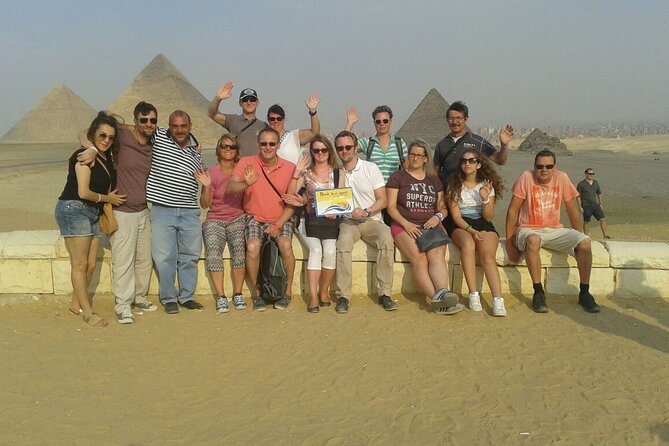
Giza is the reason most people do this trip. The tour takes you to the three main pyramids: Cheops, Chephren, and Mykerinos. What makes this stop work is that it’s not set up as one long walk with endless backtracking. The pacing is arranged so you can keep your energy for the key views.
You’ll likely move between stops inside the Giza complex rather than trekking the entire area in one go. That matters because the plateau can feel bigger than it looks on maps, and the heat (even outside peak summer) can drain you faster than expected. The tour also allows time around the pyramid grounds so you can look around rather than just snapping pictures and leaving.
There’s also an important choice point: you can explore in different ways at the site, including on foot and with optional rides. Camel or horse rides are offered as add-ons (and a camel ride has been described as a small extra fee). If you want that classic experience, this is one of the easiest moments to choose it because you’re already in the right place and the day is structured around it.
What to watch for: the pyramids are best when you slow down for details—corners, angles, the scale when you stand near them, and the way each pyramid sits differently in the landscape. A good guide makes that easier by pointing out what to notice instead of letting you stare at “the big pyramid” only.
Great Sphinx and the temple area: the quarry story you’ll actually remember
After the pyramids, you move to the Great Sphinx, described as the largest and most preserved sphinx. It’s one of those monuments where the first look is almost disbelief—then the second look is when you start noticing the carvings and the placement.
The tour framing includes the Sphinx’s material origin: it was carved from limestone left over from a quarry used during work on the Great Pyramid of Cheops. That gives you an immediate mental picture of how these projects connect. It’s a small detail, but it’s the kind you’ll remember later when you see other ancient sites and realize they’re not isolated stories.
You’ll also visit the surrounding area, including the temple connected with the Sphinx. Again, the pacing is designed for a day trip—enough time to experience the setting, not enough to treat the Sphinx grounds like an all-day archaeological study.
If you’re short on time, this is still a stop where you can get value quickly. Stand in a few spots, take in the scale, and let the explanation anchor what you’re seeing.
Optional felucca ride on the Nile: when the extra fee is worth it
This is the one add-on that can genuinely change how you feel about the day. A felucca ride on the Nile is offered for an extra fee (described as 10 euros per person). It’s not included, but the idea is simple: after ancient stone and desert scale, you get water, breeze, and a calmer pace.
How much it adds depends on your expectations. If you want a long, romantic river cruise, a short felucca ride may feel brief. But if you’re trying to balance the intensity of museum and pyramids, that short break can land nicely.
It can also be a timing tool. If the schedule gives you a bit of waiting time before a museum opens, the Nile ride can help you use it rather than just sitting. Some guides and groups have paired this with early arrival timing, so you might find the ride slotted in as part of the flow.
My advice: treat it as a “nice-to-have” not a “must-do.” If you hate extras, skip it and enjoy the monuments longer. If you like variety, this is a low-cost way to add a different atmosphere to the day.
Lunch, bottled water, and what you’ll pay for later
Lunch is included, and it’s described as a buffet-style meal with a decent spread—things like pasta, salads, bread, and meat dishes such as kofta. For a day that starts around 4 a.m. and runs late, having lunch handled is a real value point. You’re not hunting for food in between sites, and you can focus on the monuments.
What’s also included: 3 bottles of mineral water per person are provided in the vehicle during the day tour. That’s an easy win for comfort, especially when you’ll be out walking around the pyramids area.
Drinks at restaurants aren’t included. A soft drink or similar add-on is typically an extra cost, so plan on a small spending budget for beverages beyond the provided water.
One practical tip I’d follow from the field: don’t pack your own bulky water bottles for the day. You’re already carrying enough, and the tour provides water. If you need snacks, bring small items—your time between stops can be tight, and not every stop makes it easy to grab something quickly.
Papyrus museum and essential oil factory: useful context or wasted minutes
This tour may add two optional cultural stops if time allows: a papyrus museum and an essential oil (essential oils/perfume) factory. The point is to show how ancient Egyptians made paper-like material from papyrus and how they produced fragrant oils.
For some people, that’s a welcome change of pace. It adds “how daily life worked” context, and it connects ancient technology to what you can still see in Egypt today. For others, it can feel like a sales-oriented break, because these are often tied to shops where you can buy souvenirs like papyrus items and perfume products.
The key is to treat these as optional enrichment, not core sightseeing. If you’re the kind of traveler who wants maximum time at Giza and the museum, you might be happiest when these stops are skipped due to timing. If you enjoy craft explanations and want a small take-home item, you’ll likely enjoy them more.
Either way, keep an eye on what’s paid and what’s free. A papyrus purchase has been described as optional with examples of people taking home personalized items, but it’s still your choice.
Khan el-Khalili, Old Cairo, or a modern mall finish: how the day ends
Late in the day, the schedule may include a short Cairo stop depending on your return flight timing. If your flight back is late enough, you can spend time at Khan el-Khalili, described as the London of the Middle Ages through its market vibe.
There’s also Old Cairo, which has been referenced as recently added to UNESCO World Heritage. If you prefer a modern, air-conditioned break, there’s an alternative option: Cairo Festival City, with international brands, restaurants, and even a big dancing fountain.
Many groups end up choosing Old Cairo because it feels more “day-in-the-life.” Just know it can be a bit overwhelming because you’re moving through dense streets quickly and you don’t have hours to wander. It’s more like a taste than a deep session.
If you dislike shopping-market energy, you might want to mentally brace for short “pass-through” moments. Some travelers have said they didn’t love tourist-trap-style shop stops, so if that bothers you, focus on the neighborhood walk and keep your spending limits firm.
Price and value: is $257 per person a fair deal?
At $257.21 per person, you’re paying for the hardest parts of making this trip possible: flying from Sharm to Cairo, getting transportation in air-conditioned vehicles, and having a guide coordinate timed entries and site changes for a full day.
You also get several included basics that add up:
- Lunch
- All entrance fees to the listed attractions (with a note that optional choices can affect what’s included)
- Flight tickets
- 3 bottles of mineral water per person in the vehicle
At the same time, key items are not included, including entrance to the burial chamber of Cheops or Chephren (which most people don’t even plan for on a day trip), and drinks at restaurants. Also, the Nile boat ride is an add-on.
So the value question depends on your style. If you’d otherwise have to piece together transport, flights, museum tickets, and guided explanations, you’re likely getting a fair deal. If you want total freedom to linger long at the museum or skip every shop stop, you might feel boxed in by the structure—and in that case, you’d be better off with a longer Cairo plan.
For most first-timers, the price is reasonable because you’re paying to compress a huge geographic and time challenge into a single day.
Who should book this Cairo day trip from Sharm
Book it if you:
- want the Egyptian Museum highlights plus the major Giza icons in one organized day
- like having a guide explain what you’re seeing, especially at Tutankhamun’s artifacts and Giza
- can handle an early pickup and a long schedule without needing slow breaks
Skip it or consider a different plan if you:
- hate tight itineraries and prefer to roam museums at your own pace
- don’t like short market or shop stops, even when they’re optional in theory
- expect a relaxed pace with lots of downtime
This is also a good choice for families and mixed groups because the schedule is compact, the vehicle transport reduces walking stress between sites, and the guide-led highlights keep everyone oriented.
Should you book this Cairo day trip from Sharm el Sheikh?
I’d recommend it if you want maximum “wow” per day. The combination of flying in, hitting Tutankhamun’s gold coffin, then touring Cheops, Chephren, Mykerinos, and the Great Sphinx is a strong first-timer route—especially when the guide is bringing stories and structure, like Ahmed’s energy that many people mention.
But go in with the right expectations. This is not a leisurely Cairo vacation. It’s a fast, well-managed day built on early starts and tight timing, with optional extras like camel rides and a Nile felucca if you want them.
If that sounds like your kind of challenge, this trip can deliver memories quickly and efficiently.
FAQ
How long is the day trip from Sharm el Sheikh to Cairo?
It runs about 16 to 18 hours.
What time do you get picked up in Sharm el Sheikh?
Pickup is around 4 a.m.
Does the tour include flights to Cairo?
Yes. Flight tickets are included as part of the day trip.
What’s included in the price besides transport?
Lunch is included, entrance fees to the mentioned attractions are included (when the option is selected), and you also get 3 bottles of mineral water per person in the vehicle.
Is the Egyptian Museum entry included?
Yes, the tour includes entrance fees for the mentioned attractions, and the museum visit includes Tutankhamun’s golden coffin.
What’s not included for Giza?
Entrance to the burial chamber of the Great Pyramid of Cheops or Chephren is not included.
Is the Nile felucca ride included?
No. The Nile boat trip (felucca) is an extra cost (10 euros per person).
Are camel or horseback rides available at the pyramids?
They’re offered as optional extras, with a typical extra fee mentioned for camel rides.
Can you stop by Khan el-Khalili or Old Cairo?
Yes, if your return flight from Cairo is late in the evening. The plan may include Khan el-Khalili, Old Cairo, or a modern alternative like Cairo Festival City.
What if the weather is bad or the minimum number of travelers isn’t reached?
The experience requires good weather. If it’s canceled due to poor weather, you’ll be offered a different date or a full refund, and cancellations due to minimum traveler requirements are handled similarly.