REVIEW · SOFIA
Day Tour from Sofia to Skopje, North Macedonia
Book on GetYourGuide →Operated by Bultrips · Bookable on GetYourGuide
A long drive that turns into a Balkan history lesson. This Sofia to Skopje day trip pairs a guided walking tour with a behind-the-scenes transfer story, so you’re not just riding to the next stop. You’ll see both the older layers of Skopje and the newer center built around big monuments.
I especially like two things here. First, the air-conditioned, modern vehicle and well-timed breaks make the 12-hour day feel manageable. Second, the two-guide setup usually means you get context during the drive and then local, on-the-ground explanations in Skopje.
One drawback to consider: it’s a full day, and the guided walk is fixed at about 2 hours. If you’re the type who wants to linger slowly, you may feel a bit rushed unless you use the free time well.
Why this trip works so well for a day
- Two guides, two perspectives: one from Bulgaria and a local guide from North Macedonia
- Fortress views first: you start with big angles of the city, then shift into street-level details
- Old + new Skopje in one go: Ottoman-era traces, then neo-classical monuments
- Time to reset after the tour: you get 2 hours of free time for lunch and exploring
- Comfort matters on the drive: air-conditioned transport, petrol, insurance, parking included
- Q&A friendly ride: you can ask questions during the transfer both ways
In This Review
- The value of a Sofia to Skopje day trip that actually uses the travel time
- The 4-hour road each way: comfort, breaks, and border crossing reality
- Fortress views before the first church stop: how to start Skopje with the right angle
- Church of the Holy Savior and the iconostasis: the art detail that people remember
- Sultan Murat Mosque and the Old Bazaar: Ottoman traces you can still spot
- Crossing the bridge to modern Skopje: why the change in style matters
- Alexander the Great statue, neo-classical square, and Porta Macedonia
- Mother Teresa memorial house: the human side of the city’s identity
- The 2 hours of free time: lunch strategy and where to spend it
- What the guides do best (and what to watch for)
- Price and value: is $111 fair for what you get?
- Who should book this tour, and who might prefer to go slower
- Should you book the Sofia to Skopje day trip?
- FAQ
- How long is the day trip from Sofia to Skopje?
- What’s included in the $111 price?
- Are meals included?
- Do I need a passport or ID card?
- What language is the tour in?
- Is there free cancellation or a pay-later option?
The value of a Sofia to Skopje day trip that actually uses the travel time
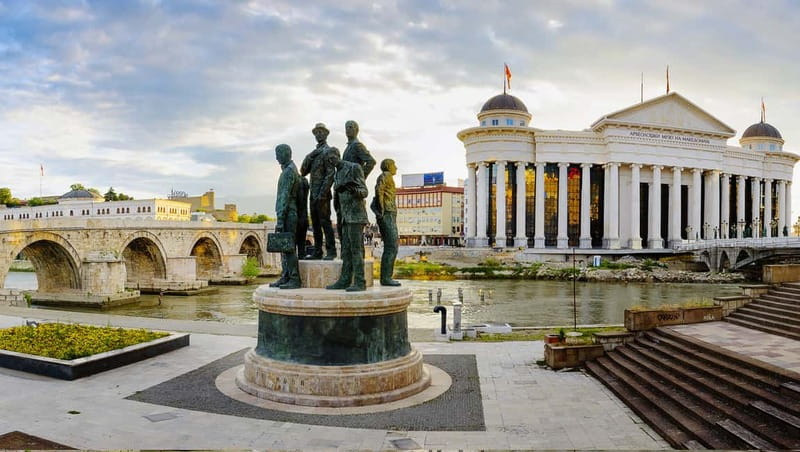
Skopje is one of those capitals that can surprise you. It has the “old city” feel in the center, but it also has a modern, monument-heavy side that you don’t get in every Balkan capital. What makes this day tour work is that the long road from Sofia isn’t treated like wasted time.
You start with pickup from a centrally located Sofia address and get into an air-conditioned vehicle. On the drive, the Bulgarian-side guide (and often the driver) keeps things moving with history and context you can carry into the walking tour. When you arrive, you’re not starting from zero.
The structure is simple: drive, short guided walking tour, then free time, then drive back. That rhythm is why this fits well as a first taste of North Macedonia—especially if you don’t want to commit to an overnight stay.
The 4-hour road each way: comfort, breaks, and border crossing reality
The itinerary expects about a 4-hour drive from Sofia to Skopje (and similarly back). Yes, it’s long. But you’re not just sitting. The guides are there, and you can ask questions while you roll along—how borders work, how the region’s politics and culture connect, and what to look for once you’re in Skopje.
A practical win: the vehicle is described as modern and air-conditioned, and the tour includes petrol, insurance, and parking. That means fewer logistical headaches for you on a day that already has a lot packed in.
Also, plan for the border day to be part of the story, not an interruption. In this kind of tour, the driver helps keep things smooth—like organizing passport checks and making sure you’re ready when it’s time. Some trips also include comfort stops on the way, which matters when you want to arrive in decent shape for walking.
Weather can change the feel of the drive. If it’s foggy, the scenery may be harder to read. Still, you’ll get the city perspective once you hit the fortress and the viewpoints.
You can also read our reviews of more tours and experiences in Sofia.
Fortress views before the first church stop: how to start Skopje with the right angle
The walking tour kicks off with a fortress stop and “sweeping views” of the city. This is a smart move. When you can see the layout from above, everything you’ll visit next makes more sense—where the river sits, where the old center clusters, and how the newer monuments fit into the wider city plan.
If you like photos, this is your moment. Even if you’re not trying to shoot a hundred pictures, getting oriented helps you appreciate what you’re seeing. Then the tour moves toward the Church of the Holy Savior, which is where Skopje’s spiritual-and-art side takes the foreground.
The timing is tight but purposeful. You’re not spending hours on one spot. You’re getting the “why this matters” framing, then rolling onward.
Church of the Holy Savior and the iconostasis: the art detail that people remember
The Church of the Holy Savior is a highlight because of its iconostasis, described as fantastic. Even if you don’t consider yourself a religious art expert, this kind of carved icon screen usually stops people in their tracks. It’s not just decoration—it’s visual storytelling, with layers of figures and symbolism placed so worshippers can follow the religious narrative.
What I like about this stop in a day tour is that it gives you a different kind of history than monuments and streets. Skopje’s “identity” isn’t only political or architectural. It’s also spiritual and cultural, and this church helps show that.
You’ll want to take a minute and look slowly rather than snapping and moving. The tour pace is designed to cover multiple major sites, but you can still give the iconostasis the attention it deserves in a short window.
Sultan Murat Mosque and the Old Bazaar: Ottoman traces you can still spot
Next up is the Sultan Murat Mosque and then the Old Bazaar. This is where Skopje shifts into the Ottoman-era layer of the city. The tour is explicitly set up so you can see remnants from the Ottoman Period, not just generic “old town” vibes.
The Old Bazaar tends to feel tactile. It’s a place of commerce, small streets, and everyday energy—more about how people live and trade than about big-ticket history statements. You’ll also hear how Skopje became one of the main trade centers in the Balkans, which helps explain why bazaars and markets mattered so much here.
One tip: go with curiosity. If you like browsing and chatting, use your eyes and ears. Many local guides point out details like the market area layout and how the city grew around trade routes. If you’re more of a “look, learn, move” person, you’ll still appreciate the way the Ottoman-era background sets up the rest of the walk.
Crossing the bridge to modern Skopje: why the change in style matters
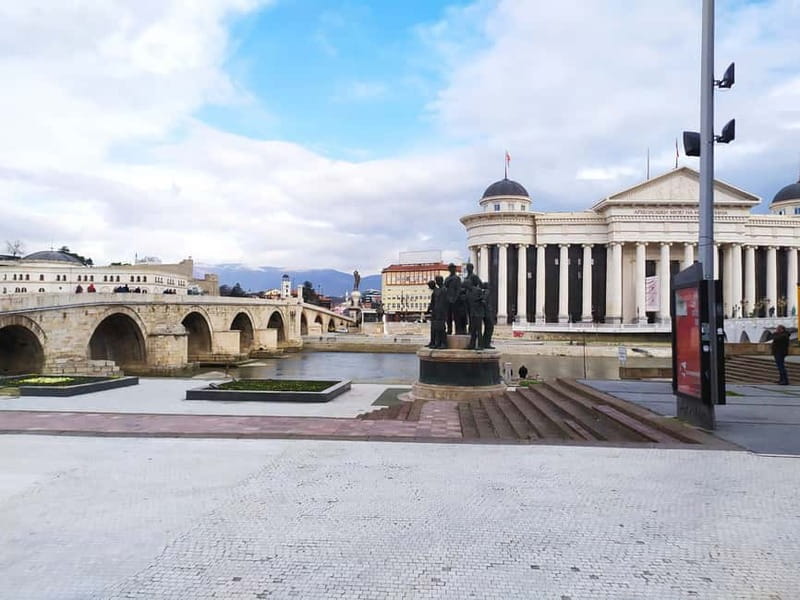
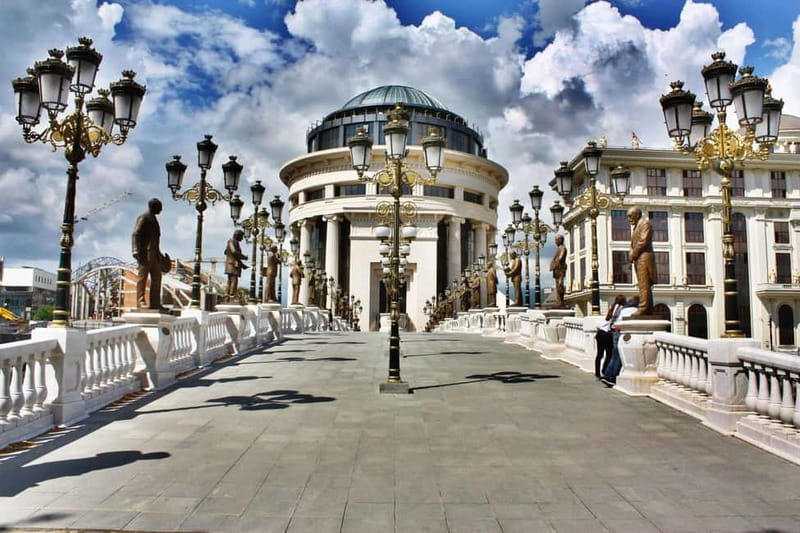
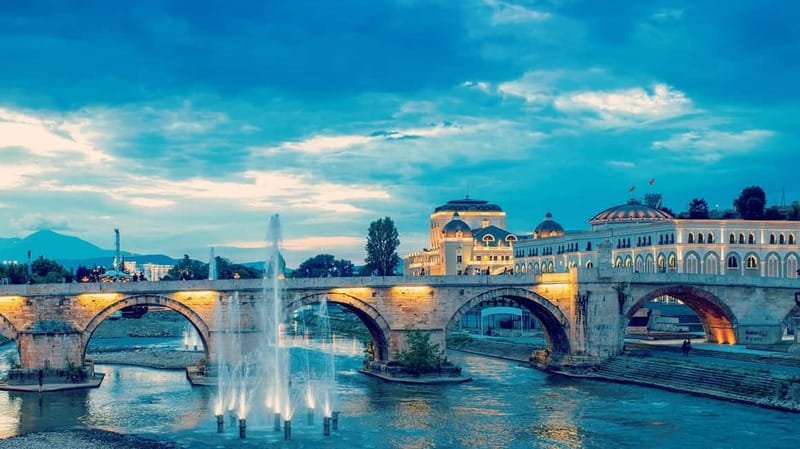
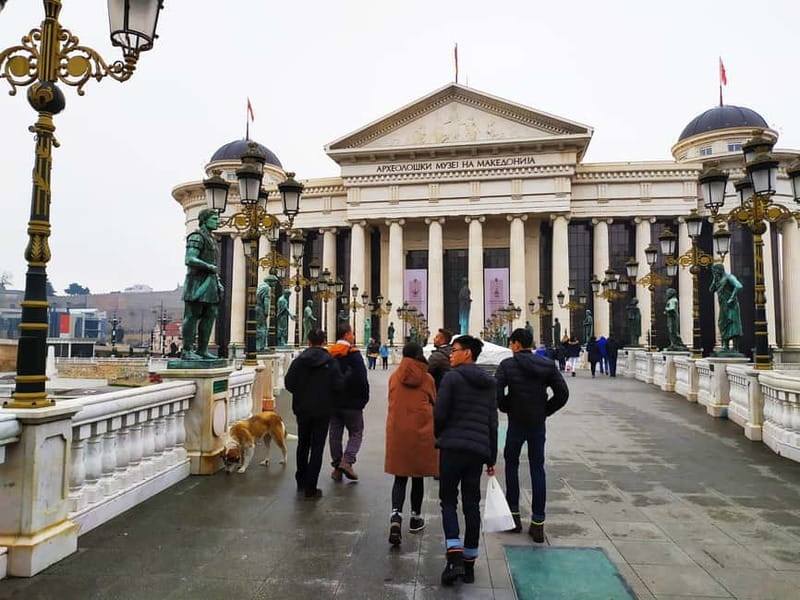
After the older center, you’ll cross a bridge into the modern part of Skopje’s center. That “crossing” is more than a route change—it’s a shift in how the city presents itself.
On one side you’re reading the old layers, shaped by empire history and markets. On the other you’re facing a city center built with bold statements and a clearer public image. The tour keeps you on track so you see both, without turning it into a long museum day.
This is also one of the reasons I’d recommend this tour for first-timers: you’ll learn what kind of capital Skopje is trying to be now, not only what it used to be. And once you see the contrast, the monuments land with more meaning.
Alexander the Great statue, neo-classical square, and Porta Macedonia
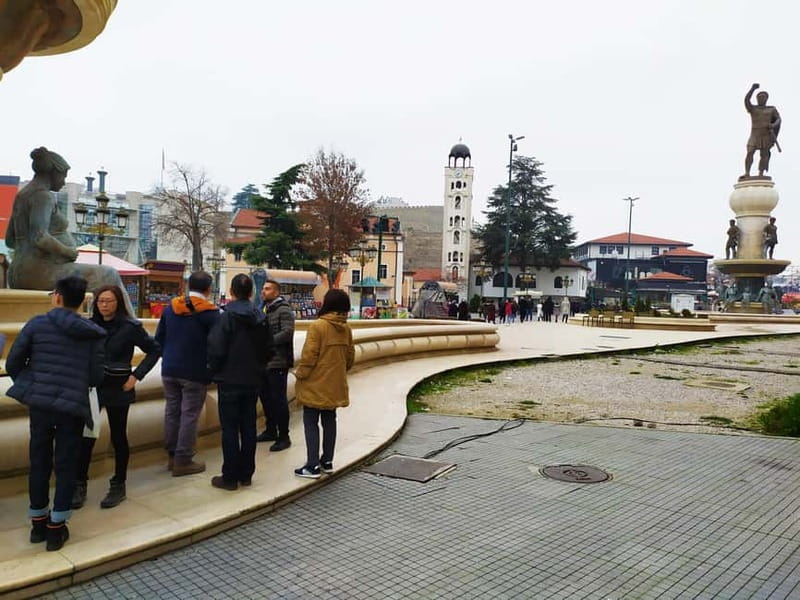
Skopje is famous for its big public art and major squares, and this tour hits several of them. You’ll visit the new neo-classical square with a huge statue of Alexander the Great. Then you continue toward the Mother Teresa memorial house. Finally, your guided walk ends at the newly built triumphal arch: Porta Macedonia.
Here’s how to make these stops more than photo ops: treat them like clues about identity. Alexander the Great and Mother Teresa are not random choices. They’re references to heritage and global recognition, and the city uses monuments to put that message into the skyline.
Porta Macedonia is especially useful as a “wrap-up” because it’s a strong visual marker. After you’ve learned about trade history, Ottoman traces, and modern rebuilding, the triumphal arch acts like the final chapter of a fast-moving story.
If you want better photos, watch the light and move a few steps. The walk covers enough ground that you can find small angles without breaking the flow.
Mother Teresa memorial house: the human side of the city’s identity
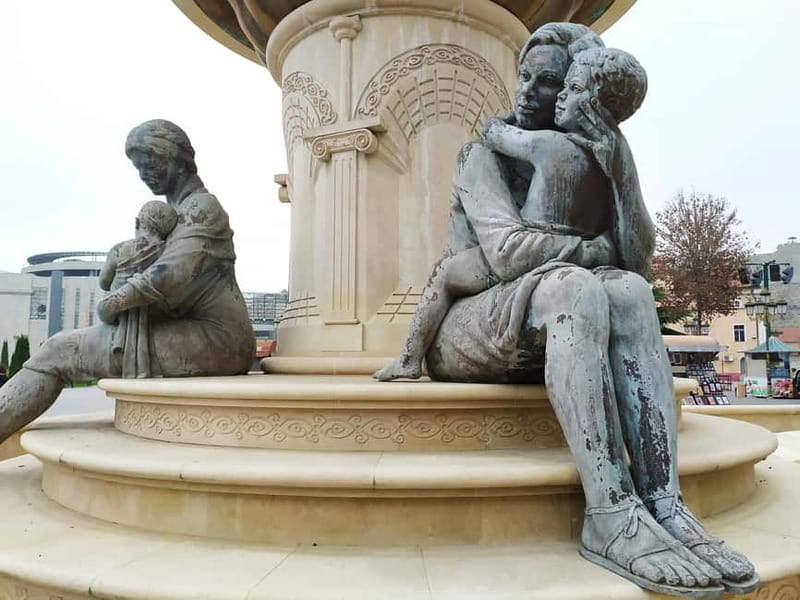
The Mother Teresa memorial house is part of the guided arc after Alexander’s square. In a day plan, that placement works. You start with fortress views and religious art, shift into Ottoman-era markets, then move into modern monumental spaces. Dropping Mother Teresa here gives you a grounded thread.
Even if you only spend a short amount of time, you’ll be able to connect why the city builds around certain figures. It’s not just about tourism signage. It’s about what Skopje chooses to highlight in its central public spaces.
If you’re pressed for time later, make sure you give this stop at least a real look—not just a quick pass. This is one of the places where the tour’s “why” explanations can stick with you.
The 2 hours of free time: lunch strategy and where to spend it
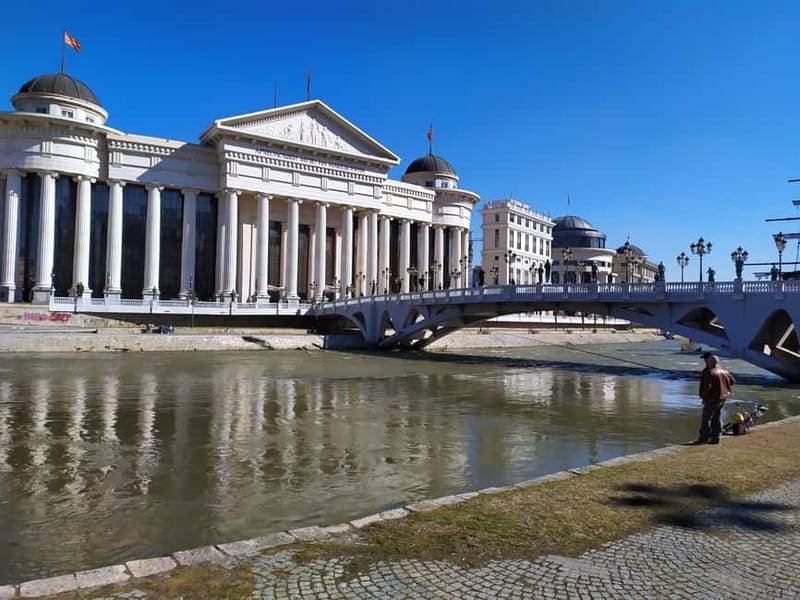
After the walking tour, you get about 2 hours of free time. The plan is built around getting you fed and giving you a breather so you can keep enjoying the city.
Your best move: pick one anchor activity. Eat a Macedonian lunch and use the time for photos around the central streets and squares you just learned about. This is the window to circle back if one site pulled you in more than expected—like the Old Bazaar area or the monument zones near the river.
Because meals aren’t included, this is also where you control your budget and preferences. If you like local comfort food, treat this time like a mini food mission: ask your guide for a couple of lunch directions during the guided portion, then follow up once you’re on your own.
Also, if the guided walk felt a bit fast for you, don’t worry. This free time is the pressure valve.
What the guides do best (and what to watch for)
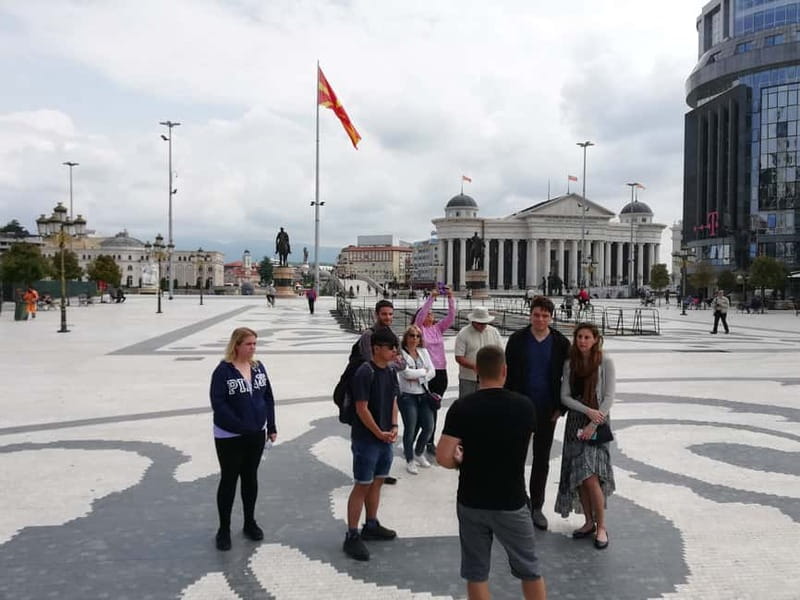
One of the biggest strengths of this tour is the guide pairing: Bulgarian-side guide plus a local from Skopje. That means the drive gives context across the region, while the walking tour gives you local detail in the neighborhoods and landmarks.
From the variety of guide experiences people describe, you can expect good conversation, not just a scripted talk. Names that come up include Sofia-side guides and drivers such as Theodore, Ivan, Kiko, and Krazi, and Skopje guides such as Lena, Lence Veljanoska, and Valentin/Velentin. The style can vary by person, but the common thread is passion and storytelling.
One consideration: sometimes the guided walking portion can feel a touch rushed, mainly because it’s only about 2 hours. If your listening style needs extra time—like if you prefer to stop for more questions—use the free period to ask follow-ups and take longer at your favorite spots.
Price and value: is $111 fair for what you get?
At $111 per person for a 12-hour day, you’re paying for more than transit. You’re paying for:
- pickup and drop-off in central Sofia
- an air-conditioned vehicle with petrol, insurance, and parking handled
- entrance fees included
- English live guiding on both sides (Bulgarian guide + local guide in Skopje)
- a structured walking tour plus time on your own
The value is strongest if you want guidance at both ends of the day. If you tried to do this solo, you’d spend time managing transport, figuring out sites, and finding context once you arrived. Here, you get the context delivered while you’re moving.
The only “cost” is time. It’s a long day and you won’t see everything in Skopje. But as a taster that connects the dots—old Ottoman remnants, religious art, and modern monument culture—this price makes sense.
Who should book this tour, and who might prefer to go slower
This tour is a good fit if:
- you’re short on time and want a first look at North Macedonia
- you like history explained in plain terms while you walk
- you want a guided day without the stress of planning transport
- you enjoy road trips, even when they’re long
It may not be ideal if:
- you dislike long drives or get tired easily
- you want deep, slow exploration of one neighborhood
- you prefer meals included or you hate deciding where to eat yourself
If you’re a “one city, one day” person, think of Skopje here as the headline, but not the whole book. You’re getting the storyline, not every page.
Should you book the Sofia to Skopje day trip?
If you want a day that feels organized, informative, and actually uses the road time, I’d say yes. The combo of fortress views, Holy Savior iconostasis, Ottoman traces at the Old Bazaar, and modern monuments like Alexander’s square and Porta Macedonia gives you a well-rounded snapshot of Skopje.
Book it if you can handle a long day and you’re happy using the free time for lunch and a bit of wandering. Skip it if you want a relaxed, slow pace or you’re the type who needs more than a 2-hour guided walk to fully enjoy a city.
Overall: it’s a solid value for an easy-to-understand introduction to North Macedonia—especially if you like cities where the old and new sit side by side.
FAQ
How long is the day trip from Sofia to Skopje?
The total duration is 12 hours, with a drive of about 4 hours each way and an approximate 2-hour walking tour in Skopje, plus 2 hours of free time.
What’s included in the $111 price?
The price includes two English-speaking tour guides (one from Bulgaria and one local in Skopje), pickup and drop-off in central Sofia, a modern vehicle with petrol and insurance, entrance fees, and parking fees.
Are meals included?
No. Meals and beverages are not included, but you’ll have 2 hours of free time to enjoy lunch on your own.
Do I need a passport or ID card?
Yes. You should bring a passport or an ID card.
What language is the tour in?
The live tour guide operates in English.
Is there free cancellation or a pay-later option?
There is free cancellation up to 24 hours in advance for a full refund, and you can reserve now and pay later.