REVIEW · PORTO
Best of Braga and Guimaraes Day Trip from Porto
Book on Viator →Operated by Living Tours · Bookable on Viator
Two Portuguese cities, one founding story. This day trip from Porto links Bom Jesus views, Braga Cathedral details, and Guimarães heritage into one smooth (and story-packed) morning-to-evening route. It is the kind of plan that helps you understand why northern Portugal matters, not just what to photograph.
I love the way the guide turns each stop into a living explanation of Portuguese origins, from Romanesque church traditions to fortress politics. I also like the pacing: short ticketed visits, then real breathing room in Braga and Guimarães for wandering and food on your own time.
A possible drawback to plan for: it is a long day with some walking and stairs, and if your group runs bilingual in practice, you may catch slightly less in your chosen language at a couple of moments. Add weather (Portugal can flip the switch fast), and you’ll want good shoes and a light layer.
In This Review
- Highlights at a Glance
- Entering The Day: Porto Timing, Meeting Point, and the Comfort Factor
- Price and Value: Why $71.35 Can Actually Feel Fair
- Bom Jesus Funicular: More Than a Religious Stop
- Braga Cathedral and the First Portuguese Power Move
- Braga Free Time: 60 Minutes for Food, Streets, and a Reset
- Guimarães: Birthplace Stories and Why the Town Feels Different
- Guimarães Castle: Broad Hill, Vikings, and the Square Keep
- Igreja de São Miguel do Castelo: A Small Church with a Big Tradition
- Guimarães Historic Centre: UNESCO Streets You Can Actually Enjoy
- The Guides Make the Difference: Stories, Patience, and Real Q&A
- Weather Reality Check: Rain, Stairs, and What Still Works
- Who This Trip Suits Best (And Who Might Want Another Option)
- Should You Book This Braga and Guimarães Day Trip From Porto?
- FAQ
- What time does the tour start, and where do I meet?
- How long is the tour from Porto to Braga and Guimarães?
- Is there an air-conditioned vehicle?
- What’s included in the ticket price?
- Is lunch included?
- What language is the tour offered in?
- Can I access the Guimarães castle walls?
- What is the group size?
- Frequently Asked Questions About This Experience
- Can I cancel for free?
Highlights at a Glance
- Bom Jesus funicular + water-powered engineering: a 19th-century ride powered by water, ending with big views.
- Braga Cathedral timing: an efficient visit that still gives you the key story beats and the Kings’ Chapel burial.
- Guimarães Castle on Broad Hill: the fortress core of Portugal’s early formation story.
- S. Miguel do Castelo tradition: Romanesque simplicity and a floor marked by founding-era warriors.
- UNESCO historic centre walk: iron verandas, granite balconies, archways, and old stones you can actually slow down for.
- Strong guide energy: guides like Christian, Castro, Philip, Pedro, and Jose get repeatedly praised for turning facts into a fun day.
Entering The Day: Porto Timing, Meeting Point, and the Comfort Factor
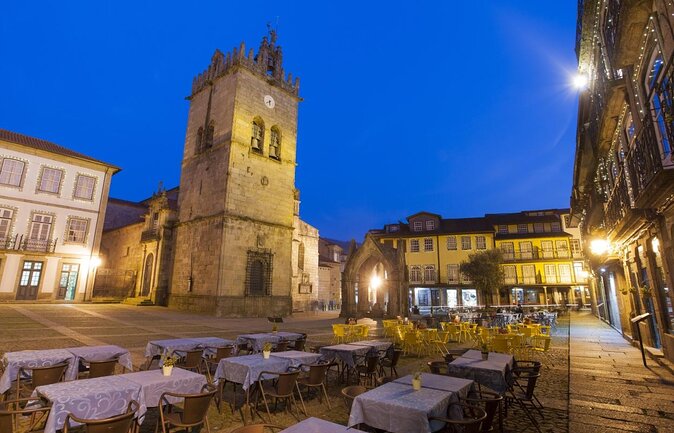
This tour starts early, with a meeting point at Calçada de Vandoma (near São Bento). The scheduled start time is 7:50am, and the day runs about 9 hours depending on traffic and on-site schedules. You’ll travel by air-conditioned minibus, which matters here because you’re moving between multiple hilltop sites and old-town streets.
One practical win: the plan does not rely on constant rushing. You get short, ticketed moments at the big sights, then breaks where you can reset. In particular, the Braga and Guimarães free time windows are long enough to find a snack, browse shops, or just walk without listening to your guide nonstop.
The group size is capped at 27, which keeps it manageable for meeting points and photo moments. It also tends to make the guide’s relationship with the group feel personal rather than robotic.
You can also read our reviews of more tours and experiences in Porto.
Price and Value: Why $71.35 Can Actually Feel Fair
The price is listed at $71.35 per person for a roughly 9-hour day. On paper, that could sound like “a lot for a day trip.” But here’s the part you should do the math on: admissions and structured guidance are built in.
You’re covered for:
- Entrance to Bom Jesus sanctuary
- Braga Cathedral admission
- Guimarães Castle admission
- A walking tour through Guimarães UNESCO historic centre
- Professional guide specialized in the destination
- Round-trip air-conditioned transport across the Minho region
Lunch is not included, so you’ll still need to budget a meal. But if you were doing this independently, you’d pay for transport, entry tickets, and time spent figuring out what matters. This format is geared toward helping you make those decisions before you arrive.
Bom Jesus Funicular: More Than a Religious Stop
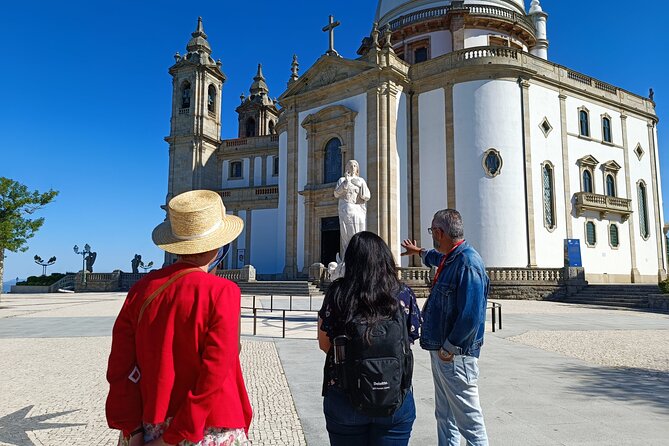
Bom Jesus is famous for spiritual reasons, but what you’ll really notice first is the design and the engineering behind it. You’re going to see the famous staircase and understand why it is tied to the vertical funicular tram idea in Portugal.
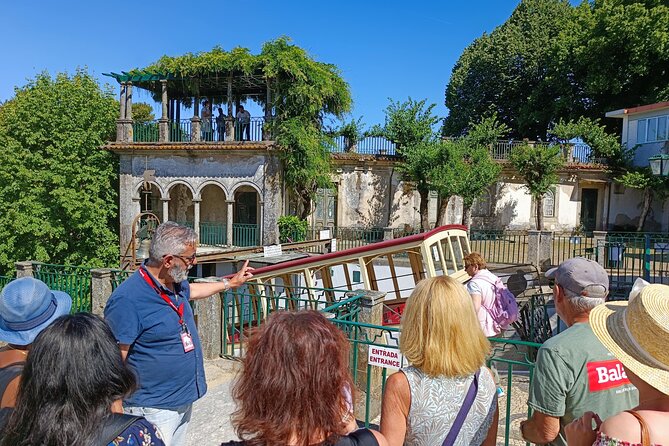
A key detail worth knowing before you go: the funicular is water-powered and linked to a 300-meter ramp completed in about 3 minutes. That is not just trivia. It changes how you experience the site because you’re seeing a functional piece of 19th-century engineering, not just decorative architecture.
The staircase itself is loaded with meaning. The route includes 17 landings with fountains, allegorical statues, and Baroque-style decoration. The themes move through Stations of the Cross, the Five Senses, the Virtues, and scenes connected to Moses and the biblical figures tied to Jesus’ condemnation. You’ll also want to take in the view from the bottom, because the visual effect is part of the experience and your first vantage point helps you read the whole composition.
Practical note: even though the scheduled visit is about 30 minutes, plan time to pause. The staircase is the headline, but the way the church sits and the granite details land in layers as you walk.
Braga Cathedral and the First Portuguese Power Move
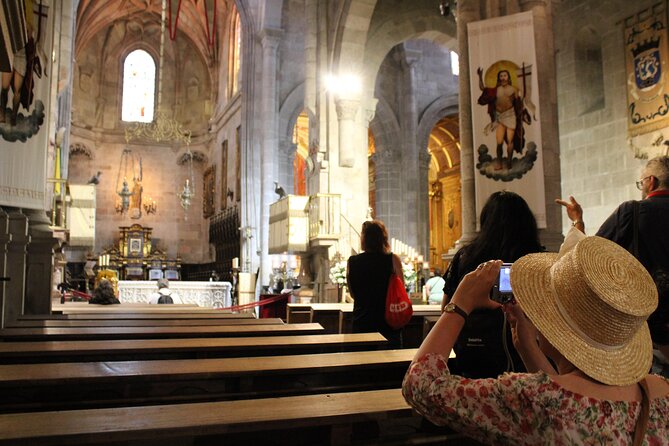
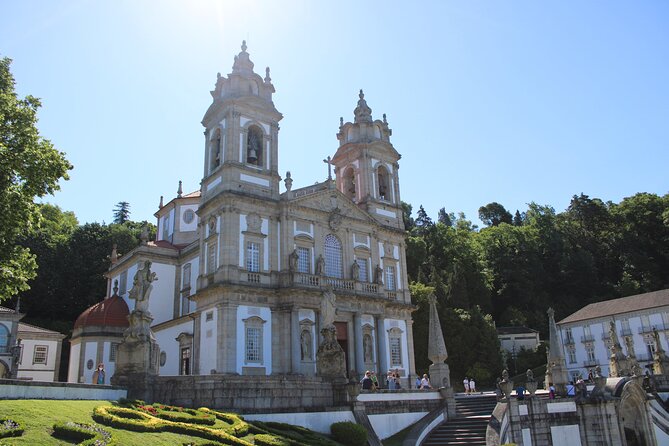
Next up is Se de Braga, often described as the first Portuguese cathedral. The dates matter: work began toward the end of the 11th century, and it was consecrated and dedicated to the Virgin Mary in 1089.
This stop has a strong “history with names” feel. You’ll learn about the cathedral’s role in the power balance with Santiago de Compostela, and you’ll also be pointed toward the Chapel of Kings, where D. Henrique and D. Teresa (parents of Portugal’s first king) are buried. It is one of those moments where you realize the country’s identity was being shaped long before modern borders became the story you usually hear.
The allotted time is about 30 minutes, and that’s enough if you go in with a plan. Focus on the main interior features and the burial chapel connection rather than trying to see every corner. If you’re the type who likes to take notes and sketch details, bring a small notebook.
Braga Free Time: 60 Minutes for Food, Streets, and a Reset
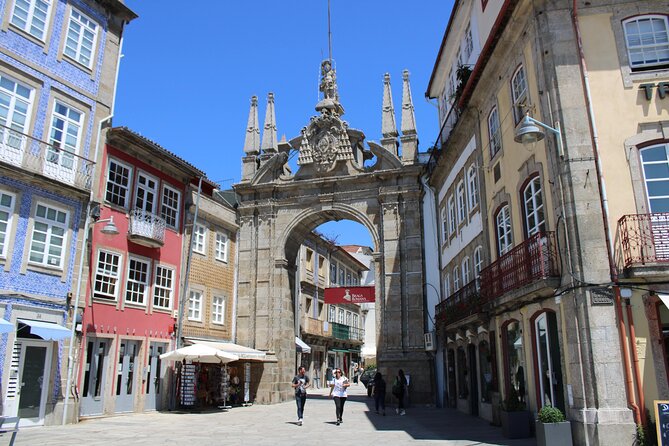
After the cathedral, you get about 1 hour in Braga. This is not a throwaway stop. It is your chance to turn the facts you heard into lived experience: look for local shops, walk the streets without a script, and choose lunch whenever you want.
What to do with an hour?
- Find a quick sit-down meal or a simple snack, since lunch is not included on the tour.
- Do a slow circuit near the cathedral area so you connect buildings to the story your guide just told.
- If the weather cooperates, pop into a cafe just to watch street rhythm for a few minutes.
Braga is compact enough that you can feel like you explored even in one hour—so long as you do not get stuck deciding between ten options.

Guimarães: Birthplace Stories and Why the Town Feels Different
Then you drive to Guimarães, often called the birthplace of Portugal because Afonso Henriques was born here. You’ll have about 2 hours before the most focused sights—enough to orient yourself and settle into the historic atmosphere.
Guimarães feels different from Porto and Braga. The streets and buildings carry a stronger sense of medieval continuity, helped by the town centre being tied to identity and restored heritage. Even if you only spend a short time here, the vibe makes the founding-story theme feel believable rather than academic.
If you’re traveling with kids or anyone who gets tired of constant walking, this is where the break becomes important. You can step back, find a shop, and recharge before the castle and church stops.
Guimarães Castle: Broad Hill, Vikings, and the Square Keep
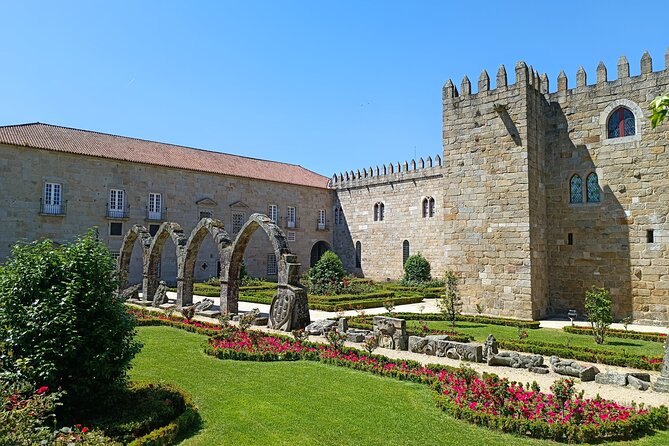
The castle is the big fortress moment on the schedule, with about 30 minutes allotted. The hill it sits on is called Monte Largo (Broad Hill), and it’s treated like the nucleus of Portugal’s early nationhood.
Here’s the story your guide will likely connect for you: the site was ordered for refuge and defense in the late 10th century era by Mumadona, countess of Galicia, because the population faced attacks arriving by sea (including Vikings) and raids from the south (including Muslim territories). Later, when Count Henry took control of Portucalense, he ordered a stronger construction—leading to the defensive structure you see today.
What you can look for inside the castle complex:
- A square keep dominating between four corner towers
- The feeling of layered defense rather than a single “movie castle” layout
- The way the geography helps you understand why this spot mattered
One important consideration: access is limited. The walls have prohibited access, and the castle visit is not about walking the top. So set your expectations accordingly. You’ll still get the key fortress experience; you just won’t be doing the full ramparts walk.
Igreja de São Miguel do Castelo: A Small Church with a Big Tradition
This stop is short—about 10 minutes—but it’s memorable if you like “small details that change the meaning.” The Igreja de São Miguel do Castelo is Romanesque in style and reduced in size, with simplicity in decoration.
The tradition you’ll hear connects the church to the founding period: it is said the church could go back earlier than the 13th century and would have been where Count Dom Henrique baptized his son, the first king, Dom Afonso Henriques.
Then comes the part that makes you look down. Under the floor, buried within the church area, are the remains of great warriors from the nation’s founding period. Even if you only get a quick look, that floor tradition gives the whole day a more personal, human edge.
Guimarães Historic Centre: UNESCO Streets You Can Actually Enjoy
The final major block is the Centro Histórico de Guimarães, a UNESCO World Heritage site since 2001. This isn’t just a stamp on a brochure. It’s about originality and authenticity in how the restoration was done, so the old town still feels coherent.
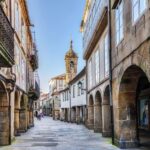
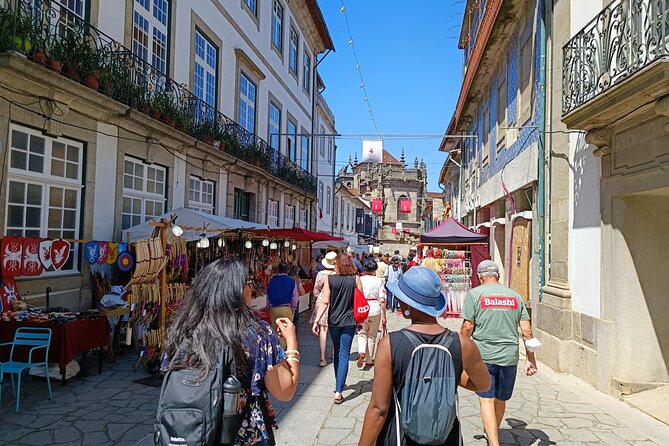
Expect a walk through the area that used to lie within the city walls. You’ll notice iron verandas, granite balconies, porticos, arches joining narrow streets, and paving stones worn smooth by time. Towers and cloisters add to the sense that this is medieval space you can still navigate.
A good way to treat this walk: let the guide set the big picture, then use the architecture to keep your own pace slow. If you find yourself rushing for photos, pause for 60 seconds and just look at how the arches and building fronts line up.
The scheduled time is about 30 minutes for this walking tour, which is enough for the essentials without turning it into a workout.
The Guides Make the Difference: Stories, Patience, and Real Q&A
One of the biggest reasons this trip scores high is the guide approach. People repeatedly praise guides for being personable and patient, with facts that feel organized rather than dumped.
Names you might hear associated with this experience include Philip, Christian, Castro, Pedro, Jose, and Jorge Mendoza. What ties them together in the feedback is the ability to connect what you’re seeing to how Portugal formed—then handle odd questions with solid answers.
You’ll also benefit from guides who stay alert to the group, checking that everyone is following and that the pacing feels right. A couple of specific “best moment” patterns show up: bus explanations timed to the next stop, and direct time management that protects your ability to wander during the breaks.
Language note: English is offered, but the tour may operate bilingual in practice. If you’re tightly focused on catching every detail in English, ask when you book how bilingual your departure will be handled.
Weather Reality Check: Rain, Stairs, and What Still Works
Even with good planning, this part of Portugal can be rainy. If the day is wet, Bom Jesus and the castle areas involve surfaces where you’ll want to watch your step. The schedule still tends to keep moving—so the best strategy is practical: wear shoes that handle damp stone, and bring a light layer you can work with quickly.
That said, the tour is designed around famous stops. Even when the sky isn’t ideal, you’ll still get the core architecture and the founding-story context. Just don’t expect perfect views on a stormy day—your guide will still help you get the meaning right.
Who This Trip Suits Best (And Who Might Want Another Option)
This is ideal if:
- You want a structured day that covers Braga + Guimarães without planning tickets and timing yourself
- You enjoy history when it comes with clear connections and names
- You like a mix of guide-led stops and short free-time wandering
It may be less ideal if:
- You need long, unstructured time in one place (this is built for multiple sites in one day)
- You want castle wall access on top of the ramparts (those parts are prohibited)
- You’re sensitive to bilingual group dynamics, since language delivery can vary during the day
If you love slow travel, you’ll probably want a second day later in Portugal’s north—because this trip is packed. But as a first taste from Porto, it’s a smart sampler.
Should You Book This Braga and Guimarães Day Trip From Porto?
Book it if you want the most efficient way to understand why northern Portugal matters—without paying for separate transport, guides, and tickets. The price feels reasonable because you’re not just buying entry to buildings; you’re buying a guided explanation that makes the architecture and the founding story stick.
Skip it or choose something else if you hate stairs, dislike rainy-day wandering, or want more time for shopping and lunch without a schedule. Also factor in that the castle walls are not accessible for a full “walk the top” experience.
If you fall into the sweet spot—history-minded, moderately active, and curious—this is the kind of day trip you’ll remember for the stories as much as for the sights.
FAQ
What time does the tour start, and where do I meet?
The start time is 7:50am. You meet at Calçada de Vandoma, 4000 Porto, Portugal, near São Bento Train Station.
How long is the tour from Porto to Braga and Guimarães?
The duration is approximately 9 hours, and it can shift due to local traffic, visit schedules, and other on-the-ground timing.
Is there an air-conditioned vehicle?
Yes. You travel in a comfortable air-conditioned minibus.
What’s included in the ticket price?
Transportation, a professional guide, admission to Bom Jesus Sanctuary, admission to Braga Cathedral, admission to Guimarães Castle, and a walking tour in Guimarães are included. A Porto city walking tour is also available from the day after your experience.
Is lunch included?
No. Lunch is not included, so you’ll need to plan and pay for your own meal during the free time in Braga and/or Guimarães.
What language is the tour offered in?
The tour is offered in English. The tour may be conducted in one language, but it can also be bilingual with a second language used.
Can I access the Guimarães castle walls?
No. Access to the walls is prohibited and castle access is limited.
What is the group size?
The maximum group size is 27 travelers.
Frequently Asked Questions About This Experience
Can I cancel for free?
Yes, free cancellation is available. You can cancel up to 24 hours in advance for a full refund.