REVIEW · BELGRADE
Belgrade Sightseeing Half-Day Trip Old and New Belgrade
Book on Viator →Operated by VICTOR TOURS · Bookable on Viator
Belgrade in three hours needs good steering. This half-day tour is interesting because it mixes Old Belgrade fortress walks with a modern New Belgrade architecture tour, all wrapped into one comfortable plan with pickup and an English-speaking guide. I love how the route forces you to get your bearings fast—starting at Kalemegdan and ending at Republic Square—while still giving you real context for Serbia’s past. I also like that you get inside the big centerpiece stop at Temple of Saint Sava. One drawback: the whole day is timed tightly, so you’ll see some places from the car and spend most of your real walking inside the fortress area.
Because the tour is private (your group only) and run in a small, air-conditioned vehicle (minivan or sedan), you don’t spend the day waiting around. You can also tell the guide has room to adjust the pace—especially on hot days—so it feels practical rather than rushed. Still, if you’re hoping for long “wander on your own” time, this is more of a high-quality sampler than a slow sightseeing marathon.
You’ll want to book this if it’s your first time in Belgrade, you’re short on time, or you want a guided story that connects monuments, neighborhoods, and the city’s political shifts. Your walking is moderate: Kalemegdan involves stairs and uneven ground, so comfy shoes matter.
In This Review
- Key highlights worth planning for
- Entering Kalemegdan and Belgrade Fortress: the city’s best “start”
- Pobednik, clock gates, and Ottoman-era details in the fortress walk
- New Belgrade’s brutalist blocks and the concrete-utopia angle
- Dedinje mansions, Rajko Mitić Stadium, and House of Flowers
- Temple of Saint Sava: why the dome dominates the city
- Nemanjina Street, Parliament, Terazije, and Republic Square
- Price and logistics: does $150.85 feel fair?
- How to pace yourself on a hot, walk-and-look day
- Should you book this Old and New Belgrade half-day tour?
- FAQ
- How long is the Belgrade Old and New half-day tour?
- What time does the tour start?
- Is hotel pickup included?
- Is this tour private?
- What language is the tour guide?
- What vehicle will I ride in?
- Which entrance fees are included?
- Is a meal included?
- What fitness level do I need?
- Can I cancel for a full refund?
Key highlights worth planning for
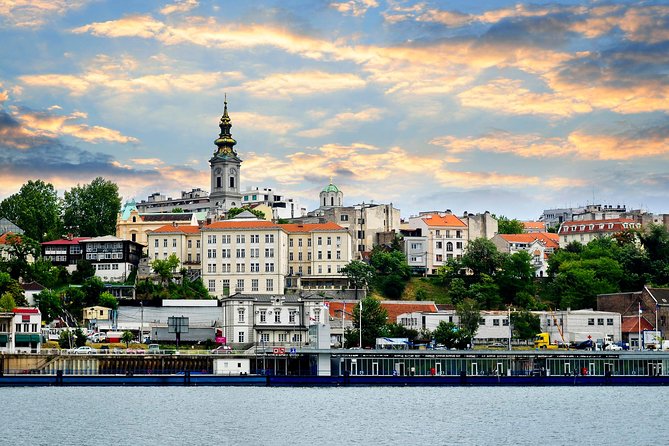
- Kalemegdan fortress walls and two Orthodox churches in one focused walk, plus a jaw-dropping rivers view
- Pobednik and the clock-gate area—ideal for photos without needing a full day
- New Belgrade’s socialist-modern architecture (including Sava Center and the Palace of Federation) seen in context, not as random buildings
- Dedinje mansions, stadium rivalry, and Tito-linked history at House of Flowers
- Temple of Saint Sava’s scale: the dome and crypt make it feel bigger than the photos
- A short, efficient route ending at Republic Square, where you can keep exploring after the tour
Entering Kalemegdan and Belgrade Fortress: the city’s best “start”
The tour kicks off with hotel pickup, then moves quickly to Kalemegdan, the oldest and largest city-park core. You enter Belgrade Fortress from Leopold’s Gate and pass by layers of the city’s past—Roman remains from Singidunum, then medieval walls built on top of them. It’s the kind of start that turns Belgrade from a collection of sights into one place with a story.
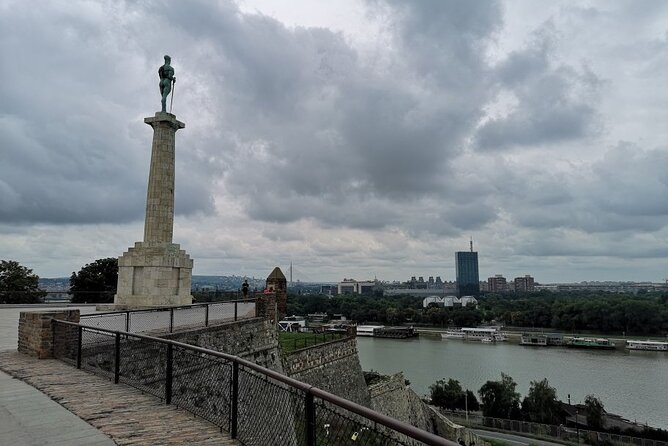
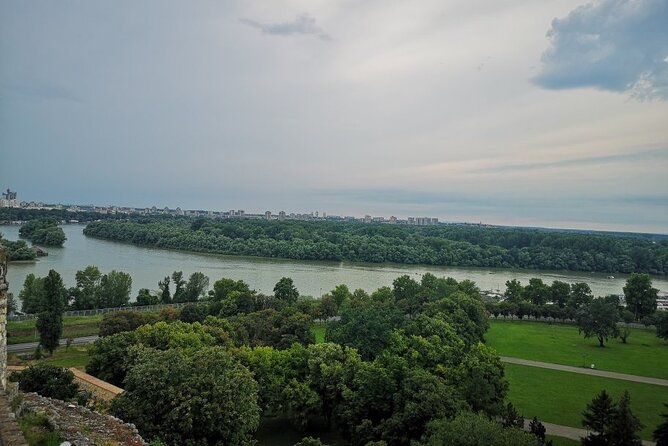
What I like most here is the sense of scale. From the fortress, you get the classic view of the Sava and Danube meeting—two rivers, one city, and suddenly you understand why Belgrade has always been a prize. The walk also includes the fortress gates and towers like Zindan Gate and Despot’s Gate, plus Jakšića tower, which date back to the 15th century. Even if you’re not a “fortification person,” the visuals make the history stick.
The tour then visits two Orthodox churches inside the fortress area: the Chapel of St Petka and Ružica Church (Virgin Mary Church). Expect free time around this part (about 30 minutes), so it isn’t just “look from outside.” On a practical level, this is also your main walking block of the morning, so pace yourself and save your energy for photos.
You can also read our reviews of more tours and experiences in Belgrade.

Pobednik, clock gates, and Ottoman-era details in the fortress walk
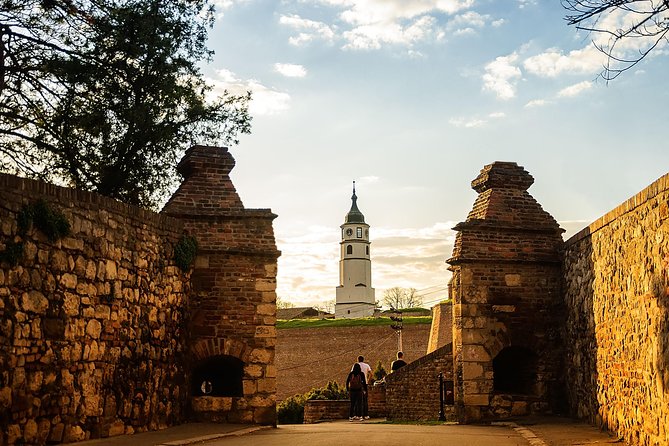
After the church area, you continue through the upper-town section and pick up major landmarks that Belgrade repeat-visitors still point out. You’ll see the Pobednik monument by Ivan Meštrović—one of the easiest “Belgrade identity” markers to recognize in photos. The guide also points out smaller-but-meaningful features such as the Roman well and the King’s Gate.
The tour keeps shifting through time. You’ll pass sights like the Damat Ali Pasha Tomb, the Clock Gate (Sahatkapija), and the Clock Tower (Sahatkula). If you like architecture details, this part feels like a guided scavenger hunt: you’re moving, looking, and learning without needing extra tickets or museum time beyond what’s already built into the plan.
One of the nicest touches is that the route naturally brings you back toward the park. You also catch monuments scattered around Kalemegdan, including the Monument of Gratitude to France by Ivan Meštrović and busts of notable Serbian figures. Then you rejoin the vehicle, which is smart because you’ll be ready for a drive-and-look rhythm by then.
New Belgrade’s brutalist blocks and the concrete-utopia angle
Once the fortress ends, the tour pivots to the city’s post-WWII and socialist-era transformation. This is where New Belgrade can either feel like “too many buildings” or a clear lesson—here, it’s the second one. You’ll ride past major landmarks tied to planning and politics, including the Ex-Central Committee of the Communist Party (also known as the Palace of Federation), Genex Tower, and the Sava Center. These aren’t random stops; the guide frames what they represent.
A standout detail: New Belgrade is linked to an architecture-focused exhibition titled Toward a Concrete Utopia, which the tour notes as tied to MoMA in New York. I’d treat this as a cue: if you’re even a little curious about how societies build after major upheaval, this portion gives you a useful lens.
Here’s the main trade-off. You’ll primarily see New Belgrade from the vehicle as you move between points, not from long walking breaks on every corner. That’s not bad—it keeps the tour efficient—but if your dream is to wander streets for hours, you may want to pair this with a separate self-guided architecture walk later.
Still, for first-timers, this is a big win because it prevents New Belgrade from feeling like an afterthought. You come away noticing how socialist-modern design and later business development shaped the skyline.
Dedinje mansions, Rajko Mitić Stadium, and House of Flowers
After crossing the Gazela Bridge, the tour heads to Dedinje, Belgrade’s more luxurious residential area, with mansions tucked into greenery around Topčider Hill. The guide explains the properties’ history and what happened during Serbia’s turbulent 20th century—this is where “architecture” turns into “people and politics.”
Then the route connects that setting to sport and identity. You’ll see Rajko Mitić Stadium, home of Red Star Belgrade, and hear the rivalry with Partizan Belgrade—lasting more than 70 years, with the rival stadium across a small hill. If you like sports history, this quick stop turns into a surprisingly effective story of how teams mirror the city.
The emotional tone shifts again at the Museum of History of Yugoslavia and the House of Flowers. This is the resting place of Josip Broz Tito. Even without deep museum time in this half-day format, this stop matters because it anchors the tour’s theme: Belgrade is not just about monuments—it’s about what different eras decided to remember.
Temple of Saint Sava: why the dome dominates the city
From Dedinje, you head to Vračar for one of Belgrade’s biggest religious landmarks: the Church of St. Sava, often called the St. Sava Temple. The dome is visible from all over the city, and when you’re standing near it, you feel why. The tour gives you numbers that make the scale clear: construction began in the 1930s on the site where Ottoman forces burned the relics of St. Sava (1175–1236).
It’s described in Serbian-Byzantine style and occupies about 3,500 m² at floor level, with additional space in galleries. The dome is 70 m high, and the gilded cross adds another 12 m, bringing the total height to around 82 m. That’s a lot of vertical drama for a half-day tour, and it’s one of the reasons this stop is included with admission.
You also get a look into what’s beneath. Beneath the floor are vaults and a decorated crypt of Saint Sava. The tour allocates around 30 minutes here, so plan to see the main interior focus rather than trying to take in every angle like you’re touring a full-day cathedral. This is exactly the kind of place where a guide’s quick orientation helps you notice what matters.

Nemanjina Street, Parliament, Terazije, and Republic Square
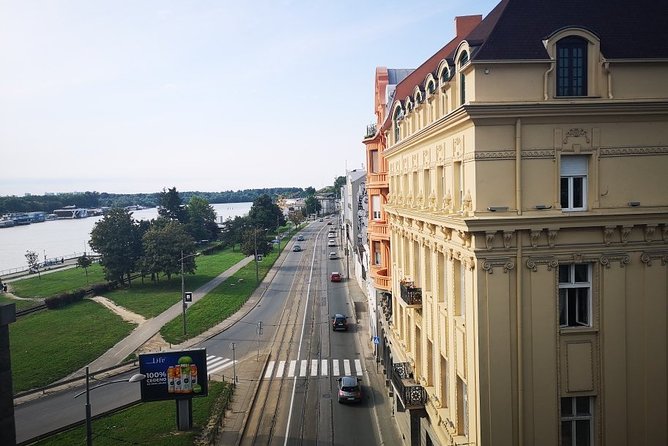
After the Temple, the tour returns to a more civic Belgrade: Vračar connects into central areas via Slavija Square and Nemanjina Street. This stretch is packed with state governmental institutions, and the guide notes pre-war architecture. It’s the “how the city ran itself” section of the day, and it pairs well with everything you saw in the fortress and Tito-linked stops.
You then stop in front of the House of the National Assembly of the Republic of Serbia for a short photo break. You also see Old and New Royal Palaces nearby, with stories about the dynasties that ruled Serbia in the 19th and 20th centuries. Time is short, but a quick break is enough here because the buildings’ forms do most of the talking.
Next, Terazije Square brings you another identity marker: a 19th-century white stone fountain and the Moskva Hotel. Finally, the tour ends at Trg Republike (Republic Square), the capital’s central hub. You’ll hear about major cultural institutions around the square, including the National Museum and National Theatre, plus why Prince Mihailo matters in Serbia’s modern story.
This ending is practical. Republic Square is a smart place to drop you because it’s an easy launching point for dinner and a second walk on your own.
Price and logistics: does $150.85 feel fair?
At $150.85 per person for roughly 3 hours, this tour sits in the “not cheap, but often worth it” category. The value comes from what’s included: pickup and drop-off, transport in an air-conditioned small vehicle, a professional English-speaking guide, parking and fuel, a bottle of water, and admission for the St. Sava Temple.
If you’ve ever tried to piece together Belgrade by yourself, you know how much time evaporates between neighborhoods. Here, the route compresses Fortress + Temple + government center + New Belgrade highlights into one plan. That matters even more if you’re on your first visit or you’re trying to handle a tight schedule.
The main thing to watch is time density. Some people report it can feel shorter than advertised, and the structure confirms why: there are several drive-by segments (New Belgrade, Dedinje, plus central streets). Still, you get enough stops to remember the day, especially if you focus on photos and key viewpoints rather than trying to “do everything slowly.”
For the best value, bring realistic expectations: this is a guided sampler with high payoff, not a slow museum tour.
How to pace yourself on a hot, walk-and-look day
Your day includes a fortress walking segment plus short breaks at major sights. The tour is listed for moderate physical fitness, which usually means: expect stairs and uneven ground at Kalemegdan, and don’t plan on long museum-style sitting breaks.
On warmer days, the guides are used to adapting—one of the repeatedly praised details in actual experiences is finding shaded areas and encouraging people to drink water. You’ll also get a bottle of water with the tour, which is a small but genuinely useful comfort.
Practical packing list:
- Comfortable shoes for Kalemegdan stairs and cobbles
- Sunscreen and a hat (Belgrade mornings can move fast)
- Camera/phone space, since rivers and domes are photo magnets
If you want to maximize what you learn, use the car time too. The guided explanations during transitions are where the neighborhoods connect.
Should you book this Old and New Belgrade half-day tour?
I’d book it if you want a guided “Belgrade map” in one morning: Kalemegdan fortress for the rivers view, St. Sava Temple for the scale, and enough New Belgrade architecture and central civic sights to feel like you understand the city’s shifts. It’s especially good for first-timers and layovers, because the ending at Republic Square helps you keep exploring right after.
I’d skip it or add a day elsewhere if you’re the type who hates drive-by sightseeing. If your ideal day is long, wandering exploration with lots of time on foot in each neighborhood, you’ll probably want additional time beyond three hours.
Overall, this tour is a smart way to start your Belgrade trip: you get the big “how the city got here” moments without burning your whole day.
FAQ
How long is the Belgrade Old and New half-day tour?
It’s about 3 hours.
What time does the tour start?
The start time is 9:30 am.
Is hotel pickup included?
Yes. Pickup is free from any hotel or Airbnb or a pension up to 5 km from Republic Square, and free from Belgrade port. Pickup further away may include a supplement.
Is this tour private?
Yes. It’s listed as a private tour/activity, so only your group participates.
What language is the tour guide?
The tour is offered in English.
What vehicle will I ride in?
Transport is by air-conditioned minivan (4–7 pax) or a private sedan car (1–3 pax), depending on your group size.
Which entrance fees are included?
Entrance to the St. Sava Temple is included. Other mentioned sightseeing stops list admission ticket free.
Is a meal included?
No. A bottle of water per person is included, but meals are not listed.
What fitness level do I need?
The tour says you should have a moderate physical fitness level, since there is walking involved.
Can I cancel for a full refund?
Yes. Free cancellation is allowed up to 24 hours in advance for a full refund. After that cutoff, refunds are not available.