REVIEW · TASHKENT
Shymkent Day Tour from Tashkent
Book on GetYourGuide →Operated by Asli Travel · Bookable on GetYourGuide
Shymkent is a quick way to feel a second country. In one day you get Shymkent’s historic core plus Kazakhstan’s memorial places, with stops along the way that lean into the Great Silk Road story. I especially like the mix of sights that range from the Citadel viewpoint to the serious Museum of Political Repression, and the day still feels efficient thanks to private, air-conditioned transport. The one real catch is time: the border crossing can eat hours, so your actual day may run longer than the listed 8.
This is a private group tour (up to 3 in your group) with pickup from your hotel/airport/train station in Tashkent, and then a car change when you reach the crossing. Your English or Russian guide stays with you for the sightseeing in Shymkent, but the border itself is handled by you on foot. For a smooth day, plan for patience, wear comfortable shoes, and expect a little logistical hustle.
In This Review
- Key things I’d circle on your plan
- Why Shymkent Feels Like Kazakhstan in a Single Day
- The Tashkent-to-Shymkent Day: Timing, Border Reality, and Comfort
- Kazygurt Sacred Mound and the Noah’s Ark Legend Stop
- Shymkent’s Citadel: Old Walls, Old Mosque, and a View You Can Feel
- Ordabasy, Zher Ana, and Independence Square: Symbols You Can Walk Through
- Parks With Meaning: Abay Park, Alley of Glory, and WWII Memorials
- Arbat Shymkent and the Upside-Down House: A Needed Breather
- Museum of Political Repression: Powerful, Somber, and Best With Context
- St. Nicholas Cathedral and the Russian Orthodox Church Perspective
- Photo Stops on the Way Back to Tashkent: Green Camps and Farm Country
- Price and Value: What $250 Per Group Really Buys
- Should You Book This Shymkent Day Tour From Tashkent?
- FAQ
- How long is the Shymkent day tour from Tashkent?
- Is this tour private?
- Do I get pickup in Tashkent?
- Do I cross the border with the guide?
- Will I be in an air-conditioned vehicle?
- Are entrance tickets included for the monuments and museums?
- Is lunch included?
- What language is the live guide?
- Is the tour wheelchair accessible?
- Can I bring drinks or food in the vehicle?
- What should I bring?
- Is free cancellation available?
Key things I’d circle on your plan
- Private transport with drivers in both countries, including an air-conditioned ride throughout
- A full Shymkent day built around the Citadel, major parks, and key cultural stops
- Kazygurt and Noah’s Ark style legends on the road to Shymkent
- A border crossing you complete yourself, so build in time and calm
- A somber stop done with context at the Museum of Victims of Political Repression
- Time-saving flexibility with a guide who can adjust pacing to your interests
Why Shymkent Feels Like Kazakhstan in a Single Day
Shymkent is Kazakhstan’s second-largest city and the administrative center of the South Kazakhstan region. What I like about visiting it from Tashkent is that you’re not just ticking a city off a list. You’re stepping into a different national rhythm: Central Asian street life, Soviet-era layers, and modern symbols tied to independence.
The tour’s best trick is balance. You start with places that explain where people lived and traveled, then you move into city landmarks you can actually walk and photograph. Yes, there’s a heavy moment at the repression museum, but it’s paired with parks and memorial spaces that put tragedy into perspective, plus lighter stops like Arbat Shymkent and its playful attraction.
If your ideal day includes a few hours of walking, a couple of viewpoints, and a guided narrative that helps you connect the dots, you’ll likely enjoy the flow.
You can also read our reviews of more tours and experiences in Tashkent.
The Tashkent-to-Shymkent Day: Timing, Border Reality, and Comfort
This experience is priced for a private group up to 3 and is listed at 8 hours, but here’s the honest planning note: the border is the wildcard. You transfer from your pickup point to the border, handle the crossing on foot, and then meet the driver on the Kazakhstan side. Passport checks can be repeated, and queues can slow things down.
Build your schedule with a cushion. People have reported everything from a relatively quick crossing to a longer, more chaotic experience that can stretch the whole day closer to 10–12 hours. If you have a flight or a strict deadline in Tashkent or onward, give yourself buffer time and keep your guide in the loop.
Logistics that matter:
- You ride in an air-conditioned vehicle.
- The car changes at the border: one driver in Uzbekistan and another in Kazakhstan.
- Money exchange on both sides is described as the same, so you’re not trying to chase a wildly different rate across the line.
- You’ll want comfortable shoes and clothes, because you’ll be walking around parks and historic areas.
- Drinks and food aren’t allowed in the vehicle, so plan for breaks on the ground.
- Lunch isn’t included, but the guide can recommend good restaurant options.
One more small detail that helps: pickup is from your hotel/airport/train station, and they ask you to be ready in the lobby about 5 minutes before pickup time.
Kazygurt Sacred Mound and the Noah’s Ark Legend Stop
Before you even reach Shymkent, the road trip gives you a different kind of travel memory. Along the route there’s a pit stop at the Sacred Mound of Kazygurt, linked to the Great Silk Road and layered with local beliefs. The legend says Noah’s Ark landed on the top of the mountain, and that myth becomes a way to talk about how travel routes collect stories over centuries.
This is one of those stops that works best if you enjoy short, guided context rather than expecting a full museum-style experience. You get the setting and the narrative, then you move on.
Also, the route includes a roadside moment where you can see camels and sometimes try mare’s milk. Even if you skip the tasting, it’s a memorable contrast to city sightseeing. For many people, it’s the moment the day feels like a real journey, not just a transfer.
Shymkent’s Citadel: Old Walls, Old Mosque, and a View You Can Feel
Once you’re in Shymkent, the day centers on the Citadel, an old town area that’s been around since the 9th century, and is often described as being about the same age as Tashkent, over 2,200 years. The Citadel is also where you find the oldest mosque and minaret that have been preserved, which gives the stop a clear “anchor” feel.
The viewpoint is a major part of why this stop works. You’re high enough to look across Shymkent and understand how the city sits in relation to its modern zones. That panoramic moment helps everything else you see later make more sense.
If you like historic urban design, pay attention to the way the Citadel area blends old and new. Underneath, the tour also points you toward shopping and modern complexes, so you can see continuity rather than treating the past as something frozen behind glass.
Ordabasy, Zher Ana, and Independence Square: Symbols You Can Walk Through
Under and around the Citadel area, you’ll find the Ordabasy Complex, including a shopping area that was built more recently beneath the Citadel region. Even if you’re not shopping, it’s useful because it shows how daily life sits next to historic foundations.
Another key symbol stop is the Zher Ana Complex, described as representing Kazakhstan’s independence and freedom. This part matters because it turns city design into something political and personal, not just decorative.
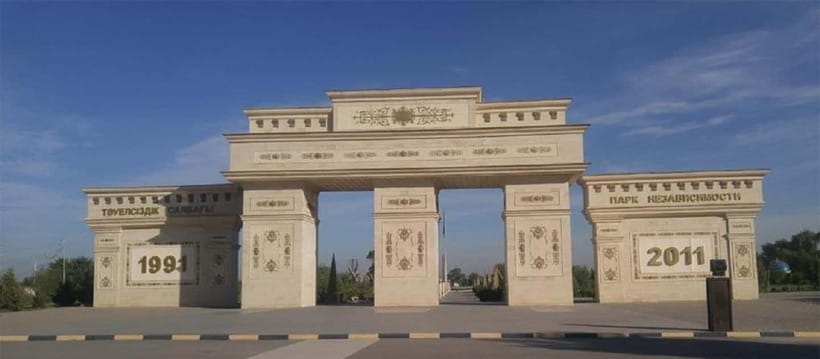
Then comes Independence Square, opened in 2011 in the historical part of the city. It’s described as the largest and newest park in Shymkent. Parks like this often feel like a promise: space for gatherings now, not just relics from earlier eras.
If you’ve got time and energy, this is where you can slow down. Take a few minutes to walk the edges, look at the monuments, and let your guide’s background connect the symbolism to what Kazakhstan went through.
Parks With Meaning: Abay Park, Alley of Glory, and WWII Memorials
Shymkent’s parks aren’t just places to rest. Abay Park centers on the Alley of Glory, a memorial complex tied to World War II events. The focal point is the Memorial of Glory, and the park is named for Abai Kunanbayev, a major Kazakh poet and educator. There’s also a monument to him on the grounds.
This is one of those stops where I’d suggest you take your time. Memorial spaces only hit if you let them land. The guide’s explanation helps you connect the site to broader events, so you’re not just photographing statues without context.
You’ll also hear about Metallurgists Park, described as one of Shymkent’s most beautiful parks. It’s linked to a city quarter built by German and Japanese prisoners of war before the war. That detail can change how you look at the park itself. Instead of seeing a pretty green area, you start seeing a place shaped by people and history.
If you prefer lighter walking, you can still enjoy these parks. Just remember: memorial sites are emotional by design, and that’s part of what you’re paying for in a guided day.
Arbat Shymkent and the Upside-Down House: A Needed Breather
After memorial intensity, the day gives you a playful change of pace at Arbat Shymkent, described as the city’s local “Broadway.” This is where you can recharge, take casual photos, and enjoy a more everyday street vibe.
One of the standout attractions here is the upside-down house, which has become a preferred local attraction. It’s the kind of quirky stop that makes the day feel human again. It also helps balance out the heavier museum content so you don’t feel like your whole day is weighed down.
If your group prefers more walking and less time in indoor sites, Arbat Shymkent is a good place to spend a bit longer. You can also use it to reset for the museum portion, which comes later.
Museum of Political Repression: Powerful, Somber, and Best With Context
The Museum of Victims of Political Repression is a serious stop. It’s focused on Stalin-era repression against the Kazakh people. This is not a quick photo spot. You’re there to understand what happened and why it mattered.
In a good guided tour, the museum part works because the guide helps you frame the material. You’ll learn about the background behind the sites, which changes how you experience the exhibits. Without that, it’s easy to feel lost or overwhelmed.
I’d come into this stop expecting it to be heavy. If that kind of content is hard for you, you can still appreciate it from a human perspective, but you might want to move slowly and take short breaks.
This museum, paired with other parks and memorials earlier in the day, creates an arc: suffering, remembrance, and then a return to the present.
St. Nicholas Cathedral and the Russian Orthodox Church Perspective
Shymkent also includes a stop at the Russian Orthodox Church, specifically the Cathedral of St. Nicholas. The cathedral is described as being built in 1988 during Soviet perestroika reforms.
This matters for how you understand the city’s layer-cake past. Kazakhstan has a multi-ethnic, multi-faith story, and this stop adds one slice of that. It’s a useful complement to the older Islamic heritage in the Citadel and the more modern independence symbols around the city.
If you’re interested in architecture and how different communities marked their presence, this church visit is a good middle chapter in the day.
Photo Stops on the Way Back to Tashkent: Green Camps and Farm Country
On the return, the tour includes some additional photo opportunities—especially around April to May, when the route can show green camps, plus farms and livestock farms. This is a gentle way to end the day and remember that the region around Tashkent and Shymkent isn’t only cities. It’s fields, movement, and everyday work.
You won’t feel rushed here if your guide keeps the pacing realistic. It’s more about getting outside the urban frame than about collecting strict “must-see” points.
Price and Value: What $250 Per Group Really Buys
At $250 per group up to 3, this tour is not cheap, and the value comes from the big friction points:
- Border organization and drivers on both sides. You’re not just driving there and figuring out the process. You’re set up with transport, and the car change is handled for you.
- A full guided day in Shymkent. You get English or Russian interpretation through multiple major sites, including the more complex context at the repression museum.
- Air-conditioned comfort for the long ride between Tashkent and Shymkent.
What’s not included is just as important:
- Entrance tickets to monuments are not included.
- Lunch and dinner aren’t included, though the guide can recommend restaurants.
- Personal expenses are on you.
Can you DIY this? Yes, it’s possible to cross and explore on your own. But if you want the day to run with less stress—especially with the border timing and the sites needing context—this private format can feel like a fair trade.
You’ll get the best value if:
- you want history and symbolism, not only quick sightseeing,
- you prefer a guide who can explain what you’re looking at,
- you’re traveling as a small group and want control over pacing.
Should You Book This Shymkent Day Tour From Tashkent?
If you’re short on time in Uzbekistan and you want to experience Kazakhstan in one day, I’d seriously consider booking. The Citadel, parks with memorial meaning, and the repression museum are the kind of stops that benefit from a guide’s explanations, not from guesswork. Add in a roadside Silk Road legend stop at Kazygurt, and you get a day that feels like more than a simple city transfer.
But if you hate uncertainty and strict timing is your priority, think twice. The border crossing can stretch your day, and the experience asks you to stay patient during formalities. This tour works best when you can treat the day as a journey, not a timed checklist.
If you like asking questions, take notes, and walk at a steady pace, you’ll likely leave with a stronger sense of Kazakhstan than you’d get from just photos.
FAQ
How long is the Shymkent day tour from Tashkent?
The tour duration is listed as 8 hours. In practice, the border crossing can add extra time depending on queue conditions.
Is this tour private?
Yes. It’s a private group experience (priced for a group up to 3).
Do I get pickup in Tashkent?
Yes. Pickup is included from your hotel or from the airport or train station. You’re asked to wait in the lobby about 5 minutes before pickup time.
Do I cross the border with the guide?
You transfer to the border and cross on your own. After the crossing, you meet the driver on the Kazakhstan side.
Will I be in an air-conditioned vehicle?
Yes. The tour includes an air-conditioned vehicle in both countries.
Are entrance tickets included for the monuments and museums?
No. Entrance tickets to the mentioned monuments are not included.
Is lunch included?
No. Lunch and dinner are not included. Your guide can recommend good restaurant options.
What language is the live guide?
The live tour guide is available in English and Russian.
Is the tour wheelchair accessible?
Yes, it’s described as wheelchair accessible.
Can I bring drinks or food in the vehicle?
No. Drinks in the vehicle and food in the vehicle are not allowed.
What should I bring?
Comfortable shoes and comfortable clothes.
Is free cancellation available?
Yes. Free cancellation is available up to 24 hours in advance for a full refund.