REVIEW · NEIVA
Neiva: Guided Day Trip to the Tatacoa Desert with Lunch
Book on GetYourGuide →Operated by GREEN VACATION COLOMBIA TRAVEL · Bookable on GetYourGuide
Tatacoa at night feels unreal. This one-day trip stacks two desert zones, a river boat ride, and stargazing so you get the full sci-fi vibe of Huila in a single schedule. I like that it starts early and keeps moving, but still builds in real breaks like a swim and a long sunset payoff.
Two things I really appreciate: you get guided hikes through named spots in both the Red Desert and Gray Desert, and you also get local meals plus downtime in the desert pool. One drawback to plan for is the long day with walking on dry ground, plus extra on-site fees for the pool and the observatory.
In This Review
- Key highlights I’d pencil in
- From Neiva or Villavieja to the Tatacoa: a full day with good pacing
- Villavieja streets and the Paleontological Museum stop
- Two deserts in one day: Red Zone hikes and Gray Zone trails
- Red Desert: orange tones and eerie-named valleys
- Gray Desert: Paso de la Culebra and Cueva del Tiempo
- Magdalena River boat tour: a welcome break before the desert hours
- Desert swim and lunch: cooling down the right way
- Cuzco Labyrinth and the sunset over the mud walls
- Stargazing at the observatory: telescopes plus a sky lesson
- Price and logistics: what $129 buys, and what costs extra
- What to pack so the desert day doesn’t slow you down
- Who this Tatacoa day trip is (and isn’t) for
- Should you book this Tatacoa Desert day trip?
- FAQ
- What time is pickup in Neiva or Villavieja?
- How long is the Tatacoa day trip?
- What languages is the guide available in?
- What’s included in the price?
- What costs extra during the day?
- Do I need swimwear?
- Are drones allowed?
- Is free cancellation available?
Key highlights I’d pencil in
- Red Desert classics like the Valley of the Ghosts, Valley of the Xilopalos, and Strait of the Ladies
- Gray Desert trails including Paso de la Culebra, Estrecho de las Señoritas, and Cueva del Tiempo
- Boat tour on the Magdalena River with a chance to spot riverbank flora and fauna
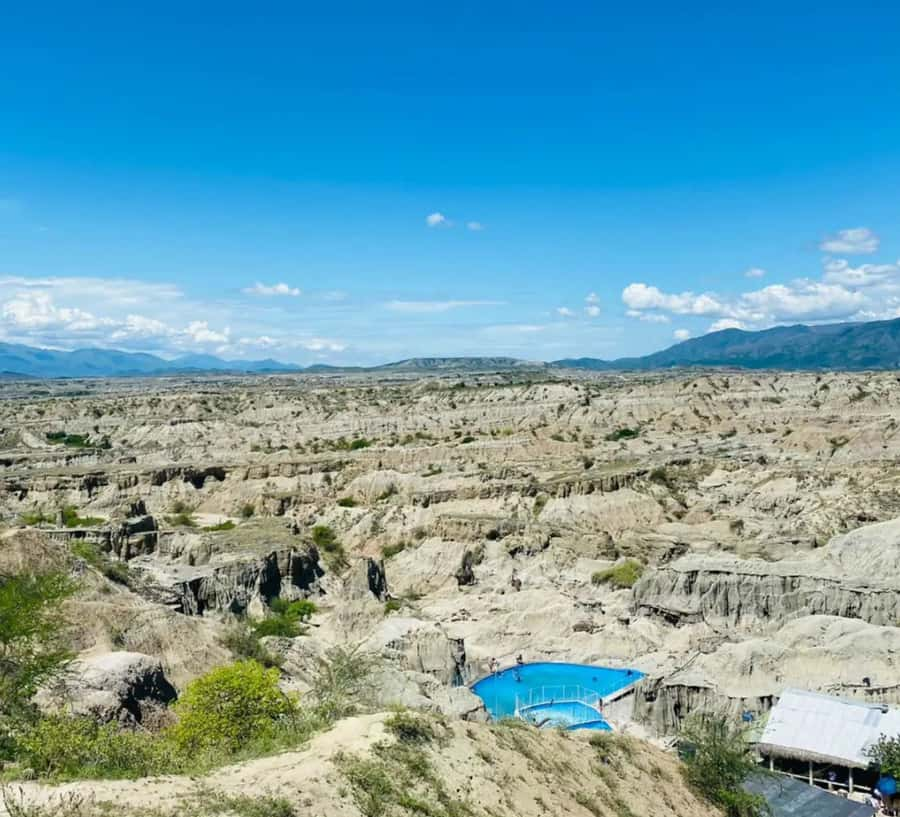
- A pool swim in the desert oasis, with water flowing in from local springs
- Cuzco Labyrinth where tall mud formations form your walking walls
- Astronomical Observatory stargazing with expert guidance and telescope time
From Neiva or Villavieja to the Tatacoa: a full day with good pacing
You’ll get pickup starting around 8:30am from Neiva or Villavieja, then head out on an over-an-hour drive toward the Tatacoa Desert. The route is timed so you’re not just arriving late and sprinting for photos. You also get a town stop before the desert heat really kicks in, which helps you understand the region instead of just passing through it.
This is the kind of trip that rewards showing up with a steady mindset. There’s a lot packed in: boat, multiple desert walks, lunch, a swim, sunset, and stargazing. The tradeoff is that you should expect long stretches with sun overhead and limited shade.
Villavieja streets and the Paleontological Museum stop
Before you enter the arid zone, you stop in Villavieja for a guided stroll and a visit to the Paleontological Museum. You also get a panoramic view of Villavieja, which gives you a quick sense of where you’ll be spending the day. It’s a helpful mental reset: you go from everyday river-town life to a desert that feels ancient.
This stop also makes the rest of the day click. The Tatacoa isn’t just pretty. It’s also a place tied to time—fossils, geology, and a kind of slow-motion history lesson under harsh sun. If you’re the type who likes to connect the dots between what you see and what it means, this museum stop is a genuine payoff.
Two deserts in one day: Red Zone hikes and Gray Zone trails
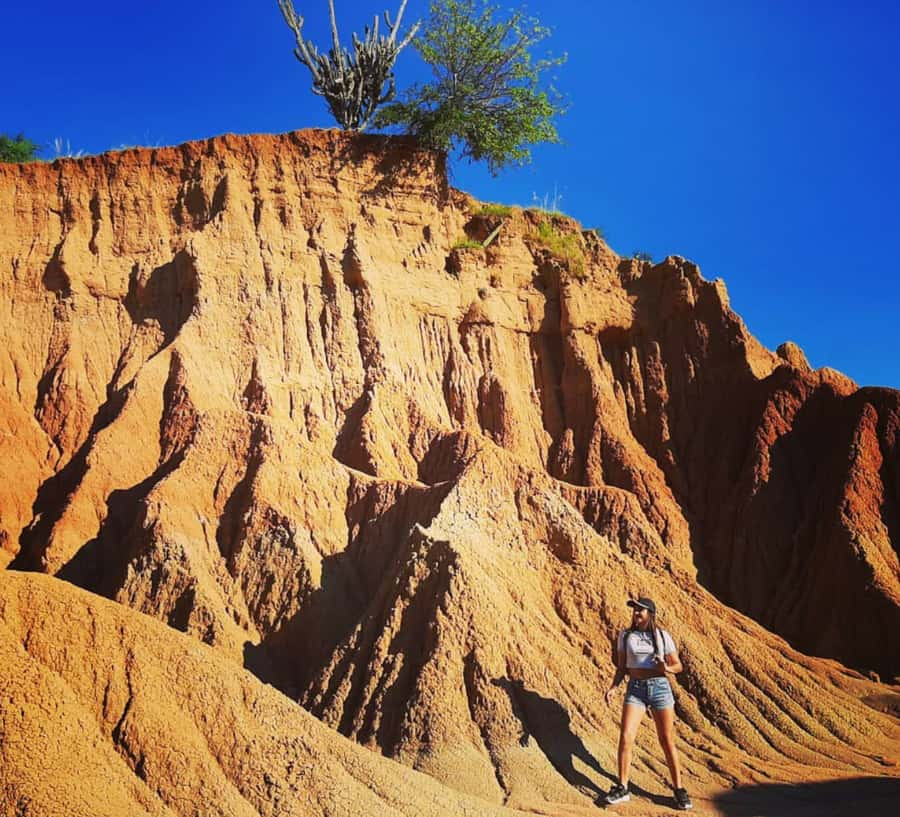
The biggest reason this day trip works is that it doesn’t treat Tatacoa as one uniform thing. You move through distinct areas with different colors, textures, and walking vibes.
Red Desert: orange tones and eerie-named valleys
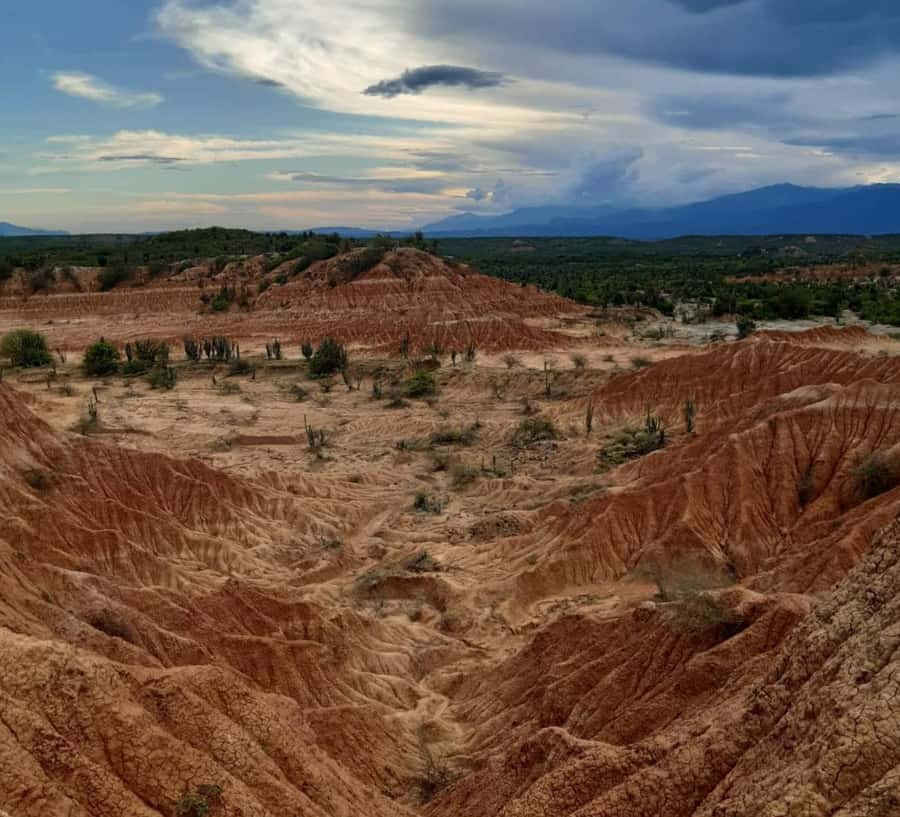
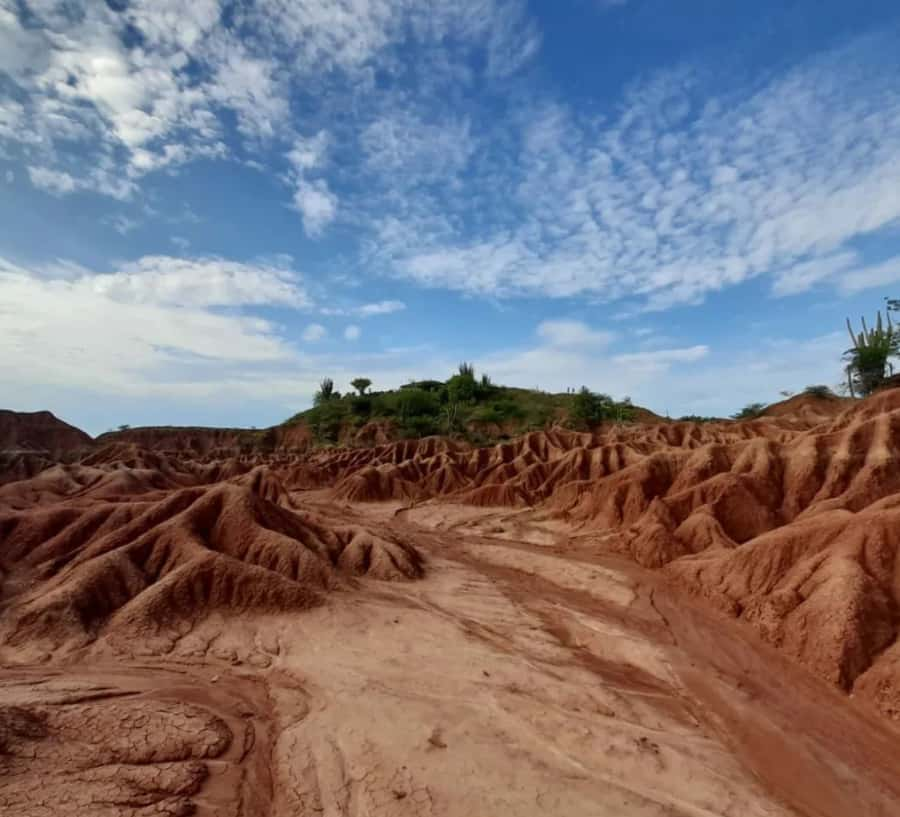
In the Red Desert, you’ll hike key points like the Valley of the Ghosts, the Valley of the Xilopalos, and the Strait of the Ladies. The tones are mostly orange-red, with sharp ground shapes and a sparse sense of life—until you notice the cactus holding its own in extreme conditions. That contrast is part of the magic: the desert looks empty, then you start seeing survival everywhere.
Walking here is usually the kind you feel in your legs, not because it’s stunt-level difficult, but because it’s hot and dry. Bring your sturdy shoes and don’t plan to wander off-route for long. Go slow and let your guide set the rhythm.
Gray Desert: Paso de la Culebra and Cueva del Tiempo
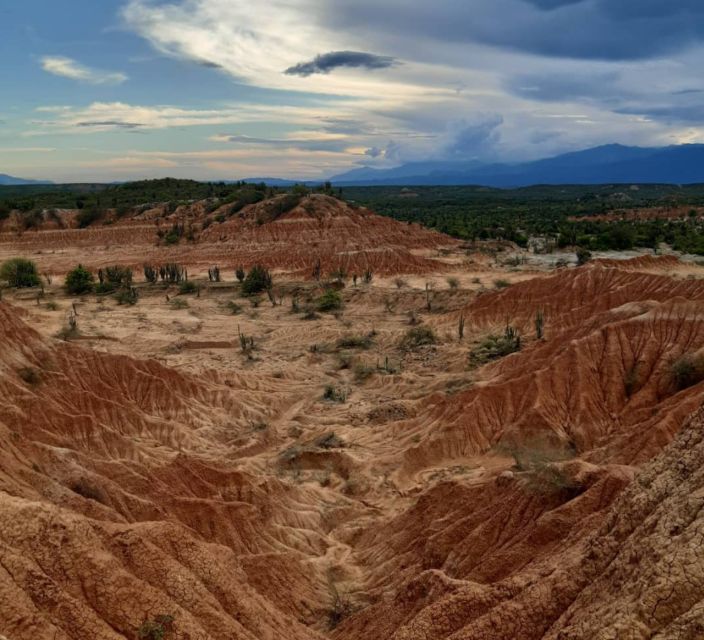
Later you’ll shift to the Gray Desert, where the ground looks more gray-green, with sections that feel tighter and more sculpted. You’ll cover trails like Paso de la Culebra, the Estrecho de las Señoritas, and Cueva del Tiempo. These spots have strong visual identity, so even if you’re not a geology expert, you’ll feel like you’re walking through a film set built from stone and dust.
A smart move: aim to take photos in short bursts, then spend more time looking up and around. The best moments in Tatacoa often happen when you step back and watch the light change over the ground. Your eyes adjust faster than your camera.
Magdalena River boat tour: a welcome break before the desert hours
One of the most underrated parts of this day is the boat tour along the Magdalena River. It’s built in early enough that you get a change of scenery before the desert becomes the whole world. You’re not just sitting there—this stop is designed for spotting representative flora and fauna along the riverbanks.
Even if wildlife-spotting isn’t your hobby, the boat time helps you pace the day. It gives you shade, rest, and a different kind of perspective. It also helps break up the desert hiking so your energy lasts until sunset and the observatory.
Desert swim and lunch: cooling down the right way
After a set of desert exploring, you’ll get a chance to cool off in a swimming pool in the desert, fed by water brought directly from local springs. It sounds odd until you’re there. In practice, it’s a real reset for your body after sun and dry air. You’ll want swimwear and a towel ready, because changing quickly matters when you’re on a schedule.
Lunch comes after that—Colombian gastronomy with a local touch. This is one of the best moments for eating like you’re traveling, not like you’re rushing. If you’re used to snack-only days, take this seriously and eat well. After lunch, you still have more hiking and then the sunset.
Two small notes that matter: drinks aren’t included, and the pool has an entry fee of 10,000 Colombian pesos (separate from the main price).
Cuzco Labyrinth and the sunset over the mud walls
In the afternoon, you’ll approach the Cuzco Labyrinth, a winding path where mud formations up to 20 meters high work like walls. This isn’t just a photo stop. The walk feels like moving through a natural corridor, with tighter turns and surprising views as your position changes.
Then comes the best part of the day: sitting down to enjoy the sunset in this desert setting. Light turns the ground into something almost architectural, and the air cools off enough that you stop feeling like you’re inside a furnace. If you’re traveling with someone who likes Instagram-style shots, you’ll still get something worth capturing—without needing to rush the entire moment.
You’ll also include the Mirador de los Colorados viewpoint as part of the desert area time, which helps tie the hiking routes together visually.
Stargazing at the observatory: telescopes plus a sky lesson
When night falls, you go to the Astronomical Observatory for stargazing. The sky here is described as clear, and that matters. You’ll have expert astrologers who help you understand what you’re seeing, not just point at the biggest dots overhead.
The format is practical. There’s a talk in Spanish, but you’ll be lying down on AstroTurf, so you can follow along by listening for key ideas and watching what gets pointed out. Telescope time is a highlight: many groups get a chance to see planets like Jupiter, Saturn, Mars, and Venus through the instruments.
Plan to stay present. If you keep checking your phone, you’ll miss the shift when the constellations really pop. Bring patience, because the sky usually rewards slow looking more than quick scanning.
As with the pool, the observatory has a separate 10,000 Colombian pesos entry fee.
Price and logistics: what $129 buys, and what costs extra
At $129 per person for a full day, this tour stacks a lot of real components: transportation from Neiva or Villavieja, a guided Villavieja town and museum stop, desert transfers, hikes across both desert zones (including specific named points), a Magdalena River boat ride, lunch, pool time, and stargazing.
Where the extras show up:
- Pool entry: 10,000 COP
- Observatory entry: 10,000 COP
- Drinks: not included
That’s not a dealbreaker, but it’s worth planning cash for. Also note you might buy cold water along the way during the day, which can help if you’re trying to pace hydration between desert sections.
In terms of value, I think this price is strongest if you want a guide to handle the routing and keep you safe on foot in areas that can be confusing without local help. It’s also good value if you care about the full sequence: river, two desert types, swim break, sunset, then sky.
What to pack so the desert day doesn’t slow you down
This day runs on comfort and heat management. From the start, you’ll do better with these basics:
- Comfortable shoes for long walks on dry ground
- Sun hat and sunscreen
- Swimwear, plus a towel and a change of clothes
- Long-sleeved shirt to cut sun and help with insect control
- Goggles if you’re sensitive to dust
- Charged smartphone for photos (signal can be patchy, but the camera still works)
- Biodegradable insect repellent, plus a hair tie
Also pack a little practical flexibility: cash for entry fees and drinks, and a long-sleeve layer for comfort after sunset when the temperature can shift.
Who this Tatacoa day trip is (and isn’t) for
This is not a casual stroll day. It’s designed for people who can walk on uneven desert ground and handle a full schedule.
It’s not suitable for:
- Children under 7
- Pregnant women
- People with mobility impairments
- People with heart problems, respiratory issues, epilepsy, or recent surgeries
- People with animal allergies or significant pre-existing medical conditions
- Visually impaired people
- Babies under 1 year
If you fall into any of those categories, you should treat this as a hard no based on the tour’s own suitability limits. If you’re healthy but worried about walking, you can still prepare by wearing shoes that give you grip and bringing water and sun protection seriously.
Should you book this Tatacoa Desert day trip?
I’d book it if you want one day that actually feels like a journey, not a checklist. The best reason is the balance: you get two desert types, a boat ride for contrast, a cooling desert swim, a proper sunset moment, and then a guided sky experience with telescope viewing.
I’d skip it if you hate long days on your feet, you’re sensitive to heat and sun, or you’re looking for a fully accessible experience. Also remember the 10,000 COP entry fees for the pool and observatory, plus drinks, so you’re not surprised when it’s time to pay on the ground.
If you want a practical tip for choosing this over DIY: the desert has named spots, but moving between them efficiently takes local know-how. A guide makes the day smoother and helps you focus on what you came for—those stark colors, the mud labyrinth, and the sky after dark.
FAQ
What time is pickup in Neiva or Villavieja?
Pickup starts at 8:30am in Neiva or Villavieja, according to the time given when you reserve.
How long is the Tatacoa day trip?
The experience runs for 1 day.
What languages is the guide available in?
The live tour guide speaks English and Spanish.
What’s included in the price?
The tour includes round-trip transportation, the Villavieja town/panoramic stop, the Magdalena River boat tour, transfers to Tatacoa, tours of the Red and Gray Deserts (including the specific trails listed), lunch, a swimming pool, and stargazing.
What costs extra during the day?
You’ll pay 10,000 Colombian pesos for pool entry and 10,000 Colombian pesos for astronomical observation. Drinks are not included.
Do I need swimwear?
Yes. You’ll have time for a swim in the desert pool, so bring swimwear and a towel.
Are drones allowed?
No. Drones are not allowed.
Is free cancellation available?
Yes. You can cancel up to 24 hours in advance for a full refund.