REVIEW · MARRAKESH
Marrakech: Atlas Mountains Day Trip, 3 Valleys & Waterfalls
Book on GetYourGuide →Operated by Morocco Family Experiences · Bookable on GetYourGuide
Atlas Mountains days from Marrakech feel like a movie set. This one mixes a local guide, Berber village life, and a home-cooked meal with mint tea stops and waterfall views. You also get an easy on-ramp to the High Atlas without needing to plan a thing yourself.
Two things I really like: the qualified local guide and cultural moments (mint tea in a Berber tent, learning traditions, asking questions), plus the lunch at a local family home with classic Moroccan dishes like tajine and couscous. One drawback to consider is that organization can be a little fussy at pick-up time, and the walk can involve narrow, uneven paths and stairs—so go in with good shoes and realistic expectations.
In This Review
- Key points at a glance
- Getting from Marrakech to the High Atlas: the Morning Flow
- Camel Ride on the Ourika Road: Quick, Scenic, and Very Moroccan
- Argan Oil Collective: The Work Behind the Bottle
- Asni Valley and the Weekly Berber Market: What People Buy for Life
- Imlil Valley: Valleys, Walnut Trees, and the Build-Up to the Walk
- The hike: an easy trail, but still real terrain
- Waterfalls and Toubkal National Park Views: Where the Day Gets Extra Pretty
- Lunch at a Local Berber Home: Tajine, Couscous, and Rooftop Views
- A small but important tip
- Price and Value: How $24 Stacks Up for What You Get
- Logistics and Timing Reality: Pick-up Points and Walking Comfort
- Guides and the Human Touch: When Lahcen Shows Up
- Who Should Book This Atlas Mountains Day Trip
- Should You Book This Marrakech to Atlas Day Trip?
- FAQ
- How long is the Atlas Mountains day trip?
- What time does the trip usually start in Marrakech?
- Where does the trip pick you up and where do you get dropped off?
- How long is the camel ride?
- What foods and drinks are included?
- Is there time for a market in the itinerary?
- How much walking is involved?
- What language is the live guide?
- What should I bring for this trip?
- Is the trip suitable for people with back problems?
Key points at a glance
- Camel ride with Bedouin-style costumes plus mint tea in a Berber tent
- Argan oil collective visit with a first-hand look at how the oil is processed
- Asni Valley weekly Berber market (Saturday) and farmer’s market on certain tour days
- Imlil Valley walking route with optional transport for people who don’t want the full trek
- Tajine/couscous lunch in a local home setting with a rooftop terrace view
- Time in the High Atlas from late morning into the return around 5:30 pm
Getting from Marrakech to the High Atlas: the Morning Flow
This day trip usually starts around 9:00 am, either with pick-up from your accommodation or from the nearest access point to your riad/hotel in Marrakech. You’ll drive out in a modern minivan/van/4×4 toward the Ourika Road area, where the day shifts from city rhythm to mountain pace fast.
The timing matters here. You’re out the door early enough to beat the worst heat, but you’re still not expected to arrive in a luxury “no surprises” way. I’d treat breakfast as optional only if you can grab something close to pick-up, since the schedule can move depending on where your group is being collected.
Camel Ride on the Ourika Road: Quick, Scenic, and Very Moroccan
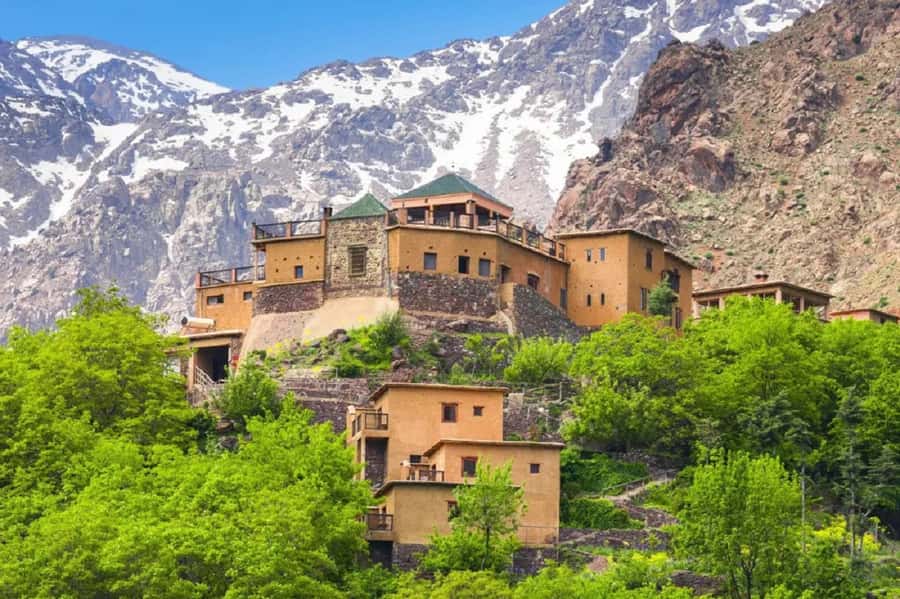
Your first activity is a 25-minute camel ride near the Ourika Road stretch. The camel drivers provide local Bedouin costumes, which turns a simple ride into a photo-ready moment without feeling like a staged theme park.
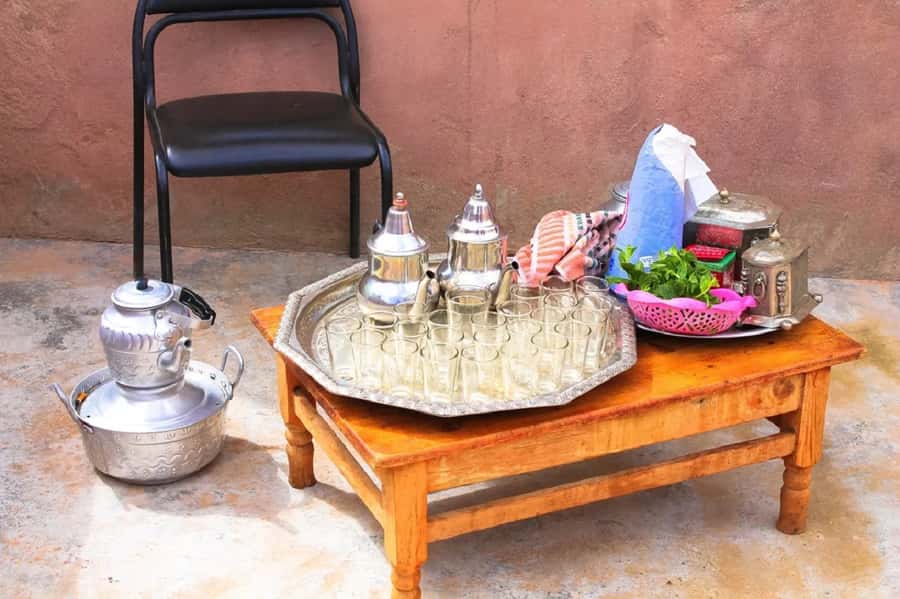
After you hop off, you get a fresh cup of mint tea in a Berber tent. This is more than a drink stop. It’s the moment where the guide usually starts framing the day—who the Berbers are, how traditions show up in daily life, and what you can ask about along the way.
A practical note: don’t expect the ride to be long or adventurous. It’s a short experience in a line, designed for everyone to join. If you’re hoping for a big, cinematic trek, your expectations might need adjusting.
Argan Oil Collective: The Work Behind the Bottle
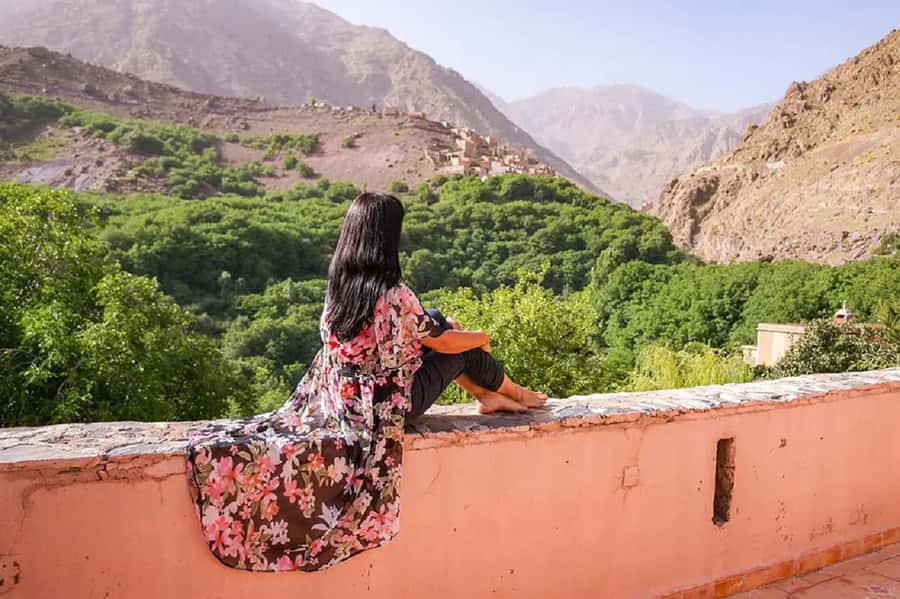
Next up is a visit to a local argan oil collective, where you’ll tour the operation and enjoy a snack. This stop is valuable because it’s tied to real craft and real labor, not just a storefront performance.
You’ll also get to experience the bottling process first hand by Berber women. That small detail changes the feel of the visit. You’re not just hearing a story—you’re seeing how product becomes product.
One caution: this kind of cooperative stop shows up on many Atlas day trips, and a few people find it repetitive if they’ve seen similar visits elsewhere. If your main interest is walking in the mountains, treat this as a cultural pause (and an opportunity for questions), not the main event.
Asni Valley and the Weekly Berber Market: What People Buy for Life
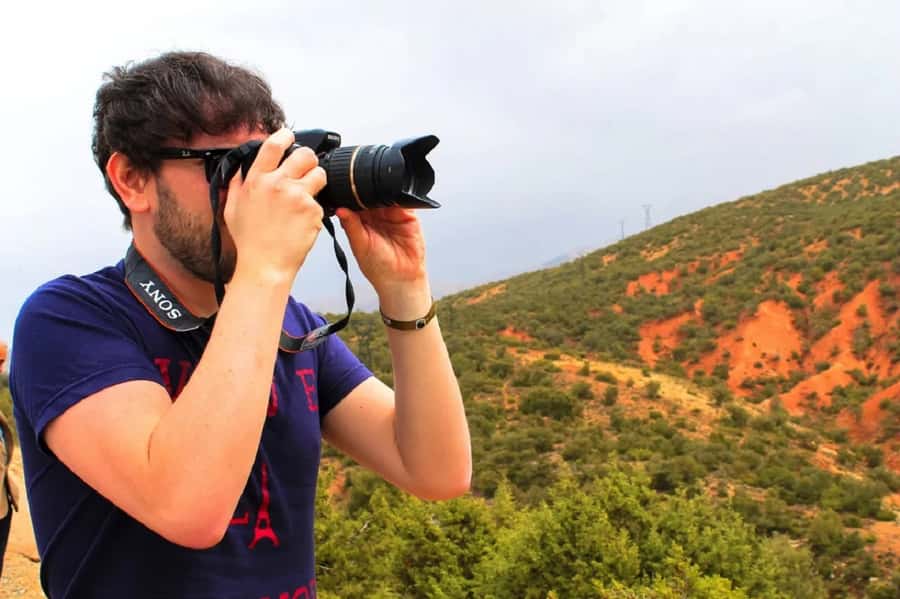
From there you continue into the Asni Valley, and this is where the day becomes more “local” in a way that’s easy to understand. You’ll get a feel for the area and then visit a weekly Berber market on Saturdays, where people come to buy staples like meat, vegetables, and other household items.
If you’re the kind of person who likes watching daily life unfold—rather than hunting for souvenirs—this is often the most satisfying stop. The market isn’t about big-ticket attractions. It’s about how food and community meet in a practical space.
On Saturday and Tuesday tours, there’s also an additional chance to visit a local Berber farmer’s market. It’s one more window into how rural life keeps itself going.
If you’re hoping the market will feel like a concentrated craft bazaar where everything is for sale to visitors, you might find it moves fast. Plan to browse with patience, and keep your camera ready but don’t force purchases.
Imlil Valley: Valleys, Walnut Trees, and the Build-Up to the Walk
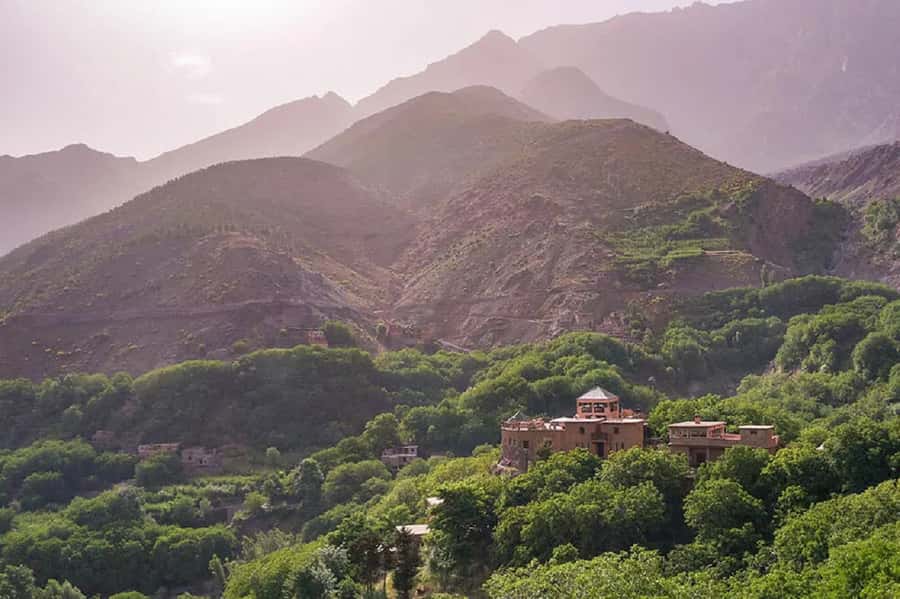
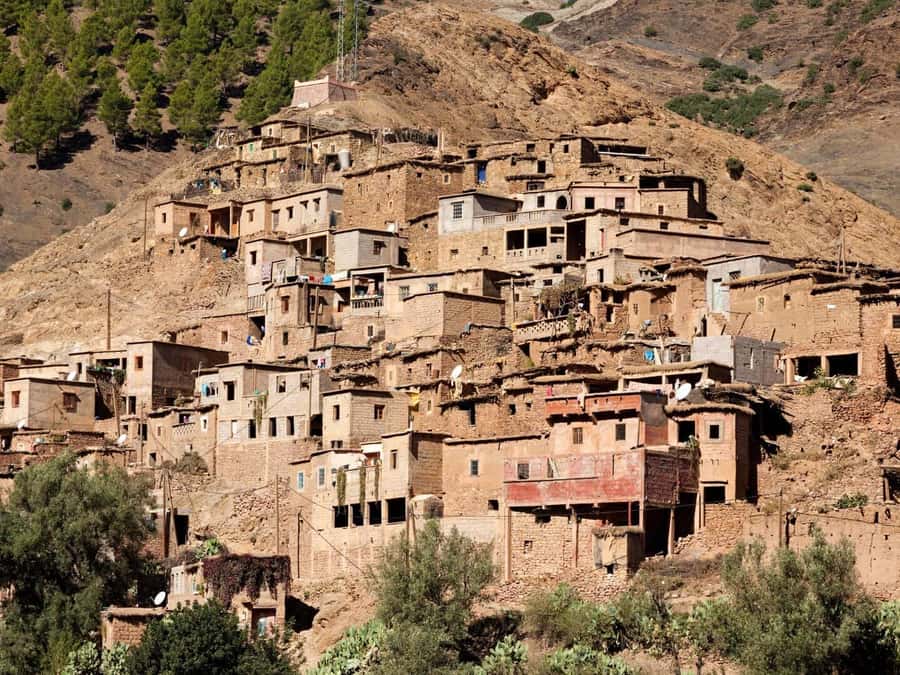
Your next stop is Imlil, a lively valley with a fast-flowing river and walnut trees, plus traditional Berber villages dotted throughout the area. This is where the trip earns its name: you’re no longer just driving and stopping—you’re getting into the valley’s rhythm.
You’ll also have a cup of orange juice connected with the waterfall area during this stretch. It’s a small comfort after travel time and it matches the day’s theme: snacks, sips, and breaks that keep the energy steady before you start walking.
Then comes the walking part.
The hike: an easy trail, but still real terrain
The total time for the trek is about 2.5 hours, and it’s described as relatively easy, with fantastic views of the valley. There’s also a key practical detail: transportation is provided for people who don’t want to walk the full route.
So you’re not locked into pain. Still, read the fine print your body can feel: paths can include stairs and uneven ground, and in some conditions the trail can be tight with loose gravel. Bring comfortable shoes and plan your pace. This is the mountains, not a sidewalk.
Waterfalls and Toubkal National Park Views: Where the Day Gets Extra Pretty
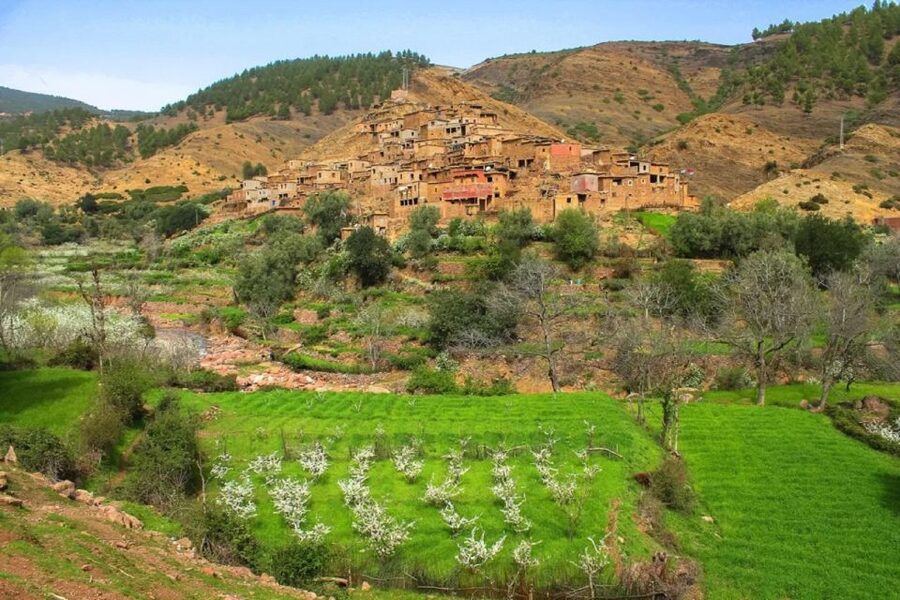
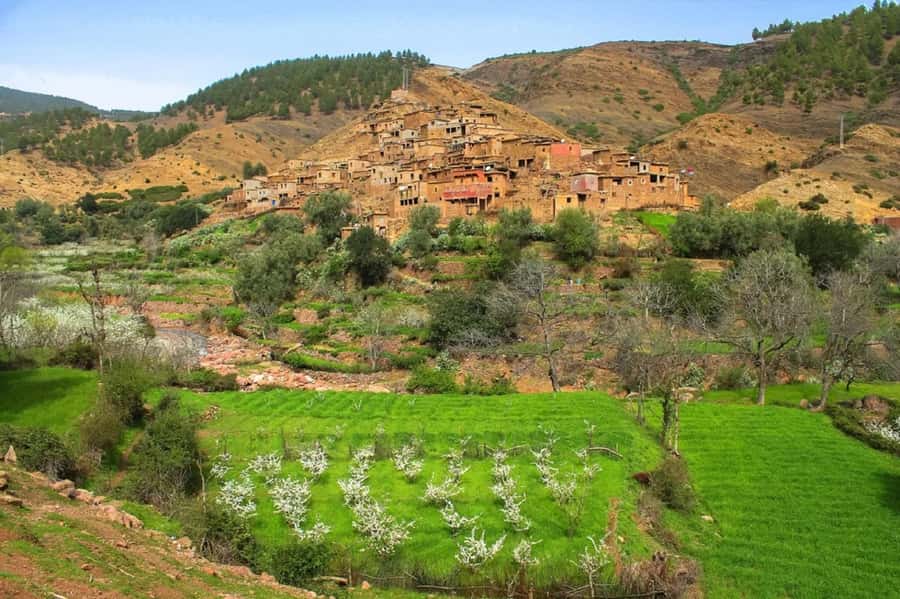
The broader theme is High Atlas scenery, and the trip includes time connected to waterfalls and the Toubkal National Park area. You’ll get orange juice at the waterfalls, which is a nice, simple reward after walking.
This isn’t a technical climbing day. The value is that you see higher terrain around Toubkal without having to arrange permits, extra gear, or separate transport. You also get that classic Atlas feel: steep valleys, stone villages, and the sense that everything works around the mountains.
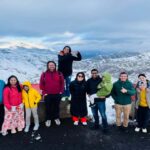
If you visit in colder months, you might catch a touch of snow in higher areas. Even when snow is unlikely, the altitude can still change the mood—cooler air, sharper light, and views that feel bigger than you expected.
Lunch at a Local Berber Home: Tajine, Couscous, and Rooftop Views
After lunch, the day often feels like it has two gears: cultural warmth first, then scenic walking. Lunch is at a local Berber house, served in a home setting where you’ll typically get tajine, couscous, and Moroccan salad.
Before the meal, there’s usually time to take in the view from a rooftop terrace. That rooftop moment is more than a photo stop. It’s where you start to understand why people live here: you can look across the valley and see the kind of landscape that makes farming and village life possible.
This lunch can be a standout. Several people specifically praise how delicious and filling the tajine is, and how much you actually get to eat—so don’t overpack on snacks later.
A small but important tip
Eat like you’re about to continue walking. One practical reminder: if you go heavy, the climb afterwards can feel longer. If you go balanced, you’ll keep energy without feeling stuffed.
Price and Value: How $24 Stacks Up for What You Get
At around $24 per person for an 8-hour day, this trip is priced like a full-service essentials bundle: transport, a local guide, camel ride, drinks, a cultural/argan stop, entry into mountain villages, and lunch.
Where it’s a solid value:
- You don’t arrange logistics for mountain transport and a driver
- You get guided context for Berber culture and the valley route
- Lunch is included, and it’s not a small snack plate
- The itinerary adds multiple “types” of experiences: market, cooperative, valley walk, and a home meal
Where it may feel less like value:
- If your group is more interested in long hiking only, some stops can feel like “time filling.” The schedule includes several culture and village interludes.
- If you’re sensitive to strict timing, keep a flexible mindset. Pick-up location details can shift, and that can squeeze breakfast time.
In other words: it’s good value if you want a guided introduction to the Atlas Mountains, not if you want total control of every minute.
Logistics and Timing Reality: Pick-up Points and Walking Comfort
The biggest practical risk here is not the mountains. It’s the “getting there” part. Some people report the departure time or pick-up location changed from what they expected on their schedule message. That doesn’t mean the tour fails—but it does mean you should plan for a little variability.
Here’s how I’d protect your day:
- Be ready a bit earlier than your expected pick-up time
- Double-check your meeting point before you leave your room
- Wear shoes you can walk in for stairs and uneven paths
- Bring a warm layer. Even if Marrakech feels hot, the mountain air can cool things down
Also, it’s not suitable for people with back problems, given the walking, stairs, and uneven terrain involved.
Guides and the Human Touch: When Lahcen Shows Up
One reason people sound happy about this trip is the guide quality. Names show up in the feedback, including Lahcen, and another note mentions Lahcen Mansouri with strong English and friendliness.
That matters because this tour is partly educational: you’re learning about Berber culture, asking questions during tea breaks, and understanding what you’re seeing in markets and villages. A good guide keeps the day from feeling like a checklist.
So if you care about explanations—what you’re seeing and why—it pays to ask questions early, especially around the mint tea stop and the argan collective visit.
Who Should Book This Atlas Mountains Day Trip
This experience fits best if you want:
- A guided High Atlas day with a manageable walk
- A taste of Berber village life, not just views from a bus window
- A included lunch that’s actually Moroccan (tajine, couscous, salad)
- Short adventure touches like the camel ride and mountain waterfalls
It’s a weaker match if:
- You want a long, strenuous trek with minimal stopping
- You have mobility limits or back issues
- You’re expecting perfectly fixed timing from curb to curb
If you’re traveling with mixed interests—one person wants markets, another wants hiking, another wants food—this itinerary naturally gives everyone something.
Should You Book This Marrakech to Atlas Day Trip?
I’d book it if you want a full, low-stress Atlas overview from Marrakech in one day: camel ride, mint tea, argan oil craft, a Berber market, Imlil valley walking, and a real lunch in a local home. The price is reasonable for the combination of transport, guide time, and included food.
I would hold off or choose a different style of tour if your top priority is a hike-only day, or if you can’t handle schedule shifts and uneven paths. Also think twice if you have back problems.
If you go in with the right mindset—good shoes, flexible timing, and open curiosity—you’ll leave with a sharper sense of what the High Atlas is like beyond the usual Marrakech postcard.
FAQ
How long is the Atlas Mountains day trip?
The duration is listed as 8 hours.
What time does the trip usually start in Marrakech?
It starts around 9:00 am, with pick-up from your accommodation or a nearby meeting point.
Where does the trip pick you up and where do you get dropped off?
You’re picked up from your riad/hotel area and dropped back in Marrakech at the end of the day.
How long is the camel ride?
The camel ride experience is about 25 minutes.
What foods and drinks are included?
You get drinks like water, tea, and coffee, plus mint tea during the Berber tent stop. Lunch at a local Berber house includes tajine, couscous, and Moroccan salad. Orange juice is included at the waterfalls.
Is there time for a market in the itinerary?
Yes. You’ll visit a weekly Berber market on Saturdays. On Saturday and Tuesday tours, there can also be a stop at a local Berber farmer’s market.
How much walking is involved?
The total walk time is about 2.5 hours. Transportation is provided for people who do not want to walk.
What language is the live guide?
The live tour guide is available in English and Arabic.
What should I bring for this trip?
Bring comfortable shoes, sunscreen, warm clothing, and a hat.
Is the trip suitable for people with back problems?
No, it’s listed as not suitable for people with back problems.