REVIEW · ULURU
Kata Tjuta Sunset Half Day Trip
Book on Viator →Operated by AAT Kings · Bookable on Viator
Kata Tjuta gets its best light at sunset. This half-day tour takes you into Uluru–Kata Tjuta National Park, then holds you at a sunset viewpoint while you sip sparkling wine and snack with commentary from the Anangu people’s stories and sacred significance. It’s built for people who want the magic without committing to a full hiking day.
I love how the drive is part of the experience, with stop-by-stop narration that turns 36 steep-sided domes into something you can actually read. I also love the pacing: about 2 hours 30 minutes total, with hotel pickup and a return that still leaves room for dinner back at the resort. The main drawback to plan around is the timing and setup—sunset viewing can mean you’re not getting your best angles for walking closer, and in warmer months flies can be intense, so bring a face net or fan.
In This Review
- Key things to know before you go
- Why This 2.5-Hour Kata Tjuta Sunset Trip Feels Just Right
- Pickup, Air-Conditioned Coach, and a Max-32 Group
- Kata Tjuta Stop 1: Domes, Views, and Drive-by Flora and Fauna
- Kata Tjuta Stop 2 at Sunset: Wine, Nibbles, and Anangu Legends
- Practical Tips: Flies, Food Setup, and Where You Can Photograph
- Should You Book This Kata Tjuta Sunset Tour?
- FAQ
- What’s the duration of the Kata Tjuta Sunset half-day trip?
- Does the tour include hotel pickup and drop-off?
- What’s included with the sunset viewing?
- Is the Uluru–Kata Tjuta National Park entry fee included?
- How many people are in the group?
- Are there flies at Kata Tjuta during sunset?
Key things to know before you go
- Small group size (max 32): easier to hear the guide and spread out at the viewpoint.
- Real sunset timing: you’re set up at the Kata Tjuṯa Sunset View Area to watch the sky change.
- Drink-and-snack moment included: sparkling wine and nibbles are served while you watch the color shift.
- Drive-through context: the coach ride includes an overview of local flora, fauna, and history.
- Guide storytelling matters: names like Andrew, Haley, Tony, Dylan, Lucy, and Debbie show up in guide highlights.
- Bring a fly plan: multiple people call out flies as the biggest annoyance in heat.
Why This 2.5-Hour Kata Tjuta Sunset Trip Feels Just Right
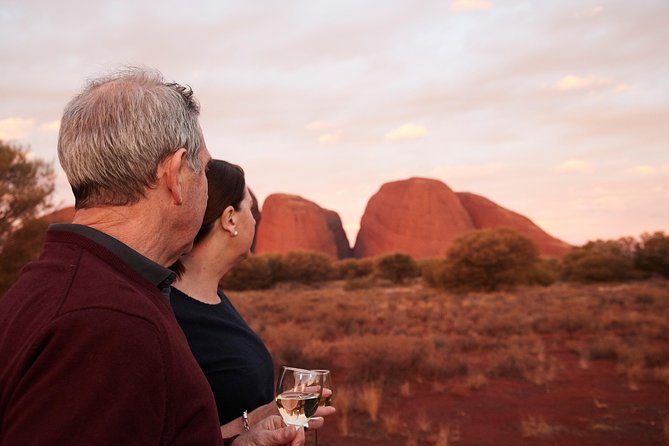
This tour hits a sweet spot in Central Australia. Kata Tjuta’s domes look dramatic in daylight, but at sunset they look like they’re glowing from the inside. That glow is what you’re paying for, and the schedule is built to get you there, then keep you there until the sky drops into desert dusk.
The total time is listed at about 2 hours 30 minutes, and in practice it runs as a true short outing rather than a half-day that somehow eats your whole afternoon. You also get hotel pickup and drop-off, so you’re not spending energy on transport puzzles after a long day of driving around the park area.
Where the value really shows up is in the mix: you don’t just get a viewpoint photo. You get an explanation of why Kata Tjuta matters and what the Anangu legends and sacred significance mean in plain language. When you’re done watching the sun dip away, you’re not left wondering what you just saw.
One more thing: it’s a nice contrast if you’ve already booked Uluru for sunrise or sunset. Kata Tjuta is a different kind of spectacle—more domes, more shadows, and a different story tone from the landscape.
You can also read our reviews of more tours and experiences in Uluru.
Pickup, Air-Conditioned Coach, and a Max-32 Group
A lot of sunset tours go long and feel rushed. This one is set up like a smooth “get-in, do the thing, get-out” circuit. You’ll be picked up from your resort area, travel by air-conditioned coach, and spend your time on the ground at the main Kata Tjuta stops rather than stuck driving for hours.
Group size is capped at 32 travelers, which matters more than it sounds. Smaller groups tend to mean:
- less waiting around at the viewing setup
- better odds you can hear the guide
- a calmer feel at the moment everyone is trying to photograph the same sky shift
The tour also uses a mobile ticket, which makes it easier to show up without printing paperwork.
The one logistics note I’d take seriously is how pickup works in real life. Some people report the pickup flow can feel like a bit of a wait depending on where you are in the resort area. So if your stop includes multiple pick-up points, treat the start time as a planning window and be ready a little early.
Kata Tjuta Stop 1: Domes, Views, and Drive-by Flora and Fauna
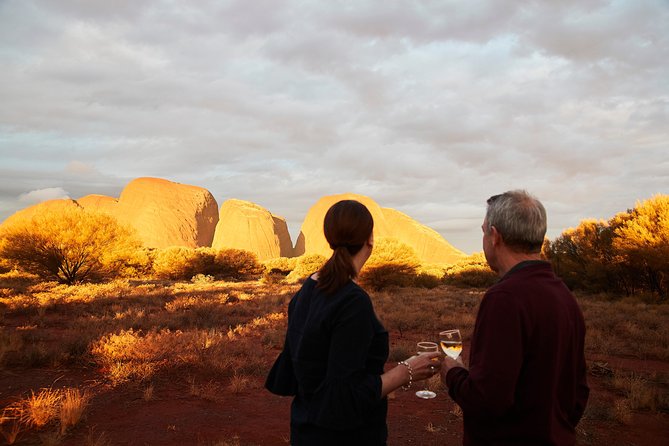
Your day begins with travel from Ayers Rock Resort toward Kata Tjuta—the 36 steep-sided domes that make up the Olgas. The first on-the-ground time is about 1 hour at Kata Tjuta, and the drive isn’t just scenery footage. You get narration along the way about the area’s history and about flora and fauna, which helps the domes feel less like random rock and more like a living ecosystem in an ancient setting.
On Stop 1, you’re aiming for viewpoint time. You won’t be doing an all-day hike here, but you will have a chance to orient yourself to what Kata Tjuta looks like from different angles. That matters because later, at sunset, the domes’ shapes and shadow lines are what create the dramatic color effects.
What to watch for at this stage:
- Keep an eye on the light direction so you know where the best colors will be later.
- Use the time to locate the overall dome cluster, since the sunset viewpoint is positioned for the sky, not for maximum closeness to every rock face.
If you’re expecting to walk far right at the start, adjust your expectations. This tour is more about the sunset moment and the interpretive narration than about a strenuous outing.
Kata Tjuta Stop 2 at Sunset: Wine, Nibbles, and Anangu Legends
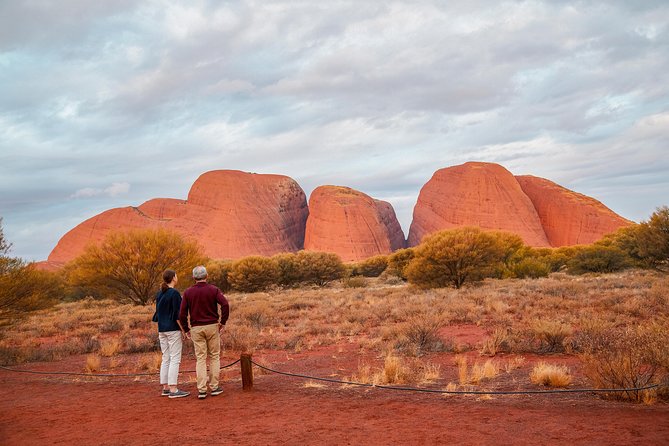
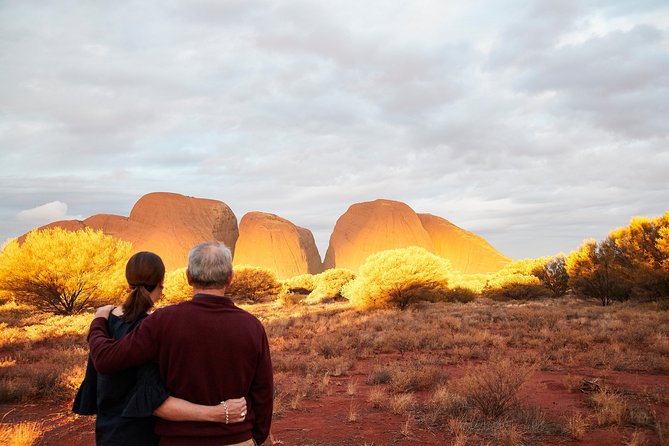
Stop 2 is where the tour earns its keep. You’ll go to the Kata Tjuṯa Sunset View Area for about 1 hour while the domes and sky trade color. This is when sparkling wine and nibbles are served, and the guide ties the moment back to Aboriginal history, legends, and the sacred significance of Kata Tjuta to the Anangu.
Even if you’ve seen other sunset tours, the best ones here are the ones with strong storytelling. The guide names that pop up again and again in positive mentions include Andrew, Haley, Dylan, Tony, Lucy, and Debbie. What people seem to love isn’t just facts—it’s the way the commentary makes the stones feel intentional, not just photogenic.
You’re also set up to get photos. Sunset is a short window and the sky changes fast, so having a stable viewpoint (with drinks and food handled for you) means you can focus on getting the shot instead of juggling logistics.
A practical heads-up: the sunset viewpoint is designed for the sunset itself, so you may end up with views where the domes are framed in a way that isn’t ideal for both sunset and close-up rock walking. One person noted that to catch the sunset you may end up with your back turned in places. Translation: if your top priority is being near the rocks for a long walk, this may feel limiting. If your top priority is watching the sky shift over Kata Tjuta while learning what you’re seeing, it’s a strong fit.
Practical Tips: Flies, Food Setup, and Where You Can Photograph
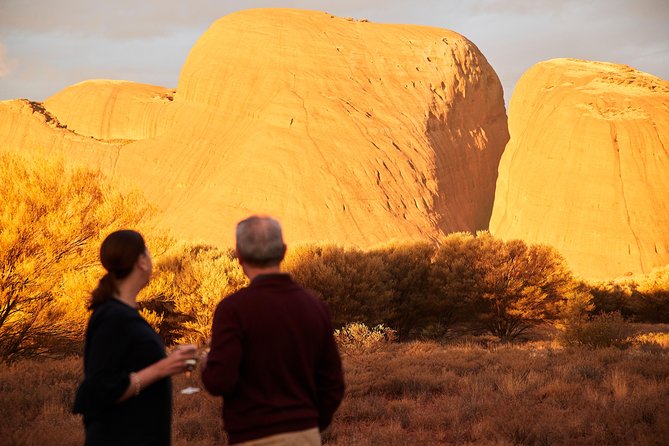
Central Australia sunsets can be stunning. Central Australia flies can be… a lot. Multiple people call out flies as the standout annoyance, especially in warmer weather, and at least one response specifically suggests you’ll want a face net or a fan in summer months. If you’re sensitive to bugs, don’t treat this as optional.
Food-wise, you’re not going to dinner at a restaurant. You’ll get a snack setup—sparkling wine plus nibbles—served at the sunset area. Most feedback is positive about the canapés and drinks being tasty and plentiful. Still, a few people complain the snack table setup felt basic or not well organized for the price, including issues like communal dips and needing to ask for something like a napkin.
So here’s the practical way to handle it:
- Treat the food as a bonus to the sunset, not as a full meal.
- If you’re picky about snack structure, expect a simple, shared setup rather than individually plated courses.
Photography is generally a win because the viewpoint is stable and the dome colors during the final sunlight are the star. The more your expectations match the format—short walk time, fixed viewpoint, drinks and narration—the happier you’ll be.
Finally, remember what you’re buying: not just a seat on a coach, but time at the right place at the right hour, plus the human part of the experience—stories and context. When the guide is strong, that’s when Kata Tjuta goes from pretty to meaningful.
Should You Book This Kata Tjuta Sunset Tour?
Yes, if you want a short, well-paced sunset outing with hotel pickup, a comfortable ride, and a guided explanation that makes the domes feel significant—not just scenic. It’s also a good match if you’re doing Uluru separately and want variety: domes at dusk instead of one giant monolith.
I’d think twice if you’re the type who needs to walk close to rocks for long stretches, or if you’re very bothered by flies and don’t want to prepare. The tour’s biggest downside points to those two themes.
If you book, pack a fly plan (face net or fan), keep your expectations aligned with a viewpoint-based sunset hour, and you’ll likely love the mix of color, calm, and story.
FAQ
What’s the duration of the Kata Tjuta Sunset half-day trip?
It’s listed at about 2 hours 30 minutes (approx.), including hotel pickup and the two main on-the-ground parts for Kata Tjuta.
Does the tour include hotel pickup and drop-off?
Yes. Hotel pickup and drop-off are included, and you travel by air-conditioned coach.
What’s included with the sunset viewing?
You’ll have sparkling wine and nibbles during the sunset experience, plus an experienced driver guide with commentary.
Is the Uluru–Kata Tjuta National Park entry fee included?
No. The Uluru Kata Tjuta National Park entry fee is not included.
How many people are in the group?
The tour has a maximum of 32 travelers.
Are there flies at Kata Tjuta during sunset?
Fly issues are specifically mentioned in feedback, with flies worse in warmer months. Bringing a face net or fan is a smart idea.