REVIEW · KANAZAWA
Full-Day Tour from Kanazawa: Samurai, Matcha, Gardens and Geisha
Book on Viator →Operated by Snow Monkey Resorts Tours (Machinovate Japan Ltd.) · Bookable on Viator
Kanazawa clicks into place fast. This full-day, small-group walk stitches together the city’s samurai past, matcha tea culture, and the refined calm of Kenrokuen Garden, then finishes in the geisha districts.
I like the way this tour saves you from random wandering. You get a tight route with a maximum of 15 people, plus an English-speaking guide who turns each stop into a story you can follow (I noticed guides like Mike, Akari, Garrett, Daniel, Lee, Mohamed, and Fadir getting called out for pacing and clear explanations).
The main drawback is simple: it’s a walking day. Expect lots of time on your feet even with breaks built into key stops, and plan for slower energy if it’s hot or if you’re traveling as a senior or with mobility limits.
In This Review
- Key highlights to know before you go
- Why this Kanazawa walking route works (and beats random sightseeing)
- Ashigaru Museum: the samurai world from the “lower ranks” perspective
- Nagamachi Bukeyashiki ruins: walking the old samurai district streets
- Oyama Shrine and Kanazawa Castle grounds: quick stops with big visual payoff
- Gyokusen-an tea house and Kenrokuen Garden: matcha first, then the best stroll of the day
- Higashi Chaya district and Kazuemachi Chayagai: tea district streets with room to look
- Inside Ochaya Shima: the preserved geisha house stop that’s worth it
- How long it really takes: 9 hours on paper, but plan your energy
- Guide quality is the real differentiator here
- Price and value: what you get for $151.30
- Who should book this tour, and who might skip it
- Should you book this Kanazawa day walk?
- FAQ
- How long is the full-day tour?
- Where does the tour start and end?
- What time does the tour begin?
- Is lunch included?
- What’s included in the price?
- Do I need to pay for Kenrokuen Garden?
- Do I get to visit a preserved geisha house?
- How big is the group?
- Is the tour fully walking?
- What happens if the weather is poor?
- Can I cancel for free?
Key highlights to know before you go
- Max 15-person group keeps the day human-sized and easier to ask questions
- Matcha + wagashi at Gyokusen-an is a real pause, not a quick photo stop
- Kenrokuen Garden entry included with time to actually stroll and take in the views
- Ochaya Shima visit included gives you a look inside a preserved geisha house
- Tea districts in two areas: Higashi Chaya first, then the less crowded Kazuemachi area
- Mostly free admissions for multiple stops, so your money goes into the big experiences
Why this Kanazawa walking route works (and beats random sightseeing)
Kanazawa is walkable, but its top sights are spaced out. The advantage of this tour is that it builds a route that follows the city’s geography instead of bouncing you back and forth. You’re not just collecting landmarks—you’re moving through districts in a way that makes the city’s layout and history feel connected.
The group size matters here. With a limit of 15, the guide can slow down when someone has a question, and you’re less likely to feel like you’re getting swept along with a megaphone tour. In the accounts I read, guides like Mike and Garrett were praised for sense of humor, pacing, and adjusting when the group moved faster than expected.
The other big point: you’re not only outdoors all day. You get planned indoor or sit-down time at tea houses and inside preserved spaces. That balance is part of what makes a long walking day more pleasant.
Ashigaru Museum: the samurai world from the “lower ranks” perspective
The day starts at the Ashigaru Museum, with about an hour on site. Ashigaru were lower-ranking samurai, and this museum focuses on that side of the class system—something that’s easy to overlook if you only think of samurai as elite warriors.
What you’re doing here is getting context. Before you see Nagamachi (the samurai district), you want to understand how that world worked at ground level. The museum includes entry to two homes that once belonged to ashigaru families, which helps the story feel practical rather than abstract. It’s also listed as free admission, so you get value immediately without paying extra at the start.
Practical tip: take a few minutes to look at the home layout and everyday details. That’s what will make the later district walk click.
Nagamachi Bukeyashiki ruins: walking the old samurai district streets
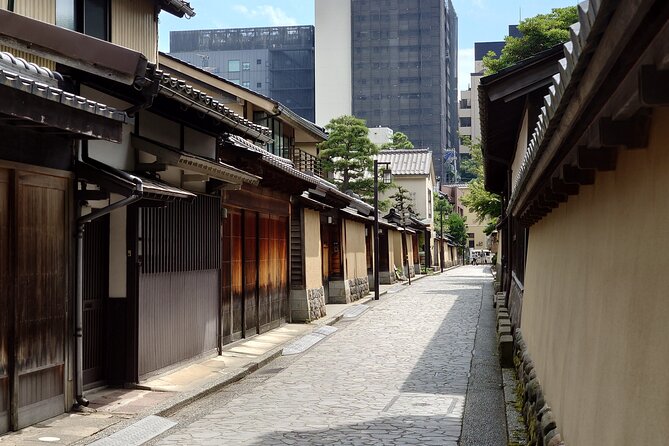
Next comes the Nagamachi Bukeyashiki area—ruins and remnants tied to the former samurai district. You’ll spend about an hour here, and the admission is free.
The draw is that the streets still carry that old-district feel. It can be tempting to think ruins mean “nothing to see,” but in places like this, the shape of the neighborhood is the point: how lanes run, how the area reads as a designed community, and how that helps you picture daily life.
If you enjoy heritage neighborhoods, this stop does real work. You start to see why Kanazawa’s samurai history feels different from the more obvious big-city castles elsewhere in Japan.
Oyama Shrine and Kanazawa Castle grounds: quick stops with big visual payoff
From Nagamachi you move toward Oyama Shrine. Expect about 40 minutes and free entry. One unusual detail noted for this shrine is the brick construction of its entry gate—out of step with many other shrines you’ll see around Japan.
From there you head toward the castle grounds. You get a brief window at Kanazawa Castle for about 20 minutes (free admission). Even though it’s short, it sets up the next big moment: you’re in the right area to connect the castle’s presence with the gardens that became a signature part of Kanazawa.
Practical tip: if you’re taking photos, do it with the time you have. This is a stop you’ll feel in motion, not a place you’ll want to linger for an hour.
Gyokusen-an tea house and Kenrokuen Garden: matcha first, then the best stroll of the day
This is one of the tour’s strongest stretches: Gyokusen-an tea house and then Kenrokuen Garden.
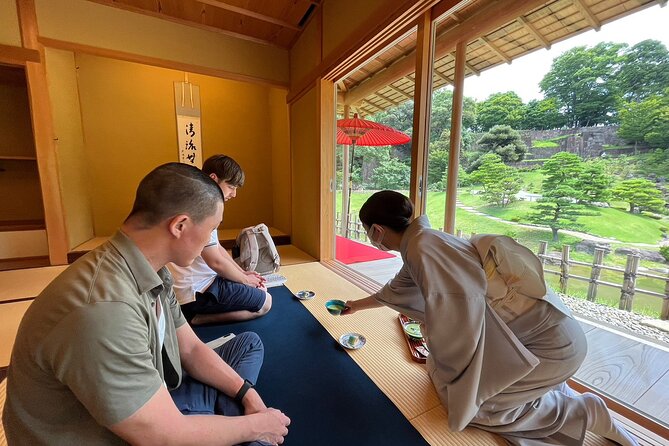
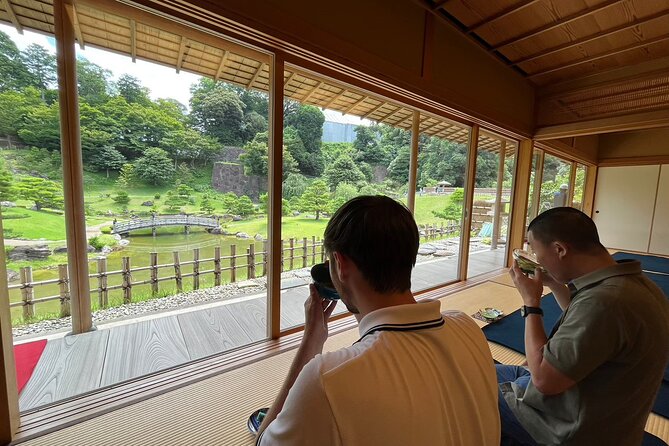
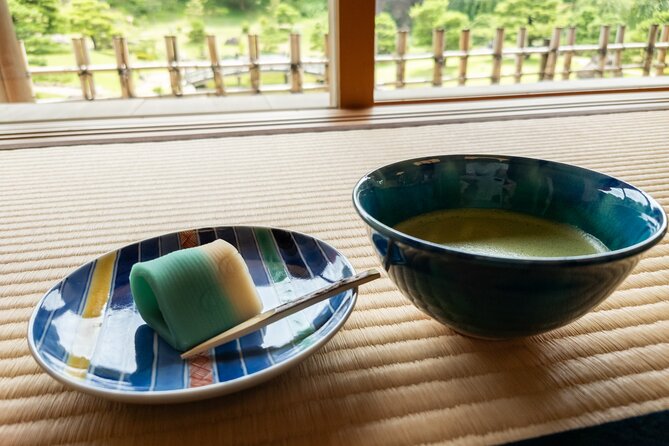
At Gyokusen-an you’ll enjoy matcha tea with wagashi sweets, and the entry is included. The timing is about an hour, and the tea experience is built around views of a centuries-old garden. That combination matters. Matcha tastes better when you’re not rushing, and the scenery helps you slow down without forcing it.
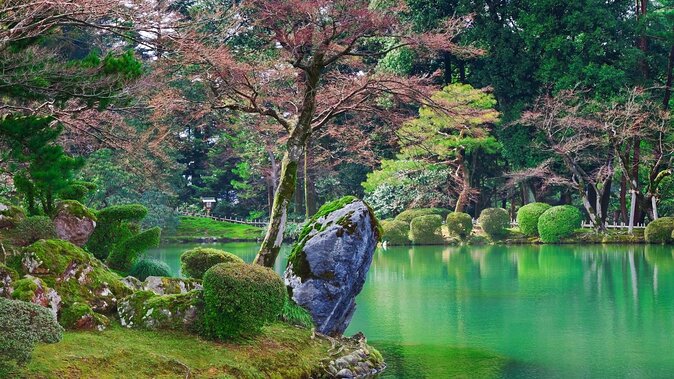
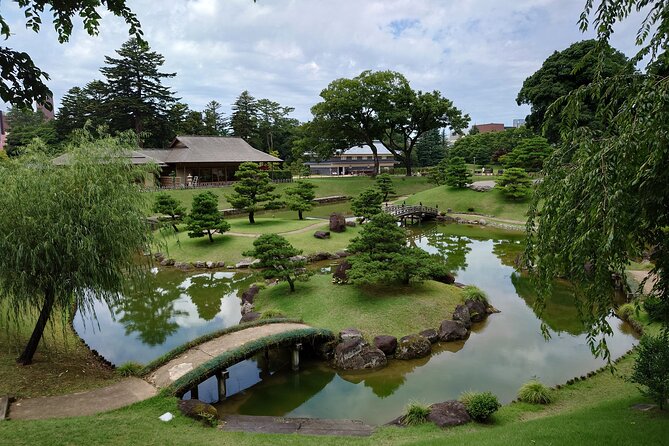
Then you move into Kenrokuen Garden for about 1.5 hours, with admission included. This is Kanazawa’s headline garden, and the point of giving it 90 minutes is that you can do more than walk the first path you see. You can follow the garden’s design ideas and pause when something catches your eye—pond views, tea-related structures, and seasonal touches are all part of the experience (especially if you’re traveling during cherry blossom timing).
A big plus: Kenrokuen is one of the rare places where the “walking” can feel calm. You still cover distance, but the garden’s layout encourages slower steps.
Higashi Chaya district and Kazuemachi Chayagai: tea district streets with room to look
After the gardens, the tour shifts into the tea-house districts that helped shape Kanazawa’s geisha culture.
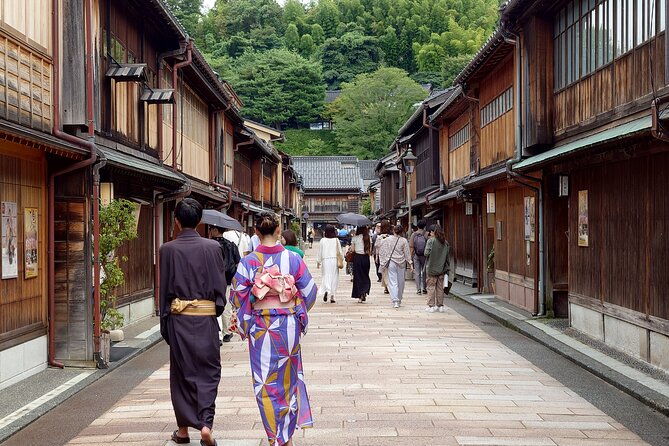
First is Higashi Chaya, with about 1 hour free to explore. Streets lined with old tea houses set the mood fast. You’ll find shops and places to eat nearby, and the district reads like a living reminder of how entertainment districts functioned—then and now.
Next you pass through Kazuemachi Chayagai for about 30 minutes. It’s described as less crowded than Higashi Chaya. The practical reason to include both is simple: you get a fuller picture of how the districts differ in feel, even though they’re tied to the same cultural thread.
One detail that can make this part feel special: if you’re lucky, you may catch geisha entertaining customers in the area. Even if you don’t see anyone, the street layout and architecture give you plenty to notice.
Inside Ochaya Shima: the preserved geisha house stop that’s worth it
For a deeper break from the street scene, you’ll enter Ochaya Shima—a preserved geisha house—for about 30 minutes. Entry is included.
This is the stop that turns the geisha district from a “pretty neighborhood” into something more concrete. The house was once inhabited by geisha and frequented by wealthy patrons, and it’s set up to show that contrast. The description includes colorful walls and musical instruments, which helps you understand what the space was built to support.
If you’re the kind of traveler who likes to learn how homes reflect social roles, this is a strong inclusion. It’s short enough to avoid museum fatigue, but it’s meaningful.
How long it really takes: 9 hours on paper, but plan your energy
The tour runs for about 9 hours. There’s also a note that you’ll be about 1 hour short of the posted 9-hour number because a 1-hour lunch break is included, and you can choose your own restaurant during that time with guide recommendations.
Here’s how to think about timing:
- You’ll start at Kanazawa Station around 9:00 am.
- You’ll end back at the meeting point.
- You’ll have planned breaks at key stops (tea, gardens, preserved house), but it’s still a full-day walking route.
And yes, the walking adds up. In the guidance I saw from people who did this day, the distance was often felt as roughly 10–12 km depending on pace and how fast you move between stops. That can be fine for many travelers, including active seniors, but it can be exhausting in hot weather.
Practical advice: wear shoes you can walk in for hours, bring water, and use the sit-down moments on purpose. Don’t try to “power through” every segment. A good guide will help manage pacing.
Guide quality is the real differentiator here
This tour lives and dies by the guide, and the feedback I gathered consistently points to the same pattern: guides make the day feel like it has a logic.
People highlighted guides such as Mike (humor and strong history storytelling), Akari (professional, clear explanations, including how Kanazawa grew as an alternative to Kyoto), Garrett (adaptability and deep context), Daniel (thoughtful pacing and keeping space for enjoyment), Lee (insight into past and present culture), and Mohamed and Fadir for knowledgeable, helpful guidance.
What that means for you: if you’re not into reading museum plaques all day, you’ll still get meaning. If you are into learning, you’ll get extra context that makes Kanazawa feel like more than a list of stops.
Price and value: what you get for $151.30
At about $151.30 per person, this tour isn’t the cheapest option—but it’s also not overpriced when you map it to what’s included.
Your included items are:
- Matcha tea and wagashi at a tea house
- Kenrokuen Garden entry
- Shima Chaya preserved geisha house entry
- English-speaking guide
- Plus several stops that list free admission (like the Ashigaru Museum and parts of the samurai/castle/temple area)
Lunch is the only clear omission, and it’s handled in a smart way: the tour gives you time to eat where you prefer and lets the guide recommend options.
So the value equation is basically this: you’re paying for the guided route plus paid cultural entries that can cost time (and sometimes separate ticketing) if you try to DIY. For a first full day in Kanazawa, that can be a real money-saver in stress, not just dollars.
Who should book this tour, and who might skip it
This tour is a great fit if:
- you want a first full day introduction to Kanazawa’s layout and culture
- you enjoy historical districts (samurai areas) and tea culture
- you want to see Kenrokuen Garden with enough time to enjoy it
- you like guided storytelling, especially from guides who can pace the day
You might think twice if:
- you dislike long walking days, even with breaks
- you need a very slow itinerary with frequent rest
- you’re traveling with someone who struggles in heat, since much of the route is outdoors
If good weather is on your side, it’s a strong day. The tour is also described as requiring good weather.
Should you book this Kanazawa day walk?
I’d book this if you want the best kind of “Kanazawa overview”: not a quick checklist, but a route that makes samurai, gardens, and geisha districts feel linked. The matcha break and the preserved Ochaya Shima visit are especially good at turning cultural theme into something you can see and experience.
If you’re sensitive to walking distance, plan your footwear and pacing carefully. If you do that, this is an efficient way to get into Kanazawa fast—without feeling like you’re sprinting between far-flung sights.
FAQ
How long is the full-day tour?
It runs for about 9 hours (approx.). There is also a 1-hour lunch break included in that schedule.
Where does the tour start and end?
It starts at Kanazawa Station (Japan, 920-0858, 石川県金沢市木ノ新保町1番1号) and ends back at the meeting point.
What time does the tour begin?
The start time is 9:00 am.
Is lunch included?
No. Lunch is not included, but you’ll get a 1-hour lunch break during the tour. You can pick your own restaurant with recommendations from the guide.
What’s included in the price?
Matcha tea and wagashi sweets at a tea house, entry to Kenrokuen Garden, entry to the Shima Chaya preserved geisha house, and an English-speaking guide.
Do I need to pay for Kenrokuen Garden?
No. Entry to Kenrokuen Garden is included.
Do I get to visit a preserved geisha house?
Yes. Entry to the Shima Chaya preserved geisha house (Ochaya Shima) is included.
How big is the group?
The tour is limited to a maximum of 15 travelers.
Is the tour fully walking?
It is a walking tour and you should expect a lot of time on foot throughout the day.
What happens if the weather is poor?
The experience requires good weather. If it’s canceled due to poor weather, you’ll be offered a different date or a full refund.
Can I cancel for free?
Yes, free cancellation is available. You can cancel up to 24 hours in advance of the experience for a full refund.