REVIEW · CHIYODA CITY
From Tokyo: Mt Fuji, Arakurayama and Kawaguchi Lake Day Trip
Book on GetYourGuide →Operated by Hakuu Co Ltd. · Bookable on GetYourGuide
Mt Fuji can look unreal. This day trip is built for big views and quick photo wins, from Arakurayama Sengen Park to Lake Kawaguchiko. I especially like the way your guide turns the scenery into stories, with the standout guide Hikari-san connecting the day with humor and Fuji legends. I also like that you’re not left to figure out timing and meeting points on your own. One thing to consider: the famous Chureito Pagoda climb means 397 steps, so plan for stamina and comfortable shoes.
The itinerary is tightly planned but not pointless. You get multiple Fuji perspectives in one outing, plus classic stops like Oshino Hakkai springs and the Lawson Lake Kawaguchi photo spot. A possible drawback is that the day can feel a bit busy at each stop because traffic and crowds affect timing, so don’t expect slow, wandering hours at every location.
In This Review
- Key points before you go
- Why This Mt. Fuji Day Trip Works (Even If Fuji Hides)
- Price and Value: What $55 Buys You (And What It Doesn’t)
- Tokyo Departure: Meeting Point and How to Avoid the One Biggest Stress
- Arakurayama Sengen Park and Chureito Pagoda: The Classic Fuji Postcard Shot
- Fujiyoshida and the Hikawa Clock Shop Street View
- Oshino Hakkai Springs: Fuji’s Meltwater in a Quiet Village
- The Lawson Lake Kawaguchi Photo Stop: Fun, Fast, Worth It
- Lake Kawaguchiko: Oishi Park in Most Seasons, Maple Corridor When Autumn Hits
- Timing, Transport, and Why the Day Feels Full
- The Guide Makes the Difference: Hikari-san’s Style and What to Expect
- What to Pack and How to Handle the Physical Parts
- Who Should Book This (And Who Might Not Love It)
- Should You Book This Mt. Fuji Day Trip?
- FAQ
- Is this tour suitable for families with children or elderly travelers?
- What if the weather is bad or Mt. Fuji isn’t visible?
- Are meals included?
- What time will I return to Tokyo?
- Where do I meet the guide?
- Are admission tickets included?
Key points before you go
- Hikari-san’s storytelling style makes the day feel more personal than a checklist
- Chureito Pagoda climb (397 steps) gives you a real wow-view if your legs are up for it
- Oshino Hakkai springs pair quiet photos with easy local food snacks
- Lawson Lake Kawaguchi is a fun, low-effort photo stop with fast convenience-store treats
- Arakurayama Sengen Park + Lake Kawaguchiko give you Fuji views across seasons
- Seasonal swap in late Oct–mid Nov trades Oishi Park for the Maple Corridor
Why This Mt. Fuji Day Trip Works (Even If Fuji Hides)
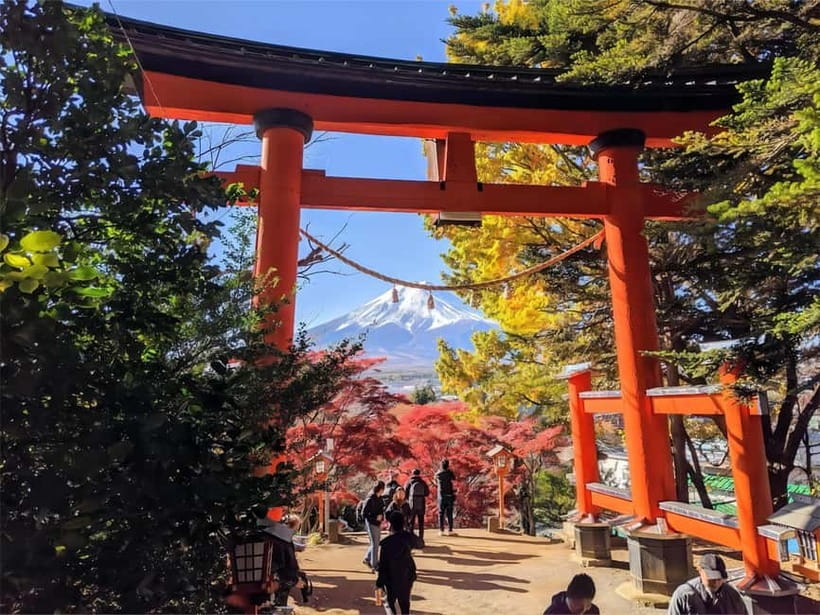
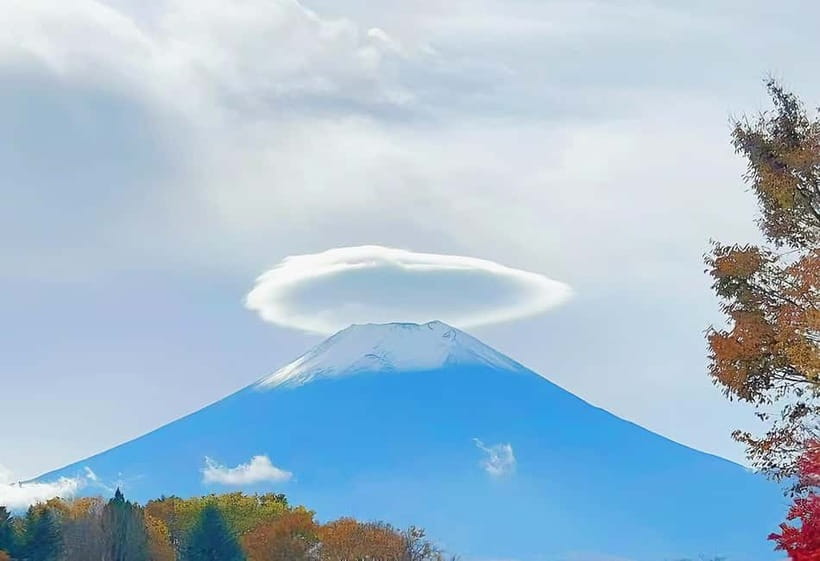
A Mt Fuji day trip is really a weather puzzle. On clear days, you’ll get the iconic mountain framed by parks, pagodas, and lake viewpoints. On foggy or rainy days, you’ll still have excellent scenery and cultural stops that don’t rely on perfect visibility.
What makes this one efficient is the balance of viewpoints and variety. You’re not doing only one “pretty place.” You’re mixing temple-like views (Arakurayama and Chureito), spring landscape (Oshino Hakkai), and lake panoramas (Lake Kawaguchiko). That gives you more chances to enjoy the mountain, even when it plays hide-and-seek.
I also like the human side of the tour. Your guide runs the day in multiple languages (English, Chinese, and Japanese), and the best guides—like Hikari-san—focus on local legends and on-the-ground tips for where to stand and when to shoot.
One more practical win: the trip is structured around transport from central Tokyo, so you’re not juggling trains, buses, and timed transfers on your own. Just keep the group pace in mind.
Price and Value: What $55 Buys You (And What It Doesn’t)
This experience is priced at $55 per person for a long, full-day outing from Tokyo to the Fuji area. For most first-timers, the biggest cost is not the sightseeing—it’s the time and effort of getting there and back reliably. A roundtrip, air-conditioned bus plus a live guide is a strong value for that.
Important value detail: admission tickets aren’t included. That means your total spending depends on whatever entries you choose (if any) at stops. The good news is that several highlights are built around viewpoints and public areas, where your main “ticket” is your time and energy.
Also note: luggage is limited. If you’re traveling with lots of bags, plan to travel light so you don’t feel stressed. Food and drinks are not allowed on the vehicle, which keeps the day moving but means you’ll buy snacks at stops.
Tokyo Departure: Meeting Point and How to Avoid the One Biggest Stress
Your pickup is set up for convenience: meet your guide at Tokyo Station Marunouchi North Exit, near the taxi stand at the north exit. This area is easy to reach by public transport, and it saves you from starting your day with a scavenger hunt.
Timing matters. Your guide’s phone number and vehicle details are shared the night before around 7:00–8:00 PM, and you’ll be told the exact meeting time by email. Arrive on time and stay with the group; if you miss the bus at a stop, you may need to take a taxi to catch up at the next location.
If you’re visiting during major holiday periods (late September into early October), plan for heavier traffic around Tokyo and the Fuji area. That can push return times, so avoid scheduling evening plans on your travel day.
Arakurayama Sengen Park and Chureito Pagoda: The Classic Fuji Postcard Shot
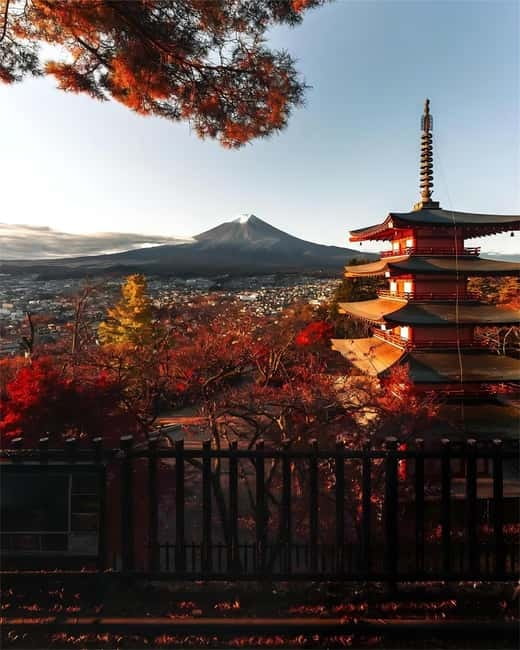
This is the core “yes, that’s Mt Fuji” moment for most people. You’ll start with Arakurayama Sengen Park, where the views are framed in a way that feels made for photography. From here, you head toward the Chureito Pagoda, one of Japan’s most recognizable Fuji backdrops.
Expect the climb. The route to the pagoda includes 397 steps. It’s not a technical hike, but it is real exercise—so wear supportive shoes and pace yourself. If you’re with kids or you’re older, take breaks and don’t rush. The payoff is that the pagoda sits high enough to deliver a wide, “whole mountain in frame” feeling when conditions are good.
Seasonal variety is a big part of why this stop is worth it. Depending on when you go, you can see cherry blossoms, deep greens, autumn leaves, or even a snowy look around Fuji’s silhouette.
Reality check: this place can be crowded. The good strategy is to go in with patience and follow your guide’s cues on where to stand and when to shoot.
Fujiyoshida and the Hikawa Clock Shop Street View
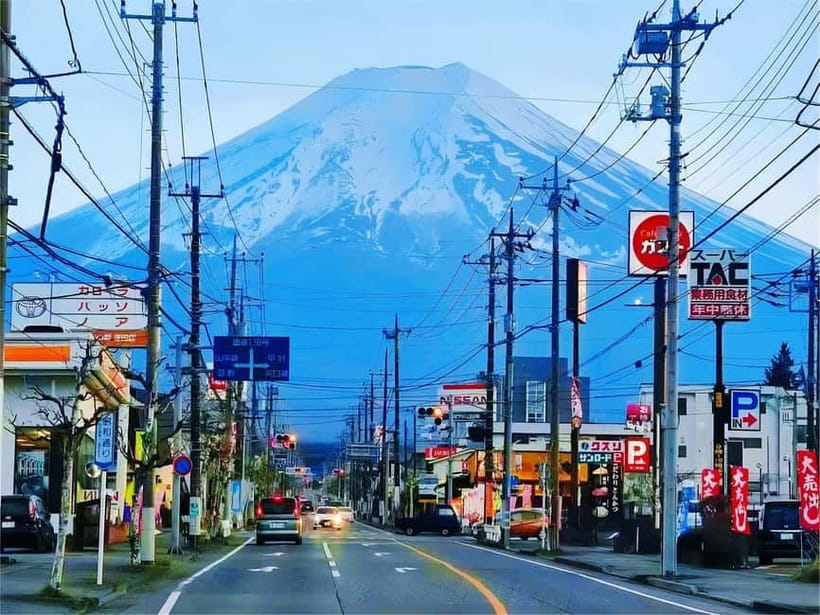
After the bigger effort, you get a lighter stop with a very specific photo advantage. You’ll visit the Hikawa Clock Shop area, and your guide will point you toward a charming street layout where the road itself helps frame Mt Fuji.
This is a great pause in the day because it doesn’t demand climbing. You can walk, look for a clean angle, and grab a photo without burning energy you’ll need later at Oshino Hakkai and Lake Kawaguchiko.
If Fuji is visible, the effect is excellent: the mountain sits in the distance in a way that feels naturally composed. If it’s cloudy, you’ll still get a pleasant street stop without feeling like the day has been ruined.
Oshino Hakkai Springs: Fuji’s Meltwater in a Quiet Village
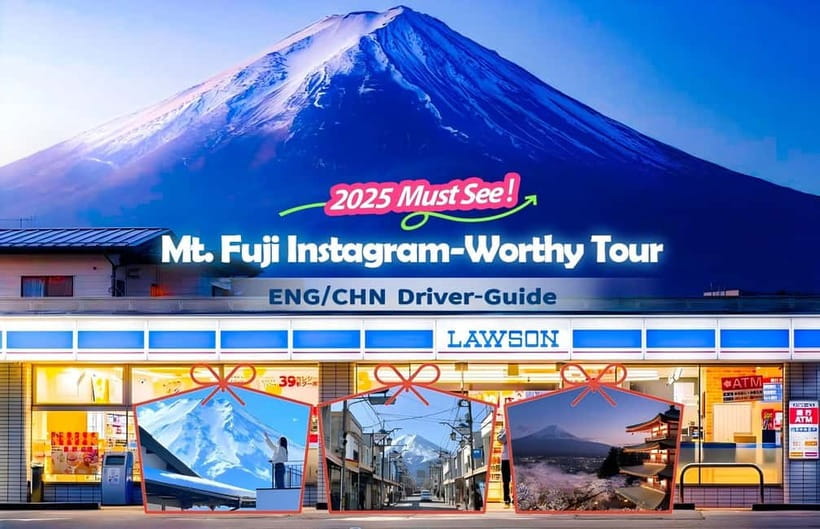
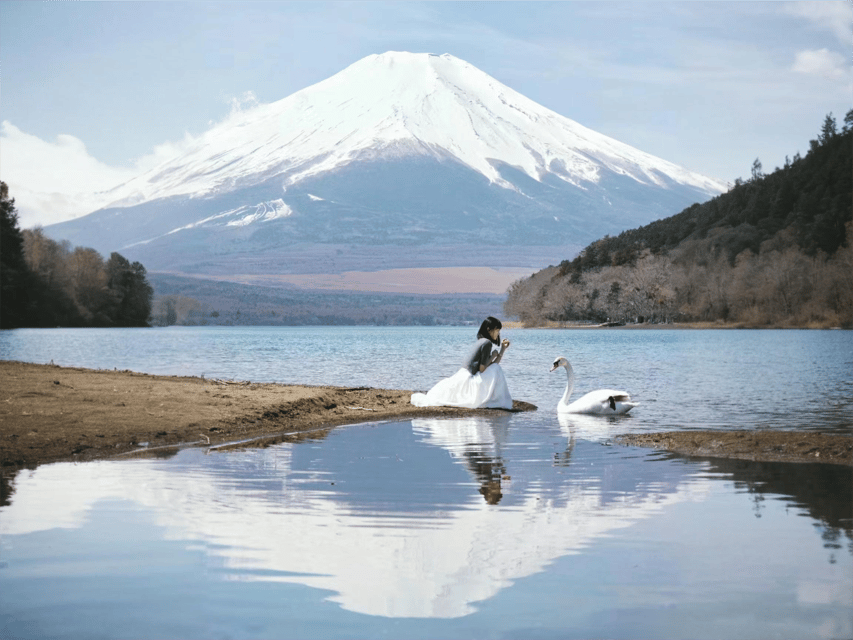
This is the “slow down and breathe” stop. Oshino Hakkai is known for eight springs formed by snowmelt from Mt Fuji. The atmosphere is calm and scenic, and the reflections are the reason photographers keep coming back.
You’ll have time to walk around and snap the mountain reflection when conditions allow. And yes, it’s also a place to snack. You can taste local treats like tofu with pickled miso and kusamochi, a green rice cake with sweet red bean paste. You can also try the sweet spring water if you want something distinctly local.
One caution: this stop can be busy, and you may want some cash on hand for small stalls, since payment options may vary by vendor. If you’re hoping to buy snacks here, don’t wait until the last minute to realize you’re short.
The Lawson Lake Kawaguchi Photo Stop: Fun, Fast, Worth It
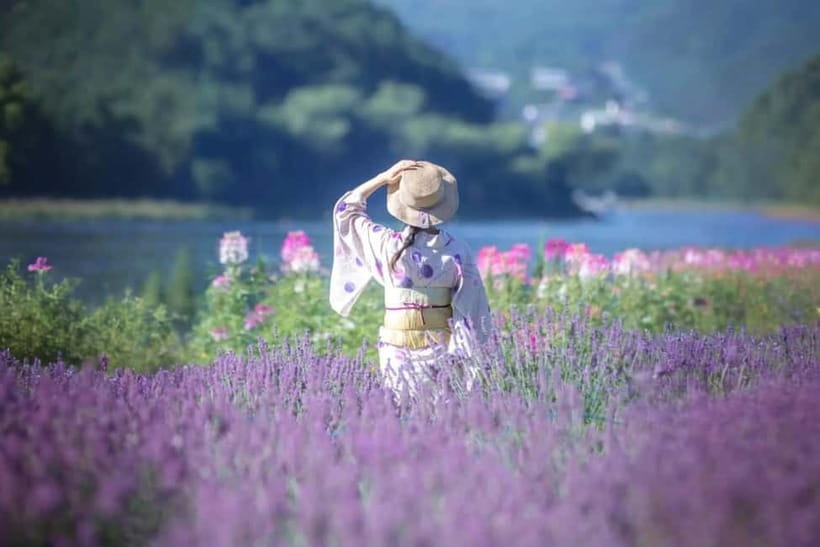
Some photo spots are just jokes. This one is silly in the best way: the LAWSON Lake Kawaguchi stop, where the iconic convenience store sign lines up with Mt Fuji in the background.
You’ll get a break time here, enough to:
- take the classic shot
- grab coffee or a hot snack
- reset before the lake views
This is also a smart stop for families. It’s easy to navigate, and it doesn’t require you to run around for the perfect angle. It’s a quick win, which matters because the day is long.
Lake Kawaguchiko: Oishi Park in Most Seasons, Maple Corridor When Autumn Hits
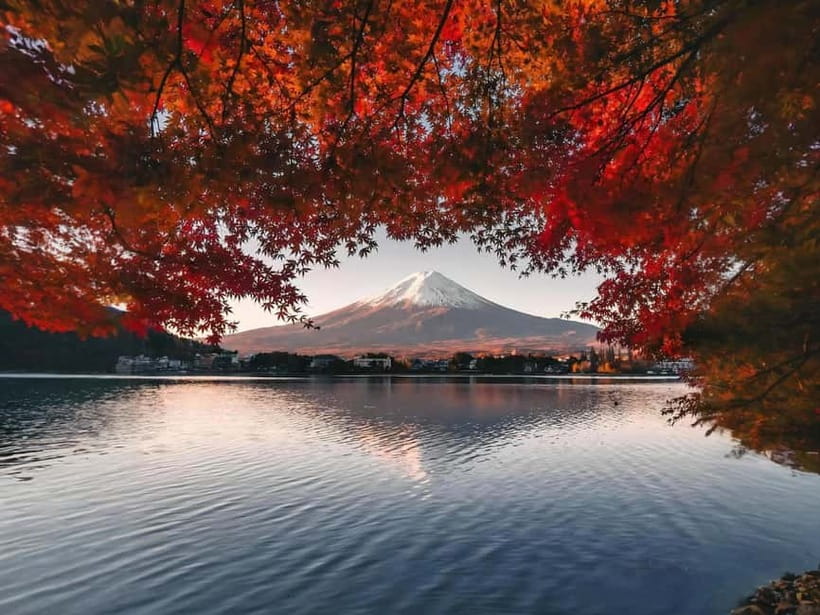
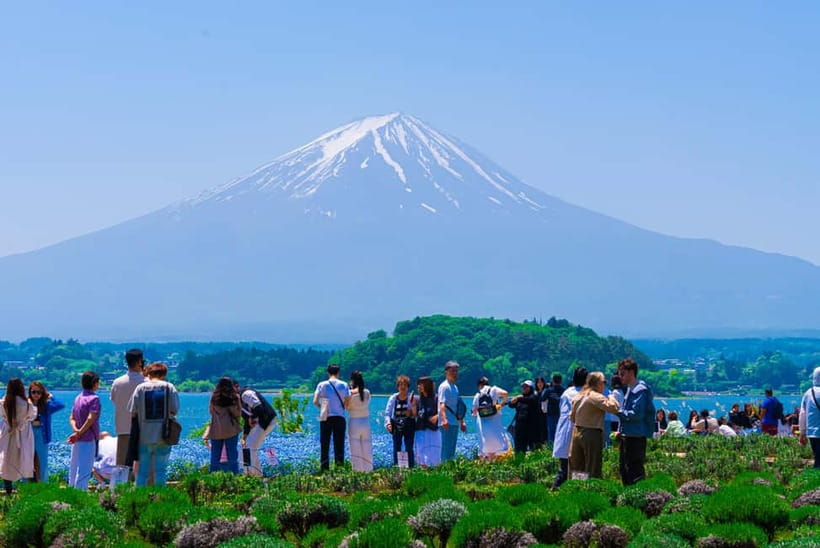
The final major view comes at Lake Kawaguchiko. You’ll have time at a planned viewpoint area—either Oishi Park or, during October 30 to November 20, the Maple Corridor instead.
In most months, Oishi Park is known for flower fields with seasonal color. Think lavender, begonia, cosmos, and Japanese blood grass—great when you want Fuji plus color underfoot.
During the maple window (Oct 30–Nov 20), you’ll swap to the Maple Corridor, a tunnel-like stretch where autumn leaves frame the mountain view. If you’re visiting in that window, this is the seasonal trade that makes the day feel special, not just scenic.
Either way, you’ll get walking time and time for photos. Lake views tend to feel slower and wider than the hillside viewpoints, so use this portion to slow down—especially if earlier stops were crowded.
Timing, Transport, and Why the Day Feels Full
The schedule is built around the drive time. You’ll spend about 105 minutes on the bus each way, with scenic views en route. Once you arrive, you’ll have multiple dedicated blocks of time rather than one long continuous stop.
Here’s how the pacing usually feels:
- Arakurayama Sengen Park: about 1 hour
- Chureito Pagoda: about 45 minutes
- Hikawa Clock Shop: about 20 minutes
- Oshino Hakkai: about 80 minutes
- Lawson Lake Kawaguchi: about 20 minutes
- Lake Kawaguchiko: about 50 minutes
The tour typically ends around 16:30, with a planned return to Tokyo around 18:00–18:30, though traffic and weather can shift this. During busy periods, expect 15–45 minutes of adjustments to avoid the worst congestion and to keep the big highlights covered.
That’s the practical reason this format works. You’re still seeing a full set of signature spots, but the guide can reorder or tweak the flow to protect the best photo windows and travel time.
The Guide Makes the Difference: Hikari-san’s Style and What to Expect
A lot of Fuji tours are simply transportation with a script. This one is more human than that—especially if you’re assigned Hikari-san.
The best version of the day goes like this: your guide keeps things light, shares local legends you won’t find in a random guidebook, and gives photo tips that help your pictures look intentional instead of accidental.
In the real world, this matters because some viewpoints are crowded and weather changes. A guide who knows where to stand and when to move can turn a chaotic scene into a smooth routine.
Also, the day is designed so you have some free time at each stop. You’re not being marched every second. You get enough room to wander a bit, grab snacks, and take your own pace—while staying on track.
What to Pack and How to Handle the Physical Parts
This is a long day. Pack for comfort more than fashion.
Bring:
- comfortable shoes (the pagoda steps are serious)
- weather-appropriate clothing
Know before you go:
- no large bags or luggage
- no food and drinks on the vehicle
And keep this mental note: the tour is safer and smoother when you stay with your group and follow your guide’s instructions. Missing the bus can turn a “day trip” into an expensive detour via taxi to the next location.
Who Should Book This (And Who Might Not Love It)
This tour is a strong fit if you:
- want a first-timer-friendly Mt Fuji day with multiple viewpoints
- care about photo stops that are well timed
- want local storytelling instead of a dead transport schedule
- prefer a guided plan that handles getting around the Fuji region from Tokyo
If you’re traveling with kids, it’s generally family-friendly, but remember the 397 steps at Chureito Pagoda may be challenging. For older travelers, the listing says it’s not suitable for people over 75, which makes sense given the walking and stair climbing involved.
If you’re the type who wants total freedom and unstructured time, a private day with more flexible pacing might be a better match than a group schedule. But for many people, the structured route is exactly the point.
Should You Book This Mt. Fuji Day Trip?
Book it if you want the classic hits—Arakurayama Sengen Park, Chureito Pagoda, Oshino Hakkai, and Lake Kawaguchiko—with a guide who turns the ride into part of the experience. At around $55 per person with roundtrip transport and live multilingual guidance, the value is hard to beat for a full-day plan that gets you out of Tokyo and back without stress.
Skip or reconsider if you can’t handle the pagoda steps, you hate crowds at major viewpoints, or you’re traveling with lots of luggage. Also, if you’re going during peak holiday traffic windows, keep your evening plans flexible.
If you’re hoping to see Fuji clearly: your odds are best with calmer weather and patience. Either way, you’ll come home with multiple perspectives on the mountain—and a day that feels more like a curated route than a rushed box-check.
FAQ
Is this tour suitable for families with children or elderly travelers?
Yes, it’s family-friendly, but the Chureito Pagoda stop includes a 397-step climb, which can be difficult. Wear comfortable shoes and take breaks as needed. The tour is not suitable for people over 75.
What if the weather is bad or Mt. Fuji isn’t visible?
Weather varies. Even if Mt. Fuji is limited, the day still includes scenic places like Oshino Hakkai and Lake Kawaguchiko that offer good experiences year-round.
Are meals included?
Meals are not included. You can buy local snacks at stops, such as tofu with pickled miso and kusamochi at Oshino Hakkai.
What time will I return to Tokyo?
The tour ends around 16:30, with an aim to return to Tokyo around 18:00–18:30. During peak periods, traffic may delay the return.
Where do I meet the guide?
Meet at Tokyo Station Marunouchi North Exit, near the taxi stand at the north exit. Your guide’s phone number and vehicle information are shared the night before.
Are admission tickets included?
No. Admission tickets are not included. You may also find that spending depends on what you choose to purchase or enter at each stop.