REVIEW · FES
From Fes: Meknes Volubilis and Moulay Idriss Day Trip
Book on GetYourGuide →Operated by 3t Travel · Bookable on GetYourGuide
A day trip that packs three time periods. You get the shock of Volubilis Roman ruins, then the quiet holiness of Moulay Idriss, and finally the monumental Meknes Medina gates like Bab Mansour. The only real drawback is that it’s a long, full day with extra costs like entry fees and no food included.
What makes this one work well is the mix of comfort and smart guiding. Your ride is usually an air-conditioned vehicle with a professional driver, and many people add local guiding at Volubilis and in Meknes so the ruins and architecture make sense fast. I also like the practical photo-stops along the way—helpful when the route gives you big views without you having to plan anything.
One more consideration: if you go on a Friday, some shops in Meknes’ Medina may be closed, so your free-stroll time can feel shorter. Still, the core sights don’t vanish, and Volubilis remains the main event.
In This Review
- Key takeaways before you go
- Why this Volubilis, Moulay Idriss, and Meknes route makes sense from Fes
- Getting out of Fes: air-conditioned comfort and photo-stops along the way
- Volubilis Roman ruins: where the countryside starts talking
- Moulay Idriss: holy town streets, a mosque-area stop, and a photo viewpoint
- Meknes Medina: Lahdim Square, Bab Mansour, and that Spanish-Moorish sparkle
- Walls, Mausoleum of Moulay Ismail, and the Museum stop that adds texture
- Timing, energy level, and why this day can feel longer than 8 hours
- Price and value: how the $23 per person really plays out
- Best for who, and who might want a different plan
- Should you book this Fes day trip with 3T Travel?
- FAQ
- How long is the day trip?
- What is included in the $23 per person price?
- Are entry fees and meals included?
- What stops are included in the itinerary?
- Can non-Muslims enter the mosque in Moulay Idriss?
- What language will the driver speak?
- Is a local guide included?
- Does pickup from my riad or hotel in Fes work?
Key takeaways before you go
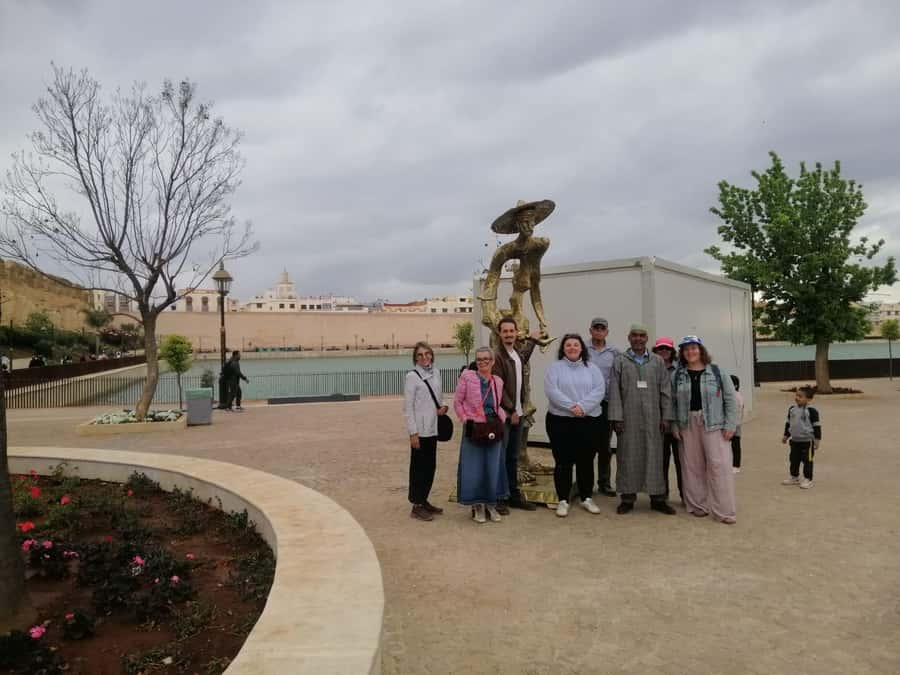
- Volubilis is the anchor: Roman remains feel big, even when the visit is only a few hours.
- Local guides make ruins click: people often cite guides like Majid as the difference-maker at Volubilis.
- Moulay Idriss is about atmosphere: compact streets and a holy-town feel, plus a viewpoint for photos.
- Meknes highlights are real set pieces: Lahdim Square and Bab Mansour are built for camera lovers.
- Plan for a long day: it’s listed as 8 hours, but your rhythm can vary by traffic and sightseeing pace.
- Friday timing matters: the Medina can slow down for shopping and browsing.
Why this Volubilis, Moulay Idriss, and Meknes route makes sense from Fes
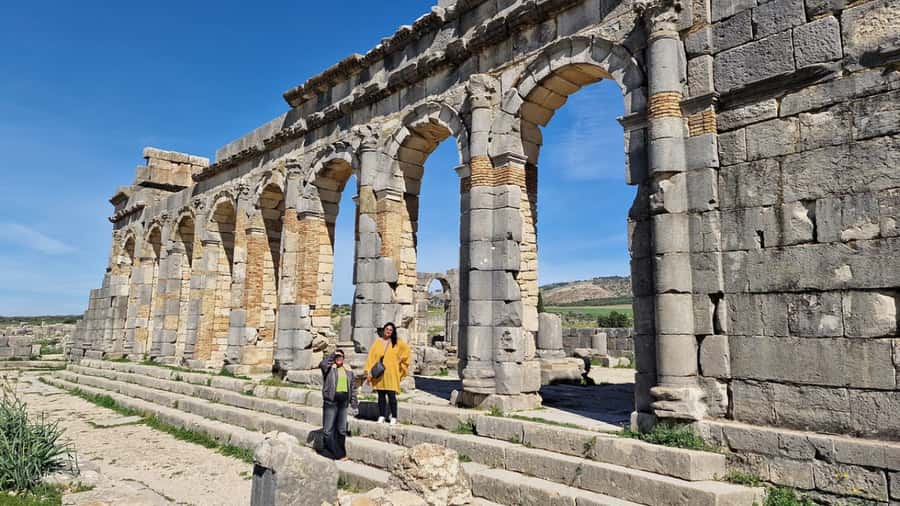
If you’re basing yourself in Fes and want to see beyond the Old City, this day trip is a very practical way to do it. You’re looking at three different Morocco stories in one sweep: Roman remains at Volubilis, Islamic origins and holy-town culture in Moulay Idriss, then imperial-era Meknes with its monumental gates and walls.
The best part is the pacing. You start in the countryside—so the day immediately breaks the “just Medina streets” pattern. Then you return to cities with structure: the holy town feels compact and quiet, while Meknes gives you big architecture that’s easier to read than many labyrinth-style neighborhoods.
This is also one of the few day trips that gives you both scale and detail. Volubilis offers wide-open ruins and mosaics-style context. Meknes offers gates, ceremonial spaces, and a walkable sense of planning—especially around its older sections.
Getting out of Fes: air-conditioned comfort and photo-stops along the way
Leaving Fes by car is the easiest way to do this loop. The tour includes hotel pickup and drop-off in Fes, plus transportation by air-conditioned vehicle, with a professional driver. That matters because Morocco road time can be long even when the distances aren’t huge.
One of the most appreciated touches is the driving style and the small stops along the route. People often mention drivers who take extra pauses when scenery is worth it—or when you need a quick break. Names that come up a lot include drivers like Mustafa and Mohammed, praised for being friendly and answering questions without making the ride feel like a lecture.
Also, the driver is listed as multilingual (English, French, Spanish, Arabic, Italian). If you’re traveling with mixed-language friends, that’s a quiet quality-of-life win: you’re less likely to feel left out when questions come up.
Volubilis Roman ruins: where the countryside starts talking
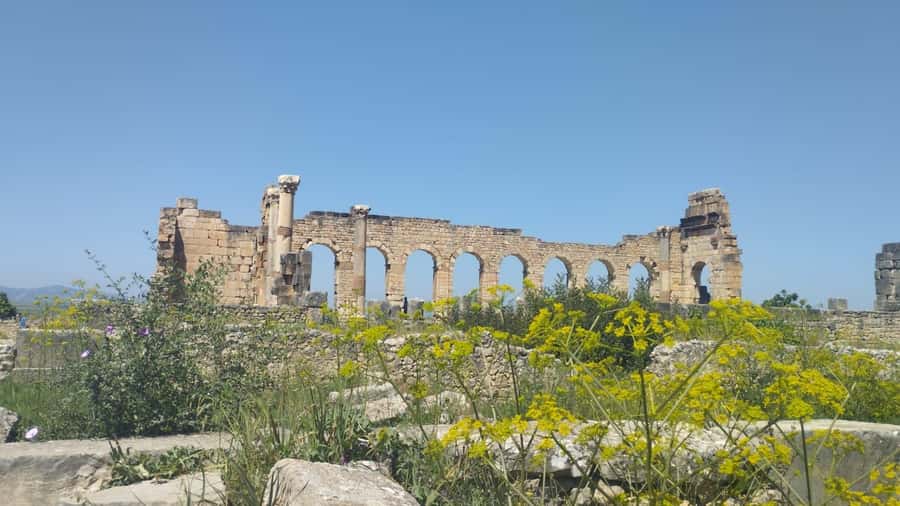
Volubilis is the main reason many people book this trip. It’s an ancient complex—about 2000 years old—with Roman-era remains that feel surprisingly “alive” when you’re walking among them. Even if you only know a little about Rome, the site gives you enough to understand the layout: the idea of a city, the logic of built spaces, and the long timeline of empires in Morocco.
Here’s what I think makes Volubilis special on a day trip: it’s readable. You’re not spending all day in a museum. You’re outside, on foot, looking at ruins that show the wear-and-weather of time. And because the site is well-known, it’s the kind of place where a local guide can do a lot in a short time.
A big theme in feedback is that adding a local guide at Volubilis is worth it. People mention guides like Majid who explain the ruins clearly and make the history feel understandable, not textbook-only. One traveler even noted that a guide with the right level of English can prevent you from relying solely on information posters.
One practical note: Volubilis is the time where you’ll feel the most walking. Wear comfortable shoes. If you’re the type who wants to pause often for photos, keep that energy for here; it’s the place most likely to reward the extra time.
Moulay Idriss: holy town streets, a mosque-area stop, and a photo viewpoint
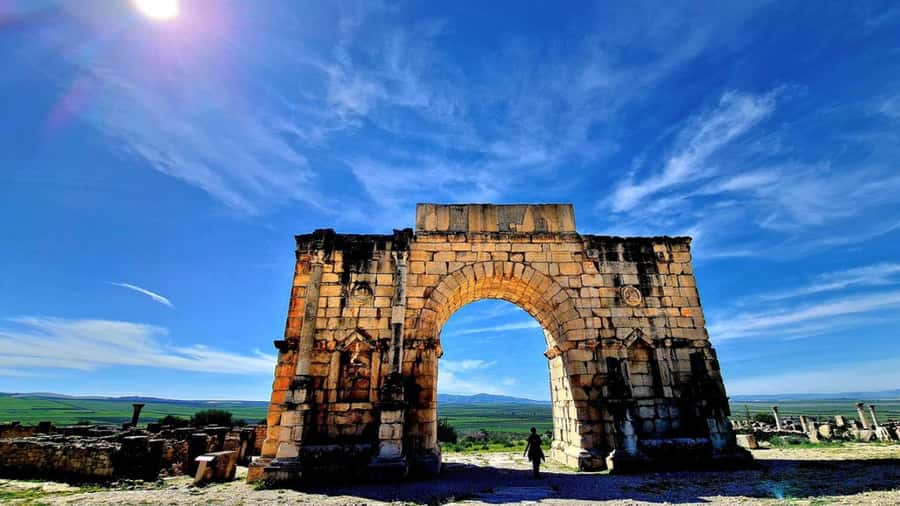
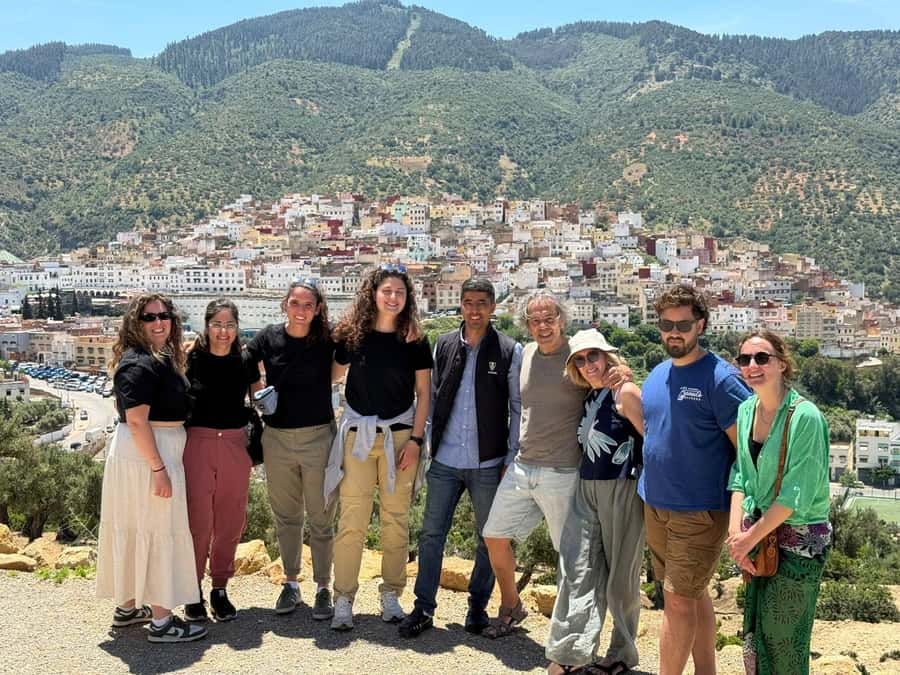
After Volubilis, the day shifts from open ruins to compact holy-town life. Moulay Idriss is one of Morocco’s holiest towns, connected to Moulay Idriss I, who introduced Islam in 789 AD. On this stop, you’re not chasing huge monuments. You’re experiencing a place with meaning, built around faith and tradition.
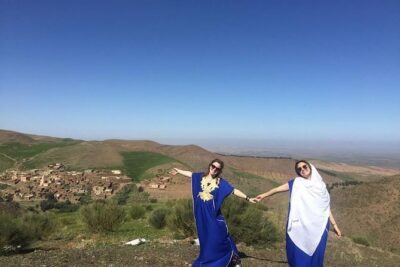
You’ll tour the narrow streets of the town and see the holy-town vibe up close. One highlight is the chance to get a view of the town—useful if you want a “from above” photo moment without having to hike.
The mosque visit is where you should manage expectations. Non-Muslims are not allowed to enter the mosque area, so the stop may feel shorter than you hoped. That’s normal here. The trade-off is that you still get the atmosphere: people moving through small lanes, the soundscape changing, and the feeling that you’re in a place with deep local devotion.
If you like quiet stops that slow the day down for a bit, Moulay Idriss is usually where that happens. If you’re rushing and want big sights at every minute, you might find this portion less “hands-on.” But in a single-day trip, it gives you a necessary cultural contrast.
Meknes Medina: Lahdim Square, Bab Mansour, and that Spanish-Moorish sparkle
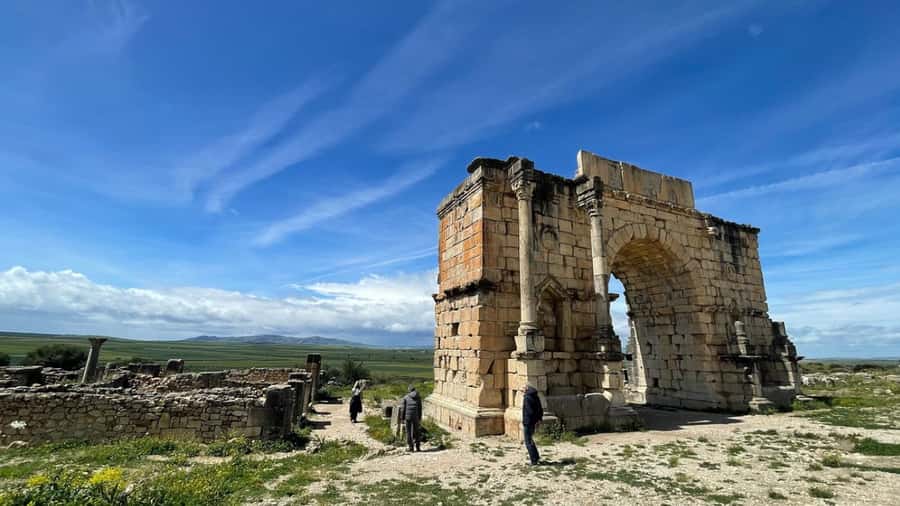
Then comes Meknes. Founded in the 11th century by the Almoravids as a military settlement, it grew into one of Morocco’s four imperial cities. What you feel in Meknes is different from Fez: it’s still Medina life, but with a more monumental, planned vibe.
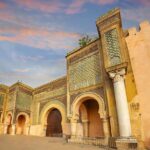
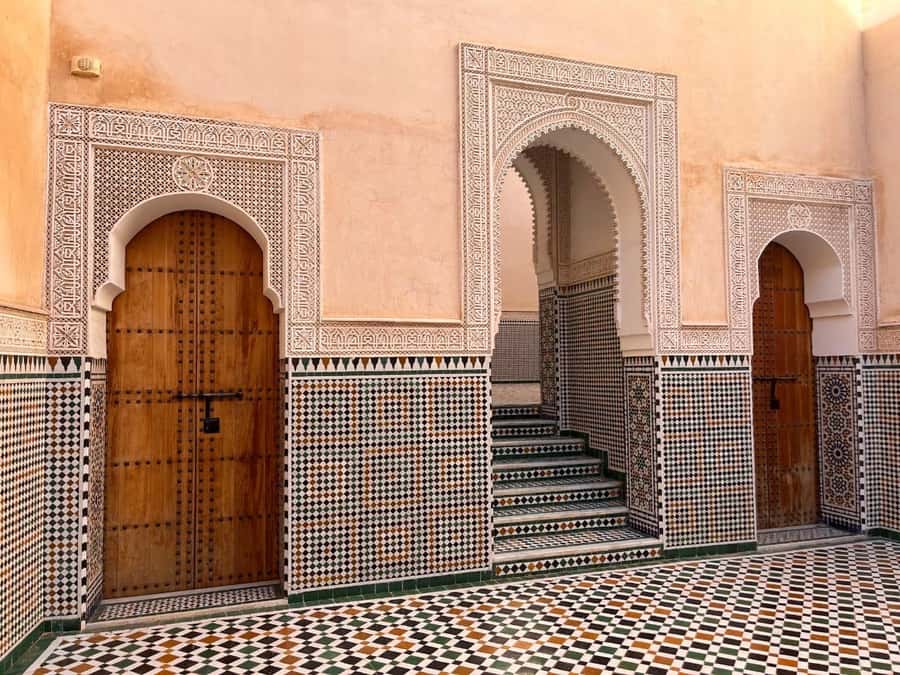
The Medina visit focuses on key architecture and set-piece spaces. You’ll see impressive gates and ornamental details tied to Spanish-Moorish design influences. Among the names that show up in the highlights are Bab Mansour and Lahdim Square—both easy to recognize, and both great for photos because the scale is obvious.
One thing I like about Meknes as a day-trip stop is how it rewards a guided walk. The streets can be tricky to navigate on your own, and the historical context makes the buildings feel purposeful instead of random. People often credit standout guides like Rashid for explaining the city’s logic, answering questions, and pointing out what’s worth your time.
If you’re coming from the heavier maze of Fez, Meknes can feel calmer. That can be good. Some people even felt Meknes was a bit of a repetition after Fez, so they didn’t pay extra for additional guided wandering beyond the core program. Translation: go with the planned highlights and then decide if you want more time wandering.
Walls, Mausoleum of Moulay Ismail, and the Museum stop that adds texture
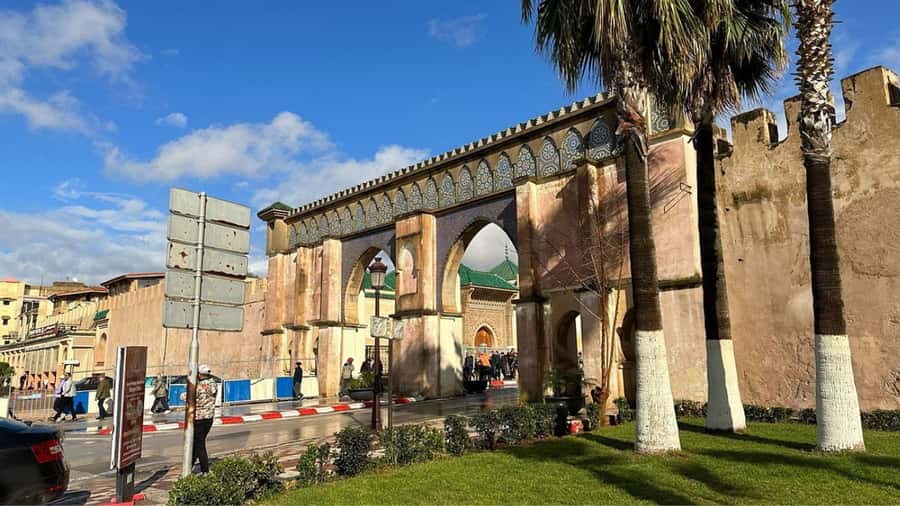
Meknes isn’t just gates. You also get a look at city walls and the Mausoleum of Moulay Ismail, the founder of the Alaouite dynasty and a sultan when Meknes served as the capital city. This is the part of the day where Meknes turns from streets-and-photos into something closer to imperial planning.
If you enjoy architecture that hints at power—where the city seems built to impress—this segment tends to land well. The mausoleum stop also gives you a chance to connect the dots between who ruled and what you’re seeing in stone.
There’s also a Museum of Moroccan Art stop. It’s a lighter beat than Volubilis or the Medina gates, but it gives you a useful bridge: you see handicrafts and get a sense of Morocco’s artistic traditions beyond architecture. If you like souvenirs, this is usually where you can understand what you’re buying and why it exists.
Timing, energy level, and why this day can feel longer than 8 hours
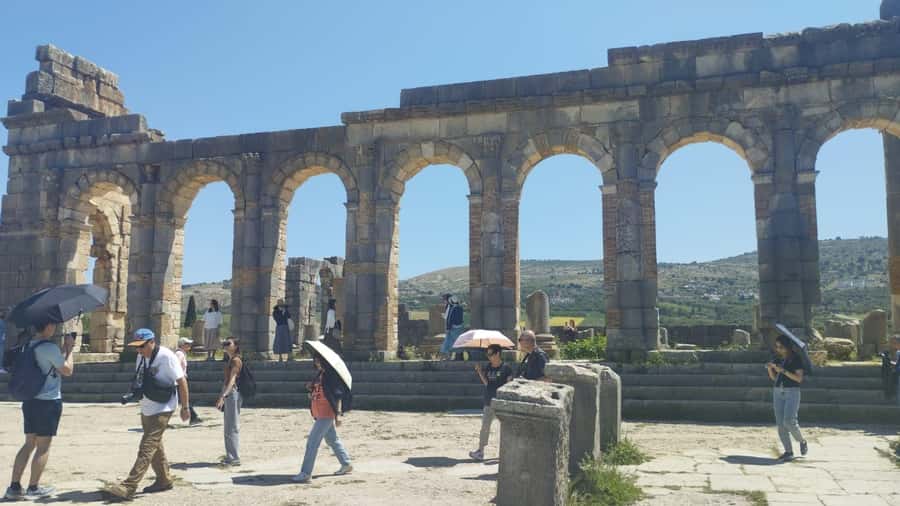
The tour is listed as 8 hours, but your day may stretch depending on traffic, how often you stop for photos, and how long you linger at each site. Many people describe it as well-paced, with a comfortable rhythm. Others note the day can run longer if you’re taking your time.
Here’s the reality check: you’re doing three separate locations with transitions in between. That means you’ll want a strategy for pacing. For example:
- Spend your “slow time” at Volubilis, where walking pays off.
- Keep your Moulay Idriss time flexible, since mosque access is limited for non-Muslims.
- In Meknes, focus on the biggest named highlights first, then decide if you want extra wandering.
Also, if you’re sensitive to stairs and uneven ground, wear shoes with grip. Ruins and older streets don’t play nice with slick soles.
Price and value: how the $23 per person really plays out
At about $23 per person, this is priced like a budget-friendly way to get structure and transportation in one day. The included basics are important value points: hotel pickup and drop-off in Fes, an air-conditioned vehicle, and a professional driver.
What’s not included is also clear: entry fees, food and drinks, and local guides. In practice, the biggest value upgrade is the guide part. People consistently say that a local guide at Volubilis and Meknes changes the experience. You stop seeing the ruins as random rocks and start connecting them to bigger stories.
If you’re the type who reads the information signs and doesn’t mind self-guiding, you might feel less pressure to pay for a guide. But the difference is real when a guide can explain what you’re looking at in plain language. There are also situations where the guide’s language skill matters—good English is a deal-maker at Volubilis.
Food-wise, plan to cover lunch yourself or accept a lunch stop in Meknes as part of the day’s flow. Some outings include a restaurant meal break, with people mentioning a recommended restaurant experience in Meknes. Still, don’t count on it being a full meal plan included in your price.
Best for who, and who might want a different plan

This day trip is ideal if you want a one-day hit of Morocco’s layered history without negotiating transport on your own. I’d especially recommend it if you:
- Want Volubilis from Fes but don’t want the hassle of figuring out timing and transit.
- Like architecture and city gates—Bab Mansour and Medina walks are a strong match.
- Enjoy having a guide decode what you’re looking at, even briefly.
If you already feel maxed out on historic Medinas after Fez and want more countryside nature instead, you might find Meknes a little less thrilling. And if your schedule includes a Friday, expect some shops to be closed, which can reduce free time for browsing.
Should you book this Fes day trip with 3T Travel?
Yes, you should book if you want a structured day that covers the three big stops—Volubilis, Moulay Idriss, and Meknes—with comfortable transport and the option of strong local guiding.
Book it if you care about context more than just photos. Volubilis and Meknes are the kinds of places where a good guide pays you back quickly, and people often call out guides by name for making the day make sense.
Skip it or adjust expectations if you’re only chasing long stays at one site, or if you get grumpy when a day feels packed. This trip is built for variety. It’s not built for breathing room.
If you do book, put your strongest walking energy into Volubilis, and keep Meknes focused on the best-known highlights first. Then whatever time you have left can be your own Medina wander.
FAQ
How long is the day trip?
It runs about 8 hours, starting with pickup in Fes and ending with return to Fes.
What is included in the $23 per person price?
The tour includes hotel pickup and drop-off in Fes, transportation by air-conditioned car, and a professional driver.
Are entry fees and meals included?
No. Entry fees, food, and drinks are not included.
What stops are included in the itinerary?
You’ll visit the Roman ruins of Volubilis, then the holy town of Moulay Idriss, and then Meknes, including its Medina and major sights such as Lahdim Square and Bab Mansour.
Can non-Muslims enter the mosque in Moulay Idriss?
Non-Muslims are not allowed to enter the mosque, so the stop is more about walking the town and viewing areas outside the mosque.
What language will the driver speak?
The driver is listed as English, French, Spanish, Arabic, and Italian.
Is a local guide included?
Local guides are listed as not included. Getting local guiding is the main add-on decision if you want extra explanation at the sites.
Does pickup from my riad or hotel in Fes work?
Yes. Pickup is optional and can be from your hotel or riad in Fes.