REVIEW · HARIDWAR
From Delhi: Rishikesh and Haridwar Day Trip
Book on GetYourGuide →Operated by India Travel Choice · Bookable on GetYourGuide
Two Ganges towns in one long day. I like this trip because a private AC car and live guide help you use the hours wisely, starting early and ending late at the water. You’re not just driving between sites; you’re getting story context for what you see—like the meaning behind icons and temple details—plus a guide who can answer real questions.
I also love the mix of spiritual and practical stops. You’ll get a yoga and meditation session in Rishikesh (with what to wear), then the day’s emotional peak: the Ganga Aarti at Har Ki Pauri in Haridwar. If you’re lucky with your guide—names like Deepak, Satish, Aman, and Aryan come up a lot—you’ll get clearer “why it matters,” not just “what it is.”
One thing to weigh: it’s a long day and not everything is included. Lunch isn’t part of the package, cable car fees are extra for Bilwa Parvat, and Laxman Jhula is temporarily closed for general visiting, so you may have to view it from nearby instead of walking across.
In This Review
- Key highlights worth planning for
- A Delhi day trip that actually makes sense for first-timers
- Private AC car and a live guide: where the value really is
- Rishikesh: from suspension bridges to Beatles Ashram nostalgia
- Laxman Jhula (with a reality check)
- Ram Jhula and the temple-and-ashram feel
- Beatles Ashram / Maharishi Mahesh Yogi site
- Triveni Ghat, then yoga at the ashram
- Triveni Ghat: the meeting of rivers
- Yoga and meditation session (included)
- Lunch in Rishikesh: budget for a good vegetarian meal
- Haridwar: Har Ki Pauri and the Bilwa Parvat temple choice
- Har Ki Pauri: the main ghat for a reason
- Bilwa Parvat: pick one temple, cable car or trekking
- Ganga Aarti at Har Ki Pauri: the sunset payoff
- Price and logistics: is $87 per person good value?
- Who should book this tour, and who should pass
- Should you book this Delhi-to-Rishikesh-and-Haridwar private day trip?
- FAQ
- What time does the tour start and when do I return?
- How long is the drive from Delhi to Rishikesh?
- What’s included in the price?
- Is lunch included?
- Is the cable car included for Bilwa Parvat?
- Which temples can I visit in Haridwar?
- Is there a yoga session, and what should I wear?
- Is the tour wheelchair accessible, and is it suitable for everyone?
Key highlights worth planning for
- Private door-to-door pickup and drop-off across Delhi NCR, with an AC car and driver built for a single-day sprint
- Rishikesh yoga session included (an hour), plus guidance on what clothing to wear
- Beatles Ashram history tied to Maharishi Mahesh Yogi, with a classic Rishikesh wander afterward
- Har Ki Pauri holy dip option and prime-time positioning for the Ganga Aarti
- Bilwa Parvat temple choice: pick one among Mansa Devi, Chandi Devi, or Bharat Mata Mandir
- Skip-the-line support where tickets apply, and included charges for key ceremony moments
A Delhi day trip that actually makes sense for first-timers
A lot of people underestimate distance. Delhi to Rishikesh is roughly a 4–5 hour drive one way (about 220 km), and Haridwar is another stop after that. This tour isn’t trying to fake a quick getaway. It’s built for people who want a strong first taste—temples, ghats, and the Ganga ritual—without needing to stay overnight in Uttarakhand.
What helps is the structure. You start at 5:00 AM and you’re not wasting time debating transport, tickets, or routes. In practice, the private setup means you can keep moving, but also pause when the guide is explaining what you’re seeing—especially at icon-rich places where context matters.
Private AC car and a live guide: where the value really is
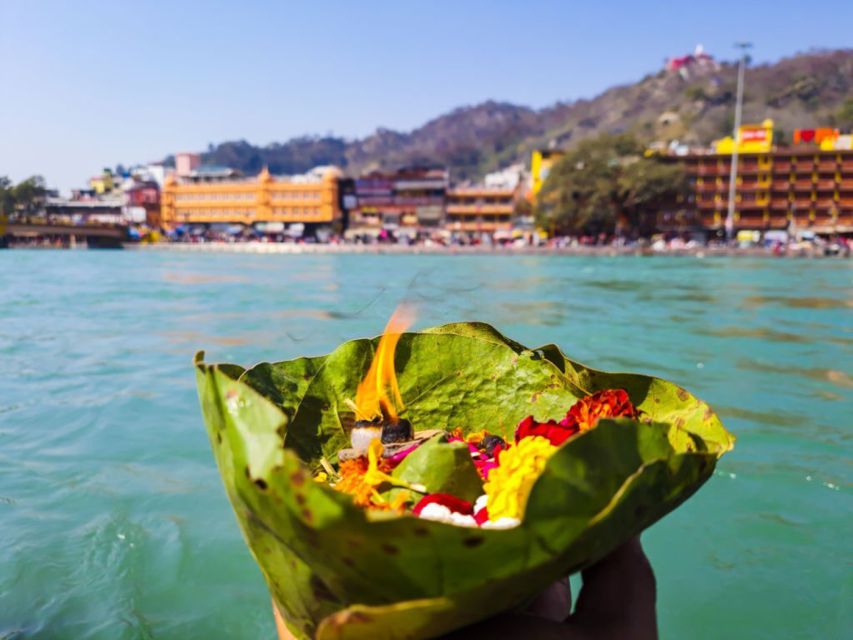
The price includes more than just driving. You get:
- Pick-up and drop-off
- Private AC car for sightseeing
- Live tour guide
- Toll taxes and parking
- Mineral water
- Yoga session fees
- Aarti ceremony charges
That matters because the day has fixed “ritual timing.” Ganga Aarti is held at sunset at Har Ki Pauri, and your best experience depends on getting there with enough time to sit, settle, and watch without panic. A competent driver also makes a difference on a day this long—fog and heavy traffic are part of the reality, and several guides in this format are praised for keeping the day calm and safe.
Language coverage is also a practical plus. The guide can be in English, Spanish, German, or French, which helps if you want details rather than just a quick nod at each stop.
Rishikesh: from suspension bridges to Beatles Ashram nostalgia
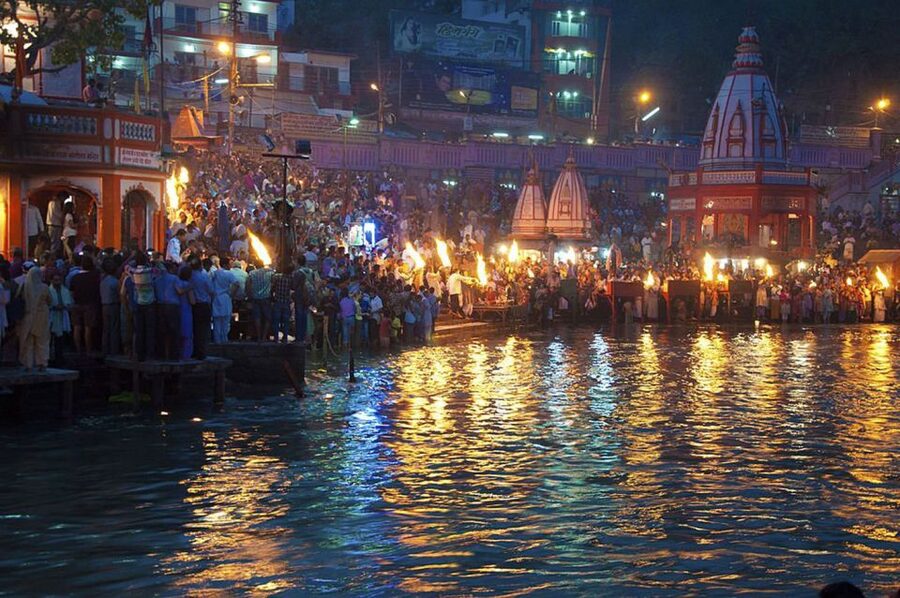
Your day arrives in Rishikesh around 9:30–10:00 AM, and the morning flow is designed to hit the recognizable anchors first.
Laxman Jhula (with a reality check)
Laxman Jhula is one of the most iconic suspension bridges over the Ganges. In this specific itinerary, it’s noted as temporary closed for general visit. Translation: you might not get that classic walk across it. Still, it’s worth checking what you can do on the day—often you can view or photograph it from nearby angles even if the bridge itself is restricted.
Ram Jhula and the temple-and-ashram feel
Next comes Ram Jhula and the area around it. This is where Rishikesh gives you its signature vibe: a riverfront setting plus spiritual commerce—temple steps, ashrams, and small lanes that funnel back toward the Ganges. If you like wandering with purpose, this is a good stretch. Your guide can point out what’s religious function versus tourist-facing decoration.
Beatles Ashram / Maharishi Mahesh Yogi site
One of the most memorable stops is the Beatles Ashram, also known as the Maharishi Mahesh Yogi Ashram. The big draw here isn’t just the pop-culture connection. It’s how it shows Rishikesh as an international magnet for meditation, not only a local pilgrimage town. You’ll also have a note on fees: entrance fees aren’t included for the betel Ashram stop, so keep a little cash aside in case you choose to enter any ticketed areas.
A practical tip: go slow here. This is the kind of place where the details—handmade signs, small courtyards, and quiet corners—carry the story. If your guide is someone like Deepak, Satish, or another praised storyteller, you’ll get a better sense of why people come and what the site represents.
Triveni Ghat, then yoga at the ashram
After Rishikesh’s bridges and ashram sites, the itinerary moves to a more sacred, slower pace.
Triveni Ghat: the meeting of rivers
You’ll visit Triveni Ghat around 12:30 PM. This is a bathing spot where the Ganges, Yamuna, and Saraswati are traditionally said to meet. Even if you don’t take the dip, standing near the ghats helps you understand why this area is considered spiritually “charged.” The river isn’t a backdrop here—it’s the whole center of gravity.
Yoga and meditation session (included)
Right after, you’ll have an hour-long yoga and meditation session at an ashram. The package includes the yoga fee, which is good because it removes one of those last-minute add-ons that can quietly inflate your day.
Clothing guidance is clearly stated: wear half sleeves or stretchable clothes suitable for the session. This is not the time for a dress shirt and rigid pants. If you’re planning what to wear that morning, treat this as your anchor activity.
And here’s the real “value” part: your guide can usually connect yoga back to what you’re seeing in temples and rituals. That prevents yoga from feeling like a separate “activity block” and turns it into a shared theme for the day.
Lunch in Rishikesh: budget for a good vegetarian meal
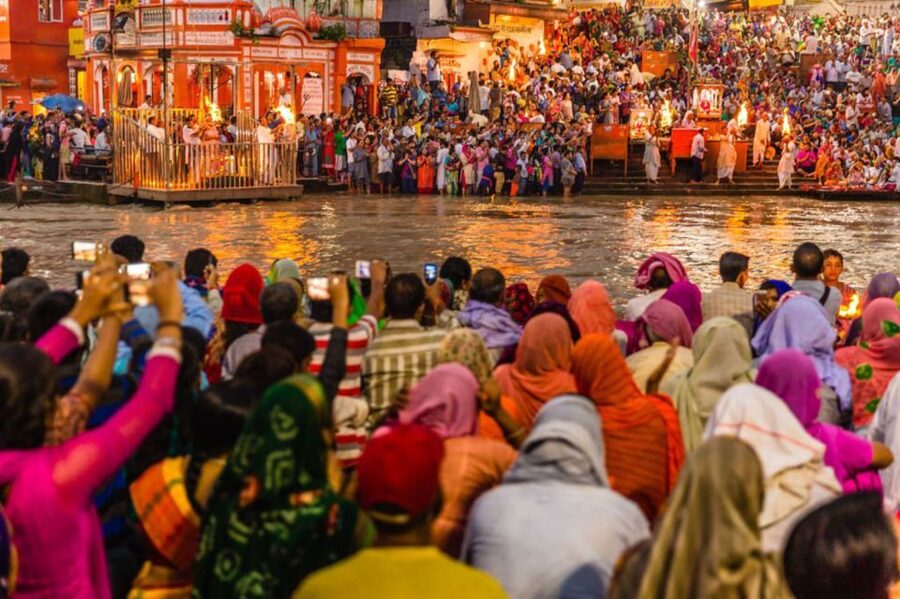
Lunch is at about 1:30 PM, but it’s not included. You’ll eat vegetarian, which fits the spirit of the day and keeps things simpler for dietary restrictions.
Plan for this:
- You’ll need to pay lunch charges separately.
- If you want a sit-down meal, you’ll likely spend time ordering and settling, so choose a place your guide thinks is efficient and reliable.
In past experiences with guides like Udai, Deepak, or others who manage timing well, the key is that lunch doesn’t derail the afternoon temples and the later ceremony.
Haridwar: Har Ki Pauri and the Bilwa Parvat temple choice
Arrival in Haridwar is scheduled around 2:30 PM. The day tightens here: you’ve got temple options, river-time, and then the sunset ceremony.
Har Ki Pauri: the main ghat for a reason
You’ll go straight to Har Ki Pauri, the most revered ghat on the banks of the Ganges in Haridwar. You can take a holy dip if you want, but the bigger point is atmosphere. This is where you see the river as a living ritual space—devotees, prayers, lamps, and steps filled with intent.
If you’re not into cold-water dipping (totally reasonable), you can still enjoy the setting and focus on the ceremony later.
Bilwa Parvat: pick one temple, cable car or trekking
Then it’s up to Bilwa Parvat, where you can visit one of these temples:
- Mansa Devi Temple
- Chandi Devi Temple
- Bharat Mata Temple (Bharat Mata Mandir)
Bharat Mata Mandir is described as a seven-floor building with an elevator up to the sixth floor, and the last floor requires walking. Also, you can reach the temple either by cable car or trekking, but cable car ride fees are not included.
So how do you choose? If you want the cleanest logistics with less exertion, cable car is usually the easier option, just remember it adds cost. If you like stretching your legs and walking through the area, trekking might feel more active. Either way, because you’re only choosing one temple, you’re not rushing across three separate religious stops.
Ganga Aarti at Har Ki Pauri: the sunset payoff
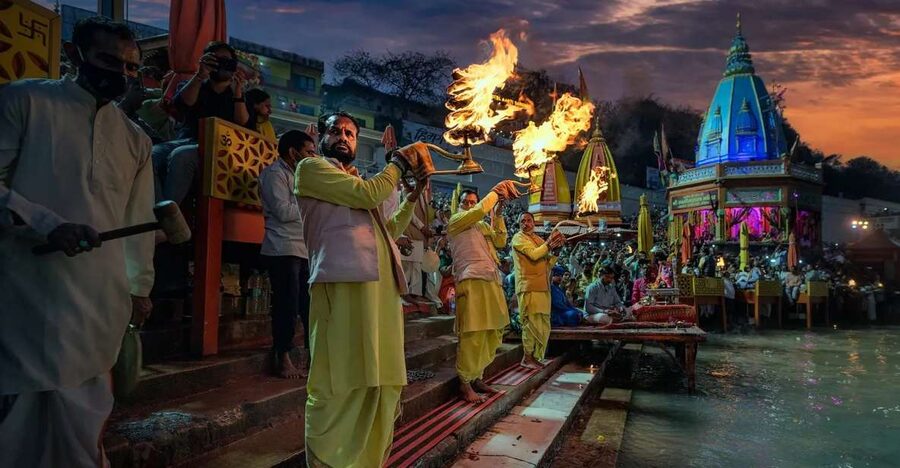
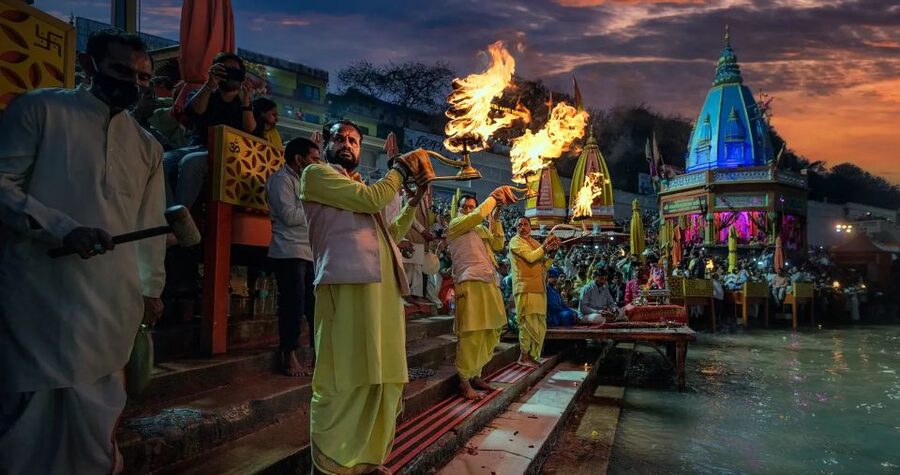
This is the headline moment. The itinerary targets 4:30 PM for the Ganga Aarti at Har Ki Pauri, held at sunset.
The practical reason this part feels special is timing and positioning. You don’t just arrive for a quick look. You get enough lead time to settle and watch without feeling stuck behind people blocking your view.
From what I’d pay attention to if I were choosing my seat: prioritize a spot that faces the action at the water’s edge, but also one where you can breathe and move a little if needed. Some guides are specifically praised for arranging excellent viewing spots early enough, which tells me it’s worth showing up on schedule rather than cutting it close.
If you care about meaning, don’t just watch the lamps—ask your guide what the ritual symbolizes and what the different actions mean. Guides like Satish and Deepak are repeatedly praised for explaining stories tied to temple icons and ritual practices, and that turns a beautiful show into something you understand.
Price and logistics: is $87 per person good value?
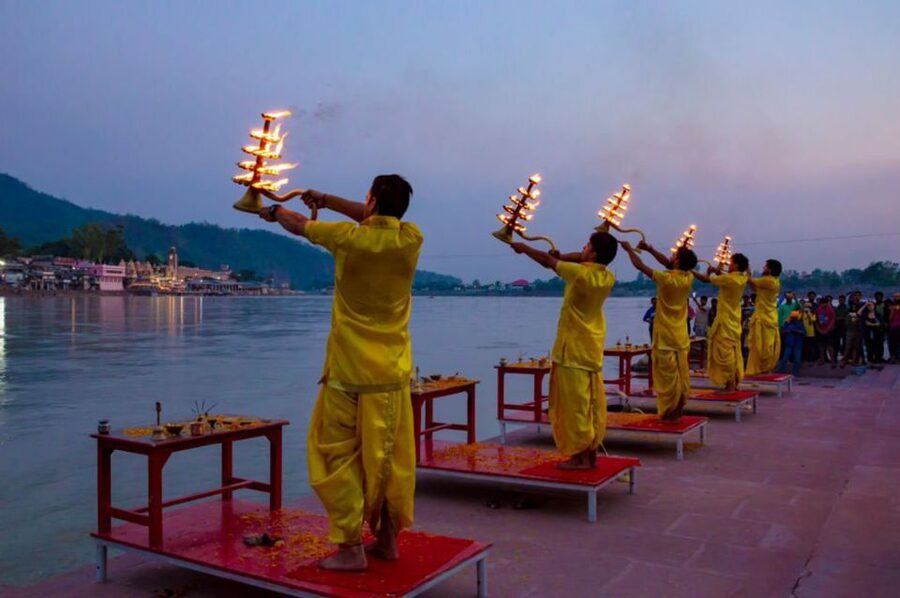
At $87 per person, this can feel fair for what you actually get—especially if you value local context.
Here’s the “value math”:
- You’re covering a long-distance day with a private AC car
- A live guide is included (not a self-guided audio plan)
- Toll and parking are handled
- Yoga fee and aarti ceremony charges are included
- Mineral water is included
What’s not included is where your planning needs to kick in:
- Lunch charges
- Cable car fee (if you choose that route for Bilwa Parvat)
- Any entrance fees that are explicitly noted as extra (like the betel Ashram entrance)
So the real question isn’t just the sticker price. It’s whether you’d otherwise have to hire a driver, figure out timing, pay for yoga separately, and then scramble for ceremony access. If you want an organized day that hits the main spiritual beats, this package usually earns its cost.
Who should book this tour, and who should pass
This fits best if:
- You want a single-day spiritual circuit from Delhi
- You like temple and river rituals with clear explanations
- You’re okay with a long schedule and lots of moving between sights
It’s also stated as wheelchair accessible, which is a big plus if mobility is a concern. At the same time, Bilwa Parvat involves stairs and/or trekking depending on how you choose to go up, so your comfort level matters when picking Bharat Mata Mandir versus the other options.
A clear no-go from the provided info: it’s not suitable for pregnant women. And alcohol and drugs aren’t allowed.
Should you book this Delhi-to-Rishikesh-and-Haridwar private day trip?
If you want one focused day that connects Rishikesh’s ashram-and-bridge world with Haridwar’s ghats and sunset Ganga Aarti, I’d say yes—especially if you like having a guide who explains the “why” behind temple icons and ritual actions. The included yoga session and included ceremony charges make it feel like more than a basic transport-only tour.
I’d hesitate if you:
- Hate long car days and late returns (you’re leaving at 5:00 AM and returning by 11:00 PM)
- Don’t want to pay extras like lunch and cable car
- Need Laxman Jhula specifically as a walkable stop, since it’s noted as closed for general visiting
If you do book, plan to dress comfortably for yoga, keep some budget aside for lunch and any cable car choice, and arrive ready for a full-signal spiritual evening at Har Ki Pauri.
FAQ
What time does the tour start and when do I return?
You depart Delhi at 5:00 AM and return to Delhi by 11:00 PM, after experiencing the Ganga Aarti and traveling back.
How long is the drive from Delhi to Rishikesh?
It’s about a 4–5 hour drive, roughly 220 km one way.
What’s included in the price?
Pickup and drop-off, a private AC car for sightseeing, a live tour guide, tolls and parking, mineral water, yoga session fees, and Ganga Aarti ceremony charges are included.
Is lunch included?
No. Lunch is not included, and lunch charges are separate.
Is the cable car included for Bilwa Parvat?
No. If you choose the cable car, the ride fee is not included.
Which temples can I visit in Haridwar?
On Bilwa Parvat, you can visit one option: Mansa Devi Temple, Chandi Devi Temple, or Bharat Mata Temple (Bharat Mata Mandir).
Is there a yoga session, and what should I wear?
Yes. There is a one-hour yoga and meditation session, and you should wear half sleeves or stretchable cloths suitable for the session.
Is the tour wheelchair accessible, and is it suitable for everyone?
The tour is listed as wheelchair accessible. However, it is not suitable for pregnant women, and alcohol and drugs are not allowed.