REVIEW · DHAKA
Fascinating Old Dhaka and Ship Breaking Yard Day Trip
Book on Viator →Operated by TaabuTour · Bookable on Viator
Old Dhaka has a way of grabbing you fast. This trip bundles Old Dhaka landmarks with a guided look at the ship breaking yard, so you see both the city’s heritage and its industrial heartbeat in one long day.
I like two things most: the rickshaw time that gets you into the tight lanes, and the fact that lunch in Old Dhaka is already sorted. One drawback to plan around: the day is packed, so if you move slowly or have health limits, the pace and walking will feel demanding. Guides such as Shahoriar, Mr Rabi, and Jafar are specifically called out for making the history click.
Key tour takeaways (quick hits)
- Old Dhaka + ship breaking yard in one day means less logistics and more contrast between old and new Dhaka.
- Hotel or airport pickup and drop-off keeps you from wasting time finding rides in chaotic traffic.
- Rickshaw + a river-rowing moment at Sadarghat adds texture beyond standard sightseeing.
- A long list of included entry tickets (and a buffet lunch) helps the day feel like real value.
- Guides matter here: names like Shahoriar, Mr Rabi, and Jafar show up as standout narrators.
In This Review
- Why Old Dhaka and the ship breaking yard pair so well
- Price and timing: what you’re really paying for
- Getting around smoothly: private car, rickshaws, and Sadarghat
- Stop-by-stop: what each place contributes to your Dhaka picture
- Shipyard Road: the industry intro that sets the tone
- Baitul Mukarram Mosque: a major scale religious landmark
- Ahsan Manzil (Pink Palace): power and prestige made visible
- Armenian Church: a different chapter of Dhaka’s community history
- Sadarghat Boat Terminal and the ship breaking yard visit
- Hoseni Dalan Mosque: another layer of religious architecture
- Lalbag Fort (Red Fort): Mughal-era remnants you can walk around
- Star Mosque (Tara Masjid): the wow-factor moment
- Curzon Hall: colonial-era architecture in active educational life
- National Parliament House: big scale, short look from the outside
- Dhakeshwari Temple: one of Dhaka’s older Hindu temples
- Lunch in Old Dhaka: buffet comfort, with vegetarian available
- Guides and pace: why names like Shahoriar, Mr Rabi, and Jafar matter
- Value check: what’s included vs. what you’ll pay extra
- Who should book this day trip?
- Should you book Fascinating Old Dhaka and Ship Breaking Yard?
- FAQ
- FAQ
- What time does the tour start?
- How long is the experience?
- Is pickup and drop-off included?
- What does the price include?
- Is lunch included, and can I choose vegetarian?
- Are drinks included with lunch?
- Do I need to buy entrance tickets?
- Is this tour private or shared?
- What’s the cancellation policy?
Why Old Dhaka and the ship breaking yard pair so well
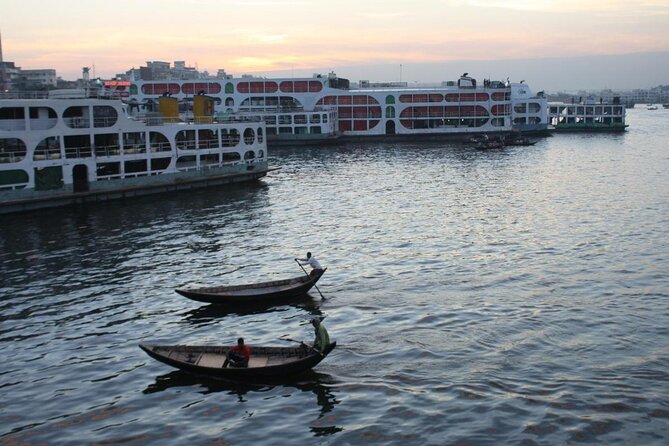
Dhaka can feel intense. That’s not a complaint so much as the reality: horns, crowds, heat, motion, and layers of history sitting on top of each other. What makes this tour smart is that it doesn’t treat Old Dhaka as a museum-only story.
You start with places that reflect Dhaka’s identity—mosques, forts, a palace known as the Pink Palace (Ahsan Manzil), churches from older communities—and then you shift gears to an industrial site where you can learn how ship breaking works and why it matters here. The day becomes less about checking boxes and more about understanding how the city functions: faith and power, trade and labor, architecture and daily life.
And because the itinerary is guided throughout, you’re not just looking at buildings. You get commentary that ties the scenes together, which is exactly what first-timers need.
Price and timing: what you’re really paying for
At $108.77 per person for about 10 hours (starting 8:00 am), you’re paying for a lot more than sightseeing. The biggest value pieces are:
- Transport in a private vehicle for the day
- Hotel/airport pickup and drop-off
- All entrance fees and activities included
- Lunch in Old Dhaka (buffet style)
- Local guide + rickshaw transport
In Dhaka, time spent navigating traffic and finding your way can eat your whole day. This tour is built to reduce that stress: you get taken from stop to stop, and you don’t have to bargain for each segment of the day.
That said, the schedule is full. Think of it as a “see a lot, learn a lot” format rather than a slow stroll where you linger for hours at one place.
Getting around smoothly: private car, rickshaws, and Sadarghat
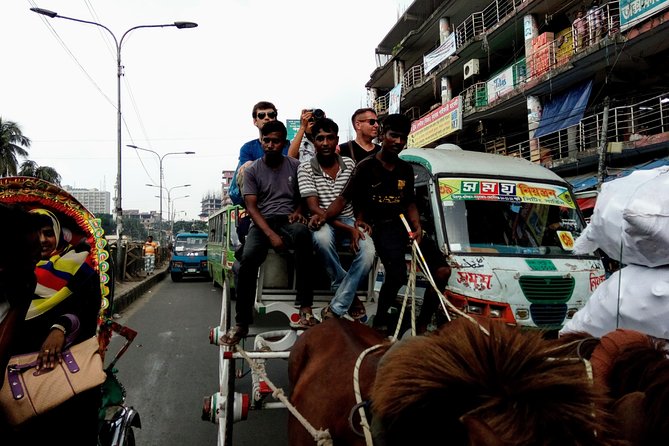
You’ll travel by private vehicle most of the day. That matters because traffic in Dhaka can be brutal, and you’ll spend time seated. The good news: the tour keeps that time productive by pairing long transit stretches with a structured route and continuous guidance.
Then you switch modes where it counts:
- Rickshaw transport is included, so you can experience the human-scale movement that cars can’t replicate in the narrow lanes.
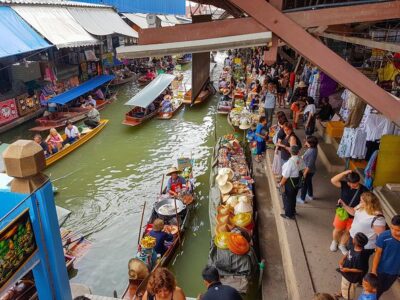
- At Sadarghat Boat Terminal, you get to experience the river side of the city more directly. The tour includes a chance to row a boat to cross the river, plus time to explore the terminal’s inside scenes like deck allocation and typical boat cabin layouts.
If you want your day in Dhaka to feel like Dhaka—rather than a drive-by tour—these transport moments are a big deal.
Stop-by-stop: what each place contributes to your Dhaka picture
This route is paced so you keep switching themes: religion, empire-era architecture, community history, then the river and industry.
Shipyard Road: the industry intro that sets the tone
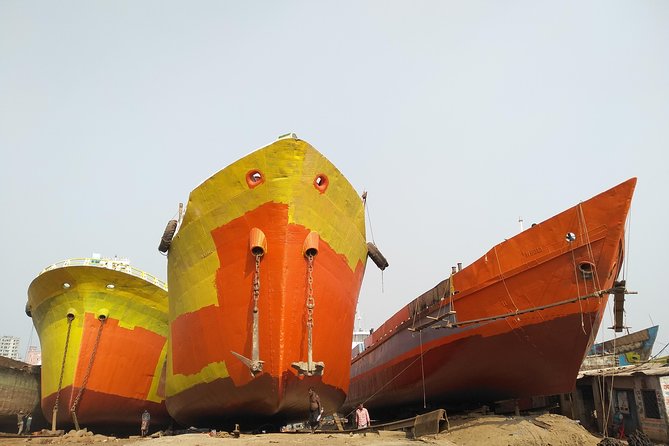
You start at Shipyard Road, where shipbuilding is described as a growing industry with real potential. The visit runs about an hour and has free admission on the stop details.
Why this works: it primes you before you reach the ship breaking area. Even if you’re not a maritime person, the guide’s framing helps you understand what you’re about to see later—how this industry fits into Bangladesh’s wider economy and history.
Baitul Mukarram Mosque: a major scale religious landmark
Next is Baitul Mukarram Mosque. It’s scheduled for about an hour, with entry included. The highlight here is seeing the central mosque from inside.
I like this kind of stop early in the day because it resets your attention. You go from traffic-and-streets energy into a place designed for stillness, then the guide connects it back to Dhaka’s cultural logic.
Ahsan Manzil (Pink Palace): power and prestige made visible
Then comes Ahsan Manzil, often called the Pink Palace and known as a pleasure house of Dhaka’s king. Entry is included and the stop runs about an hour.
This is where architecture starts telling political and social stories. You can treat it like a visual timeline: how authority expressed itself, how residences marked status, and how Dhaka’s elites lived.
Armenian Church: a different chapter of Dhaka’s community history
You’ll visit the Armenian Church next. It’s another included-entry stop around an hour.
Even if you only know a little about the Armenian community’s role in the region, this kind of stop is valuable because it widens Dhaka beyond one narrative. You’re shown that the city’s story wasn’t written by one group alone.
Sadarghat Boat Terminal and the ship breaking yard visit
This is the heart of the trip.
You’ll spend about two hours at Sadarghat Boat Terminal. Expect lively scenes: you’ll be shown around the terminal, including practical details like typical boat layouts. Then you get to row across the river—a short, memorable action that turns the river from background to experience.
After that, the tour connects you to the ship breaking yard. The emphasis is on learning the process and the history of ship breaking through guided commentary.
One practical consideration: this part of the day can feel more physical and intense than the palace-and-mosque segments. Wear comfortable shoes and keep your focus on your guide’s instructions.
Also, the tour’s structure matters here. You don’t just show up and guess what’s happening. You get context first, so the shipyard doesn’t become a confusing industrial site—it becomes a story you can follow.
Hoseni Dalan Mosque: another layer of religious architecture
After the river and shipyard segment, you move back to religious landmarks, starting with Hoseni Dalan Mosque. It’s about an hour with entry included.
Stops like this are helpful when you’ve already seen one major mosque. You start noticing differences in design, placement, and how each building communicates meaning.
Lalbag Fort (Red Fort): Mughal-era remnants you can walk around
Next is Lalbag Fort, also called the Red Fort. It’s an included stop about an hour long, built in the Mughal period.
If you’re the type who likes to understand how power left physical marks, this is the moment. You’re not just looking at one facade—you’re exploring a fort environment, which helps you picture how security, administration, and city life worked in earlier eras.
Star Mosque (Tara Masjid): the wow-factor moment
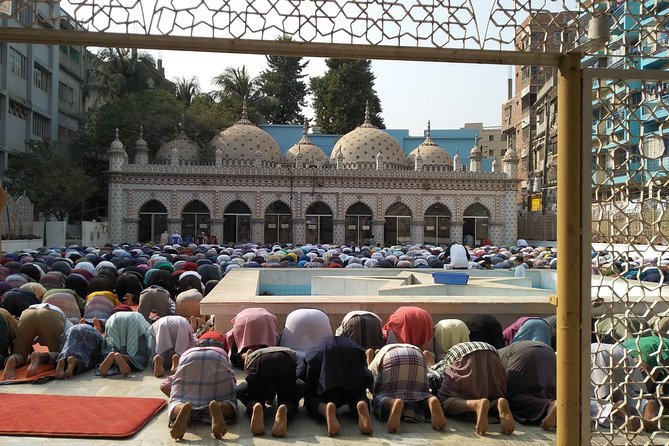
Then comes the Star Mosque (Tara Masjid). Expect about an hour, with entry included.
This is the sort of stop that gives you visual payoff: the name itself hints at the shape-and-design idea, and the guide’s commentary helps you connect aesthetics to meaning. It’s also a good contrast after the fort.
Curzon Hall: colonial-era architecture in active educational life
Next is Curzon Hall at the University of Dhaka area. You get about an hour here, with entry included.
This stop is especially useful for people who like to see how colonial-era buildings are still part of modern city life. The tour frames it as the greatest building associated with the University of Dhaka from the colonial period, which gives you a clearer lens for what you’re seeing.
National Parliament House: big scale, short look from the outside
After all that walking, there’s a breather. The tour includes about 30 minutes at National Parliament House, with a focus on seeing it from the outside. Admission is listed as free for this stop.
It’s quick, but the scale is the point. You’re reminded that modern governance occupies space next to all this older architecture.
Dhakeshwari Temple: one of Dhaka’s older Hindu temples
Finally, you visit Dhakeshwari Temple, scheduled for about 30 minutes with entry included. It’s described as one of the oldest Hindu temples in Dhaka City.
This closing stop rounds the day out. By the time you reach it, you’ve seen mosques, a church, a fort, palatial architecture, and an industrial yard. The temple helps tie the whole city story together through another religious lens.
Lunch in Old Dhaka: buffet comfort, with vegetarian available
Lunch is included as a buffet in Old Dhaka. Drinks are not included, so if you want a specific drink, plan to buy it separately.
A key detail for many people: vegetarian option is available, as long as you request it when booking. That alone can make the day smoother, because you don’t have to scramble for food during the busiest parts of the city.
The best way to think about lunch here is as recovery time. You’ll be hopping between sites with limited gaps, so the included meal is part of what keeps the day enjoyable.
Guides and pace: why names like Shahoriar, Mr Rabi, and Jafar matter
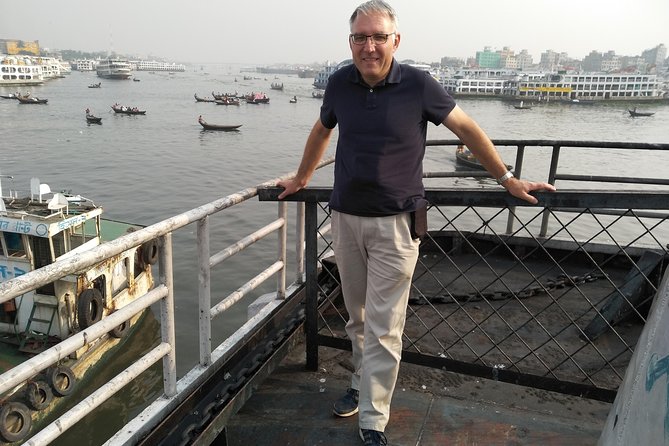
The tour’s success depends heavily on the guide. And you can see that in the way different guides get praised for turning a long route into a coherent story.
- Shahoriar gets credited with explaining Dhaka’s history while covering major sites by car and walking.
- Mr Rabi is noted for packing in a lot and keeping things understandable.
- Jafar is highlighted for local knowledge and for helping people understand Bangladesh beyond surface-level facts.
Still, pace is real. One note to take seriously: if the day’s route is moving fast because of conditions in Dhaka (like unrest or tight timing), you’ll want to be ready to keep up. If you have any physical limitations, don’t assume you’ll be able to slow the tour down.
Value check: what’s included vs. what you’ll pay extra
This is where the math works in your favor.
Included:
- Hotel/port pickup and drop-off
- Local guide
- Private transport
- Rickshaw
- All entrance fees and activities
- Lunch buffet
- Local taxes
- Mobile ticket
- Group discounts (when applicable)
Not included:
- Drinks
- Souvenir photos (sold separately)
For $108.77, you’re basically paying for a full guided day with transport + entries covered. In Dhaka, that can be a big win because you avoid stacking multiple tickets, multiple entry lines, and repeated bargaining.
Who should book this day trip?
This works best for you if:
- It’s your first time in Dhaka and you want a structured introduction.
- You like learning from guides, not just taking photos.
- You want a mix: palaces, mosques, heritage churches, fort walls, a river terminal, and an industrial ship breaking yard.
- You’re comfortable with a long day (about 10 hours) and some walking.
You should reconsider if:
- You have mobility issues or you know you struggle with long, fast schedules.
- You prefer a calmer day with fewer stops.
- You don’t enjoy gritty industrial settings (the ship breaking yard segment is the point, not an optional add-on).
Should you book Fascinating Old Dhaka and Ship Breaking Yard?
If your goal is to understand Dhaka as a working city with deep history—not just a handful of monuments—this is a strong choice. The combination is efficient: one pickup, one guide, one day, and lots of included entries plus lunch.
I’d book it if you’re excited by contrast: Mughal-era fort walls and a Pink Palace inside the same day as the river’s Sadarghat energy and a guided look at ship breaking. It’s a full plate. But when you want the whole picture, this route gives it to you.
FAQ
FAQ
What time does the tour start?
The tour starts at 8:00 am.
How long is the experience?
It runs for approximately 10 hours.
Is pickup and drop-off included?
Yes. The tour includes convenient hotel or airport pickup and drop-off in Dhaka.
What does the price include?
All transportation (including rickshaw), a lunch buffet in Old Dhaka, local guide, private vehicle transport, and all entrance fees and activities are included. Local taxes are included as well.
Is lunch included, and can I choose vegetarian?
Lunch is included as a buffet. A vegetarian option is available if you advise the provider at the time of booking.
Are drinks included with lunch?
No, drinks are not included.
Do I need to buy entrance tickets?
No. Entrance fees for the listed activities are included in the tour.
Is this tour private or shared?
It’s private. Only your group participates.
What’s the cancellation policy?
You can cancel for a full refund up to 24 hours in advance of the start time. Free cancellation is offered with that 24-hour cutoff based on local time.