REVIEW · DA NANG
Da Nang: Imperial City of Hue Day Trip with Lunch and Ticket
Book on GetYourGuide →Operated by Cong ty TNHH TVA Travel · Bookable on GetYourGuide
Hue is a royal-history sprint from Da Nang. I like the round-trip hotel transport that keeps this day tidy, and the drive includes the Hai Van Tunnel, one of Southeast Asia’s longest. The one drawback is simple: it’s an 11-hour schedule, so if you want slow and sleepy sightseeing, you may feel a bit time-pressured.
My second big plus is the English-speaking guide work, especially when they walk you through the 13 Nguyen dynasty kings and the long arc of rule that shaped Hue. And yes, the included restaurant lunch lands well in the mix, with people praising both the food and how the guide handled different preferences.
In This Review
- Key takeaways before you go
- Da Nang to Hue in One Long Day: the real trade-off
- The Hai Van Tunnel ride: why the journey isn’t wasted time
- Khai Dinh Tomb: royal art you can read at walking speed
- Lunch in Hue: what “included” really means for your day
- Thien Mu Pagoda: Hue’s symbol, not just another temple
- Hue Citadel (Imperial Forbidden Citadel): where the Nguyen Dynasty story locks in
- What the tour includes (and what it saves you from)
- Price and value: is $51 a fair deal?
- Comfort, timing, and your “day-trip survival” checklist
- Who should book this Hue day trip from Da Nang?
- Should you book this tour?
- FAQ
- How long is the Hue day trip from Da Nang?
- Where is the pickup in Da Nang?
- Is there an English-speaking guide?
- Is lunch included?
- Are attraction entry fees included?
- What main sights does the tour visit?
- What should I bring, and what should I avoid?
- Is this tour refundable, and is it suitable for everyone?
Key takeaways before you go
- Hotel pickup and drop-off from Da Nang city center (Hai Chau District)
- Hai Van Tunnel crossing early on for dramatic views and an efficient start
- Khai Dinh Tomb first, then lunch, then Thien Mu Pagoda, then Hue Citadel
- All attraction entry fees included, so you’re not hunting tickets mid-day
- English live tour guide, with guides praised for clear storytelling (one named An comes up)
- Comfort matters: wear walking shoes, bring a hat, and expect a lot of site time
Da Nang to Hue in One Long Day: the real trade-off

This tour is built for people who want the “big Hue hits” without stitching together buses, tickets, and directions. You’ll get round-trip transfers from Da Nang city center, and the day is paced like a guided checklist: key royal sites, one solid lunch break, then back on the path.
The trade-off is time. Eleven hours sounds manageable until you remember Hue sites include stairs, uneven ground, and plenty of standing while a guide explains what you’re seeing. If you’re the type who likes lingering, sketching, and stopping for coffee every hour, you might find the pace slightly brisk.
Still, for a first visit to Hue from Da Nang, this structure is exactly what you want: cover the landmarks in a logical order and leave with a clear story of the Nguyen Dynasty.
You can also read our reviews of more tours and experiences in Da Nang.



The Hai Van Tunnel ride: why the journey isn’t wasted time

The day starts with hotel pickup in Da Nang and then the drive toward Hue includes crossing the Hai Van Tunnel. People often focus only on the destination, but getting there this way can turn the trip into part of the experience.
Why it matters for you: it cuts travel friction and keeps the schedule workable. You don’t need to think about transport logistics, and you start the sightseeing day with momentum rather than stress.
Also, weather can happen in Central Vietnam. One of the recurring themes in feedback is that even when conditions weren’t perfect, the plan held up and the guide kept the group moving through the key moments.
Khai Dinh Tomb: royal art you can read at walking speed
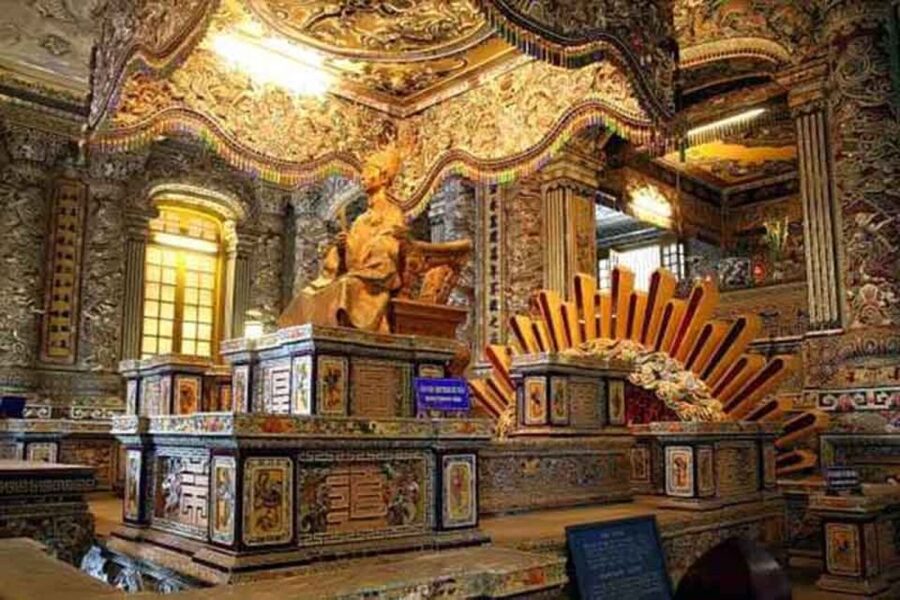
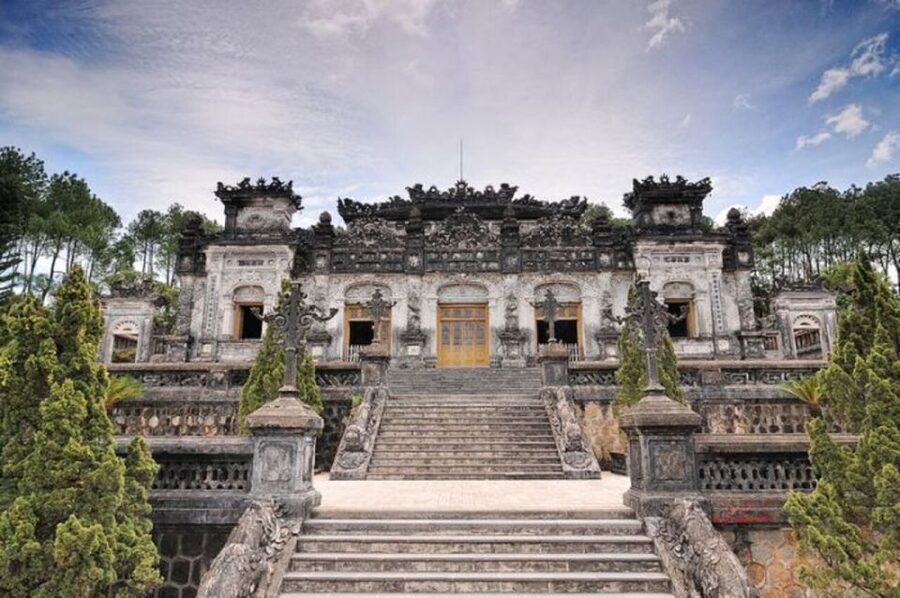
Khai Dinh Tomb is where the day begins on the Hue side, and it’s a strong opener. This is one of the most beautiful royal tombs of the Nguyen Dynasty kings, and it gives you a sense of how the monarchy mixed power, spirituality, and symbolism in stone.
What you’ll get from this stop: a “royal scale” that’s easy to grasp. Even if you don’t speak Vietnamese, the tomb’s presence and design communicate status immediately, and a good English guide can connect details to the broader Nguyen story.
A practical note: this kind of site rewards comfortable shoes. You’ll want to be able to walk, pause, and move around without worrying about your feet. Bring a sun hat too. Hue sun can be blunt, and you’ll feel it before you notice it.
Lunch in Hue: what “included” really means for your day
Lunch is scheduled in the early afternoon, and it’s more than just a break. This is where the tour helps you manage energy, especially on an 11-hour timeline that includes multiple major sites.
What makes this valuable for you: you’re not forced to make a midday decision under pressure. With lunch handled, you can focus on the next stops—Thien Mu Pagoda and the Hue Citadel—rather than spending time comparing menus and figuring out where to go.
People also specifically praised the restaurant food, and they noted the guide respected food preferences. That’s a small detail, but it’s the difference between “fine lunch” and a meal that keeps you comfortable for the afternoon.
One more thing: mineral water is included. It sounds basic, but on hot days it helps you pace yourself instead of saving hydration for later.
Thien Mu Pagoda: Hue’s symbol, not just another temple
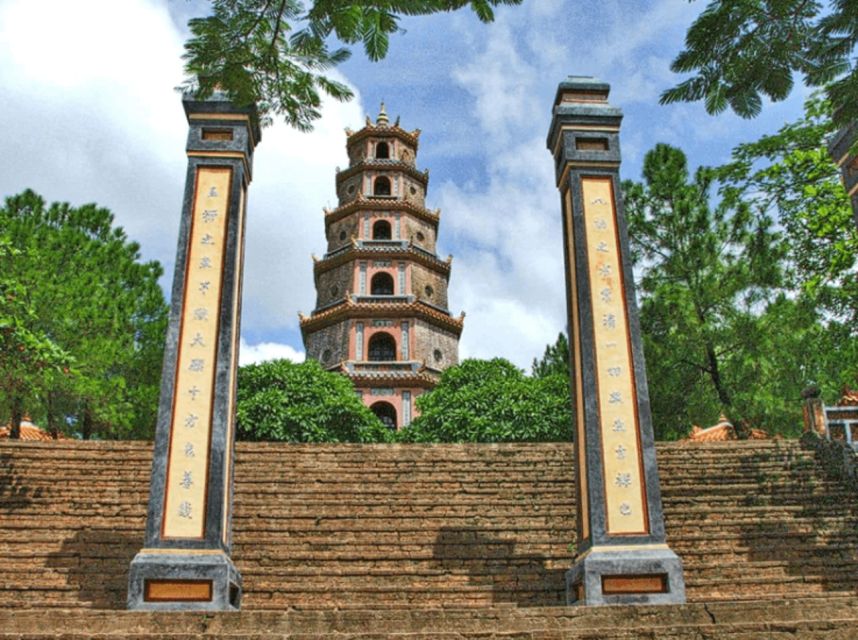
Next comes Thien Mu Pagoda, described as Hue’s oldest and most beautiful pagoda. It’s also treated as a symbol of the religion and spirit of the Hue people, which means this stop isn’t only about architecture.
Here’s why it works in the itinerary: after the tomb’s royal-world feeling, the pagoda shifts you into Hue’s religious identity. You’ll see a different side of the city—one that connects everyday belief and long-term tradition, not just imperial power.
What to expect: time to look around and time to listen. A guide’s explanation is where this stop becomes meaningful, because the pagoda’s role as a symbol is the point. If you keep one eye on the structures and the other on the guide’s storyline, you’ll leave with more than photos.

Hue Citadel (Imperial Forbidden Citadel): where the Nguyen Dynasty story locks in
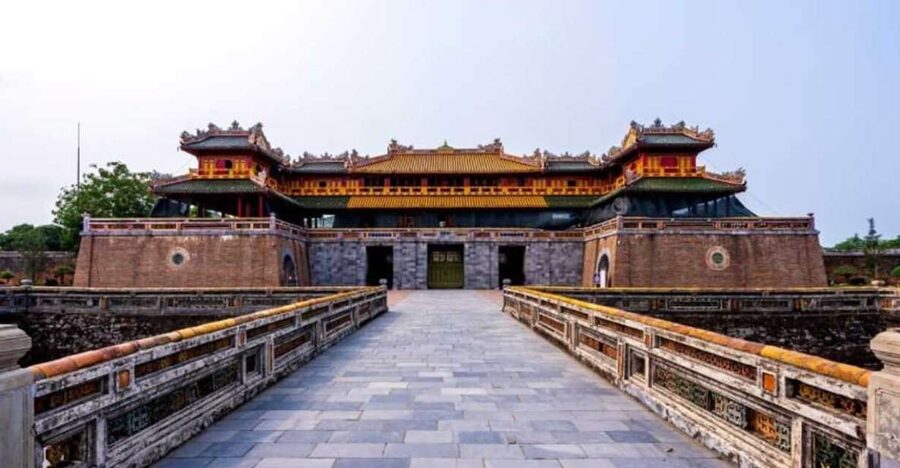
The last big highlight is Hue Citadel, the Imperial Forbidden Citadel, recognized as a UNESCO World Cultural Heritage Site in 1993. This is where Hue feels most like a capital city from another era.
The key value isn’t just that it’s old. It’s the way the citadel sets the stage for what you learned earlier: the political and cultural power of the Nguyen Dynasty. This tour frames the story through the 13 Nguyen dynasty kings who ruled for over 140 years, so you’re not just looking at walls—you’re learning the timeline that the walls represent.
What makes this stop memorable: scale plus explanation. Citadel spaces can feel easy to walk through quickly without absorbing anything. The guide’s job here is to help you “read” the site—what different areas meant, how the monarchy functioned, and why the citadel mattered.
If you’re short on time in Hue, this is the stop you don’t skip. It’s the one most likely to turn random sightseeing into real understanding.
What the tour includes (and what it saves you from)
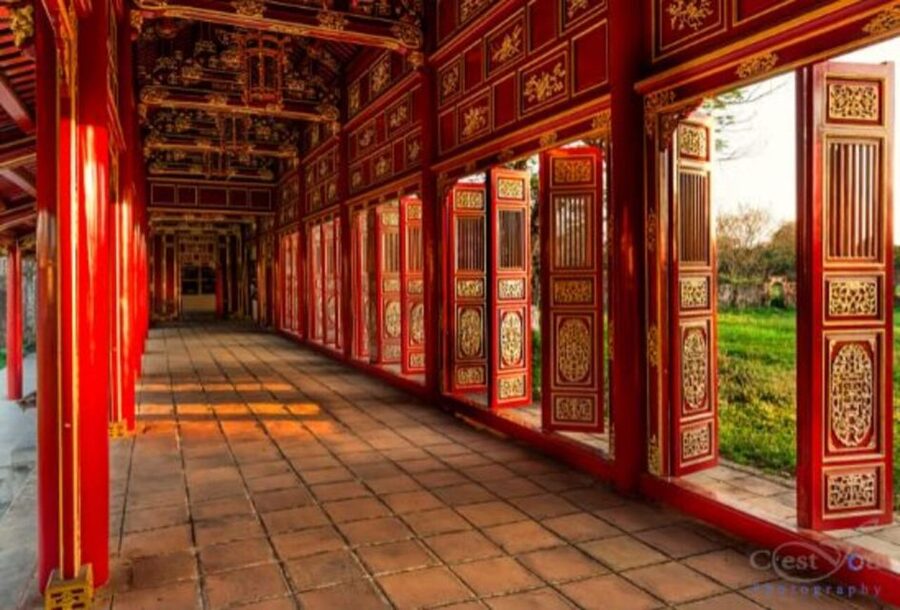
This is one of those tours where the included stuff matters because it reduces decision fatigue.
You get:
- Hotel pickup and drop-off from Da Nang city center (Hai Chau District)
- A tour guide in English
- Lunch
- Attraction entry fees
- Mineral water
Translation into real life: you don’t have to budget separately for site tickets, and you don’t need to spend your morning planning routes. For a day trip, that kind of simplicity is real value, not fluff.
Also, the tour is live guided, not recorded narration. For historic places, live guiding makes a difference because you can ask follow-ups and move at the pace the group needs.
Price and value: is $51 a fair deal?
At $51 per person for an 11-hour day trip with round-trip hotel transfers, an English guide, lunch, and attraction entry fees, this is priced like a “turnkey day.” That typically means you’re paying for convenience plus the cost of admission and organization.
If you were to DIY Hue from Da Nang, your costs would likely spread out across:
- transport (and the time/effort to line it up),
- several entrance tickets,
- and food.
This tour bundles those pieces together. You’re also getting someone to explain the Nguyen Dynasty story through the major sites, including the tomb, pagoda, and citadel. That’s hard to replicate on your own without spending time researching before you arrive.
So is it worth it? If you want Hue as a first-date kind of visit—see the key landmarks and get the story—yes, the value holds. If you prefer independent exploration and you know exactly what you want to do in Hue, you might not need a guided bundle.
Comfort, timing, and your “day-trip survival” checklist
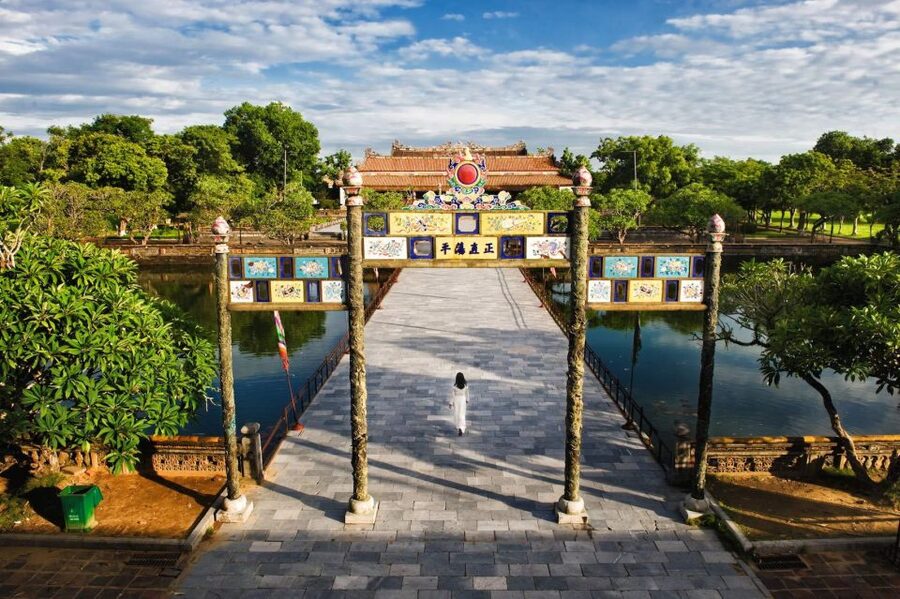
This tour is walk-focused, so your comfort choices matter more than you’d think. Here’s what to take seriously based on the tour’s stated guidance:
- Bring comfortable shoes. You’ll be on your feet.
- Wear comfortable clothes and plan for sun with sunglasses and a sun hat.
- Bring cash (the tour specifically calls it out).
- Avoid high-heeled shoes, which won’t be practical for temple and tomb ground.
Also, do yourself a favor and plan to use the breaks wisely. Feedback includes mention of multiple toilet breaks along the way, which is exactly what you want on a long, structured day.
If weather is bad, don’t assume you’ll cancel. The itinerary is set up to still cover the essentials. You might just spend more time choosing shade, pacing your photos, and relying on the guide’s explanations while you wait out short changes.
Who should book this Hue day trip from Da Nang?
This is a great match if you:
- want a clear first visit to Hue without building your own plan,
- like guided history that connects sites to a timeline (the Nguyen Dynasty reign is a big theme),
- appreciate included meals and entry fees when your schedule is tight,
- travel solo and want a guided structure (one solo traveler praised it as full-on and easy to manage).
It’s less ideal if you:
- want slow travel or long unstructured stops,
- don’t like group pacing,
- need wheelchair accessibility, since the tour is not suitable for wheelchair users.
Should you book this tour?
If your goal is to see Hue Citadel, Thien Mu Pagoda, and Khai Dinh Tomb in one day with simple logistics, this trip is a strong option. The combination of hotel transfers, English guide, lunch, and included entry fees makes it feel like a well-packaged day rather than a half-organized scramble.
Book it if you want value in time and structure. Skip it if you’re the kind of traveler who wants Hue at your own pace and you’re comfortable planning transport and tickets separately.
If you do book, treat it like a “royal history day”: wear good shoes, bring sun protection, and be ready to listen. The sites are impressive, but the story is what makes them stick.
FAQ
How long is the Hue day trip from Da Nang?
The tour lasts 11 hours. Starting times vary, so you’ll want to check availability for the exact departure.
Where is the pickup in Da Nang?
Pickup is available from hotels in Da Nang city center, specifically in the Hai Chau District.
Is there an English-speaking guide?
Yes. The tour includes a live tour guide who speaks English.
Is lunch included?
Lunch is included during the tour, along with mineral water.
Are attraction entry fees included?
Yes. Entry fees for the included attractions are part of the package.
What main sights does the tour visit?
You’ll visit Khai Dinh Tomb, Thien Mu Pagoda, and the Hue Citadel (Imperial Forbidden Citadel).
What should I bring, and what should I avoid?
Bring comfortable shoes, sunglasses, a sun hat, comfortable clothes, and cash. High-heeled shoes are not allowed.
Is this tour refundable, and is it suitable for everyone?
Free cancellation is available up to 24 hours in advance for a full refund. The tour is not suitable for wheelchair users.