REVIEW · CRETE
Crete: Sightseeing Day Trip with Cooking Lesson and Lunch
Book on GetYourGuide →Operated by Safari Experts Crete · Bookable on GetYourGuide
Goats, clay, and off-road views in one day. If you want more than a bus ride, this tour blends 4×4 driving through the Embasa gorge with hands-on stops like a farm visit and a ceramics workshop, all wrapped up with a Cretan lunch and cooking lesson. I like the variety because every segment teaches you something real about how people live here, not just what to photograph. One thing to weigh: the day is packed, so some parts can feel busy if multiple groups are running the same activities.
What ties it together is the mix of people, place, and taste. You’ll meet guides such as Nikos and Mike, Nico, Mario, and Vagelis (names that show up often in past groups), and they tend to make the facts easier to remember. I especially enjoyed the olive oil tasting at the factory and the visit to the 2000+ year old plane tree, but a few guests found the cooking lesson more of a demonstration than a full hands-on cooking session.
In This Review
- Key highlights at a glance
- First ride out: pickup points and the 4×4 Defender or Vito
- Potamies farm: goat milking, milk products, and the real rhythm
- Aposelemis Dam and the submerged village of Sfendili
- Embasa gorge: dirt-road 4×4 driving and herb-hunting moments
- Lassithi Plateau and the pottery workshop where you make your own piece
- Cooking lesson and wood-oven lunch: learning the flavors, then eating them
- Krasi village: aqueduct square stops and the 2000-year-old plane tree
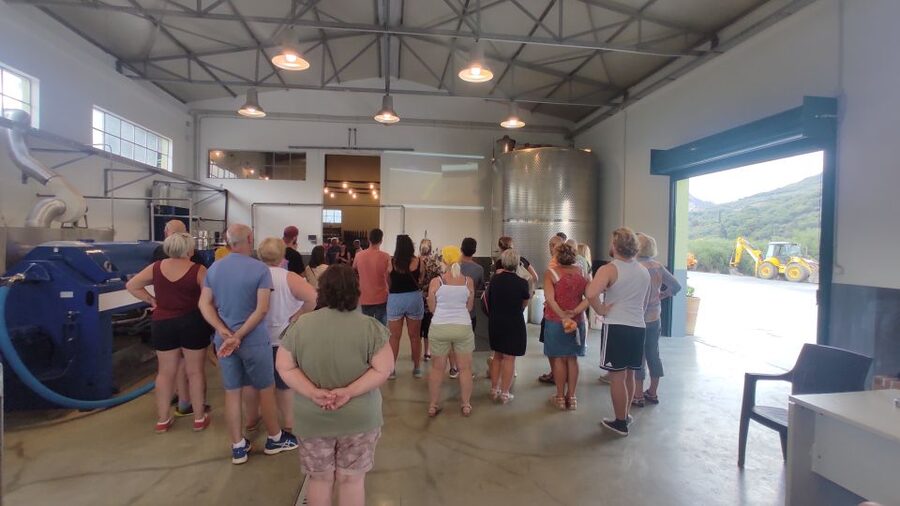
- Olive oil factory tour: from extraction to taste tests
- Price and value: does $108 make sense for an 8-hour day?
- Group vibe and the one thing to manage: pace
- What you should bring (and what to skip in the car)
- Who should book this day trip
- Should you book this Crete cooking, pottery, and off-road day trip?
- FAQ
- How long is the Crete sightseeing day trip with cooking lesson and lunch?
- Where does pickup happen for this tour?
- What vehicle is used for the off-road parts?
- What hands-on activities are included?
- Is lunch included, and is it tied to Cretan food?
- Are drinks included during the day?
- What languages is the live tour guide offered in?
- What should I bring, and what’s not allowed during the tour?
- Is free cancellation available?
Key highlights at a glance
- Potamies farm visit with goat milking and milk products that feel like a peek into daily life
- Off-road 4×4 ride on dirt roads through Embasa gorge, with mountain views and herb-picking chances
- Ceramics workshop where you create your own pottery in a Cretan style
- Aposelemis Dam stop, including views linked to the submerged village area of Sfendili and bird life around the wetland
- Lassithi Plateau time, plus chances to meet locals and get a slower pace from the higher ground
- Olive oil factory tour and sampling, tying the lunch flavors back to how the island’s main crop is made
First ride out: pickup points and the 4×4 Defender or Vito
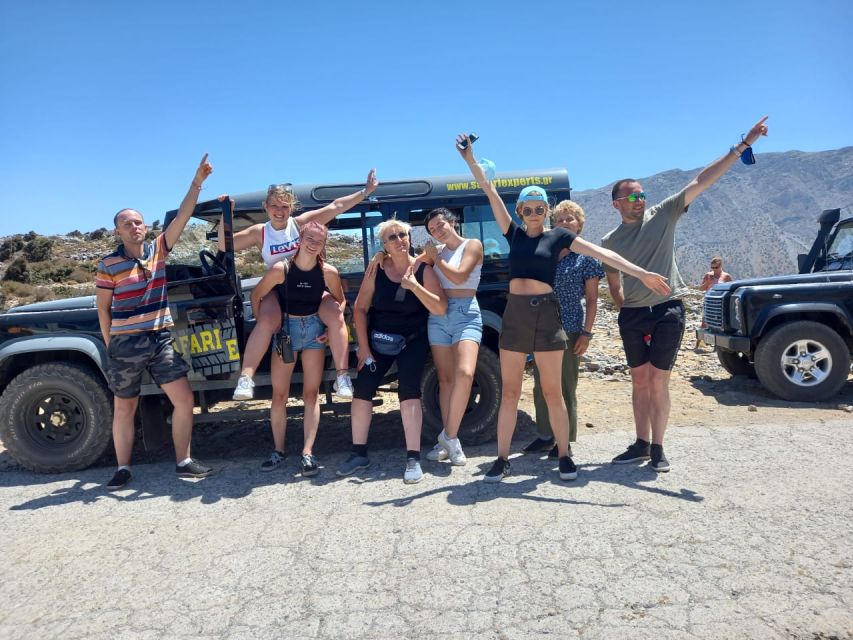
This is an 8-hour tour built around getting you out of the coast areas and into inland Crete. Pickup is available from Analipsi, Heraklion, Hersonissos, or Sisi, and you’ll start by being collected from your hotel lobby. The vehicles are described as Land Rover Defender or 4×4 Mercedes Vito (fully AC), which matters because this day includes uneven roads where a normal car would feel underpowered or uncomfortable.
The best part of the early stage is that you’re already getting the scenery before the first activity. Even if you’re not hiking, you’ll see the countryside shift as the day goes on. The route can change for safety or weather, so think of the drive time as flexible rather than a strict checklist.
You can also read our reviews of more tours and experiences in Crete.

Potamies farm: goat milking, milk products, and the real rhythm
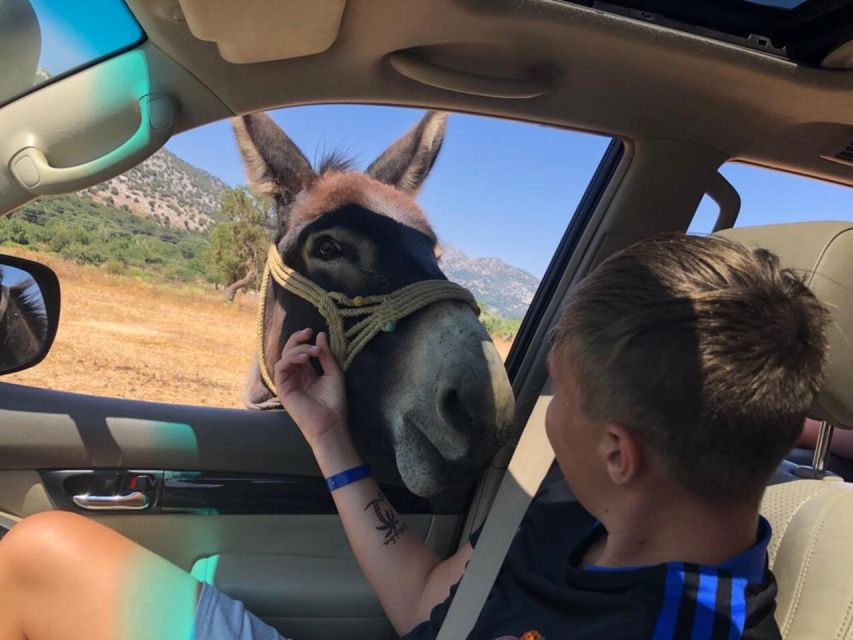
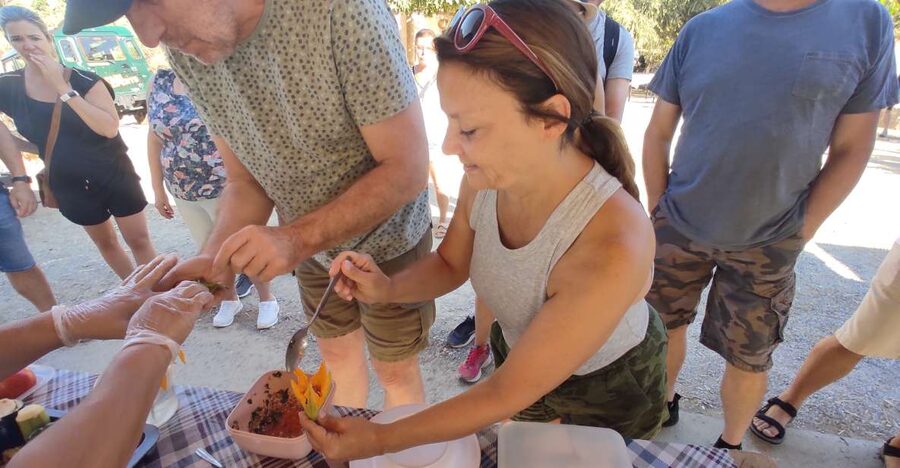
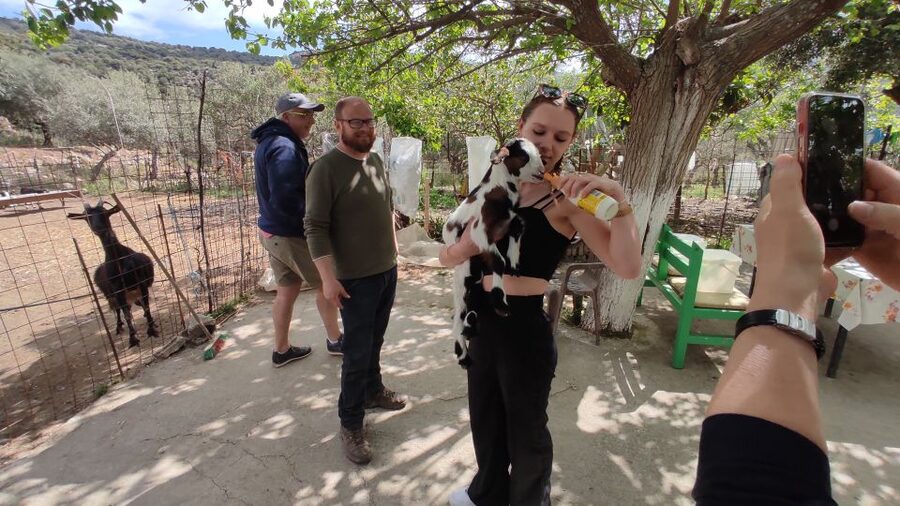
The day kicks into its hands-on mode at a farm in Potamies. Here, you can watch a farmer milk the goats, and you’ll have the chance to sample products made with the milk. If you like farm experiences that feel practical and grounded, this is one of the stops that delivers, because you’re seeing something that exists before breakfast and still matters at the end of the day.
Wear comfortable shoes. You’ll be standing and moving around more than you expect from a sightseeing tour, and you’ll feel it if you’re wearing slick sneakers or sandals. This is also where the tour earns its cultural angle: the goal isn’t only to see animals, but to understand how farm products become the flavors you’ll taste later.
Aposelemis Dam and the submerged village of Sfendili
Next up is the dam of Aposelemis, described as the largest water supply project in Crete. The visit connects the scenery to something big and practical: water management that shaped where and how people live. You’ll also see the area where the village of Sfendili is submerged, including the chance for photos of half-submerged houses and the natural wetland that formed around it.
This stop is a good break from the more active farm and off-road segments. It’s also one of your best photo opportunities that doesn’t feel staged: birds and water add movement even if you’re not a landscape shooter. If you’re sensitive to heat, go steady here and use your hat and sunglasses, because the views around water can still be bright and tiring.
Embasa gorge: dirt-road 4×4 driving and herb-hunting moments
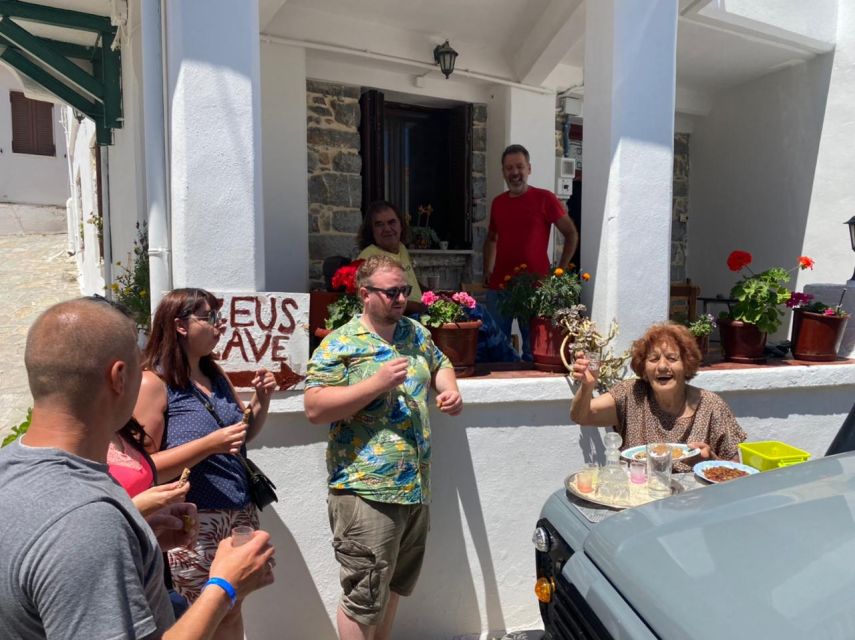
If you came for the adrenaline, this is the segment. You’ll drive uphill through the gorge of Embasa on dirt roads in the 4×4. The point isn’t thrill for thrill’s sake; it’s getting viewpoints that road cars can’t reach and seeing the terrain the way locals experience it.
There’s also a small nature bonus: you may have the opportunity to pick local herbs. Even if you don’t pick anything, you’ll likely notice how the guide connects plants to cooking. That link between roadside nature and your eventual lunch is one of the reasons this tour feels more like learning than sightseeing.
And here’s the practical note: dirt roads can be bumpy. If you’re prone to motion sickness, I’d plan accordingly. The upside is that the jolts come with mountain views you can’t replicate from a paved viewpoint.
Lassithi Plateau and the pottery workshop where you make your own piece
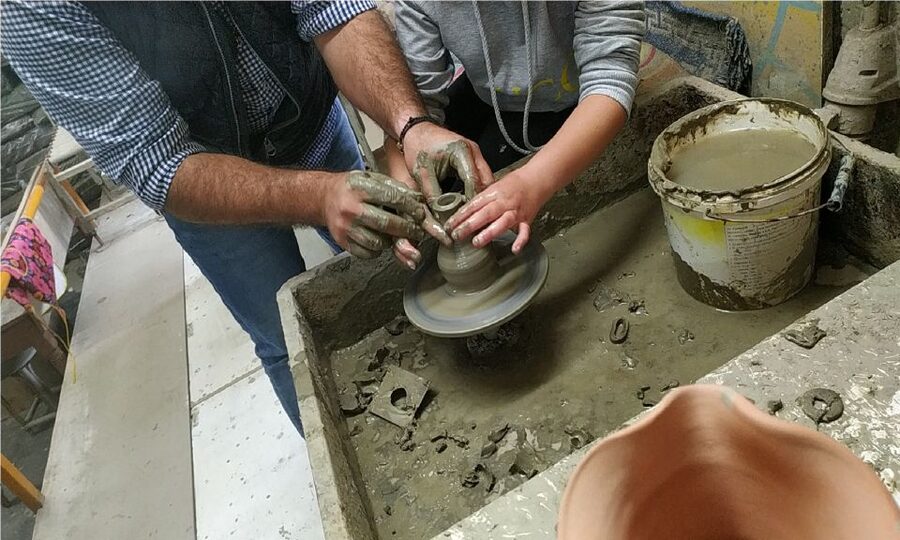
On the Lassithi plateau, the tour turns creative. You head to a pottery workshop to uncover secrets of Cretan ceramic art, and you create your own ceramic masterpiece. That matters because it’s not just watching someone else work. You’ll leave with something physical that links the day back to a skill, not only to photos.
Pottery also slows the day in a good way. You go from driving and looking outward to working with your hands and paying attention to technique. If you’re traveling as a couple or with friends, this is a stop where everyone gets to participate, even if one person isn’t the type to love farm animals or birdlife.
A possible drawback: because the tour is time-controlled, the workshop experience will be guided and scheduled. You won’t get hours and hours of unlimited creative time. Still, for most visitors, the fact that you make something at all is the payoff.


Cooking lesson and wood-oven lunch: learning the flavors, then eating them
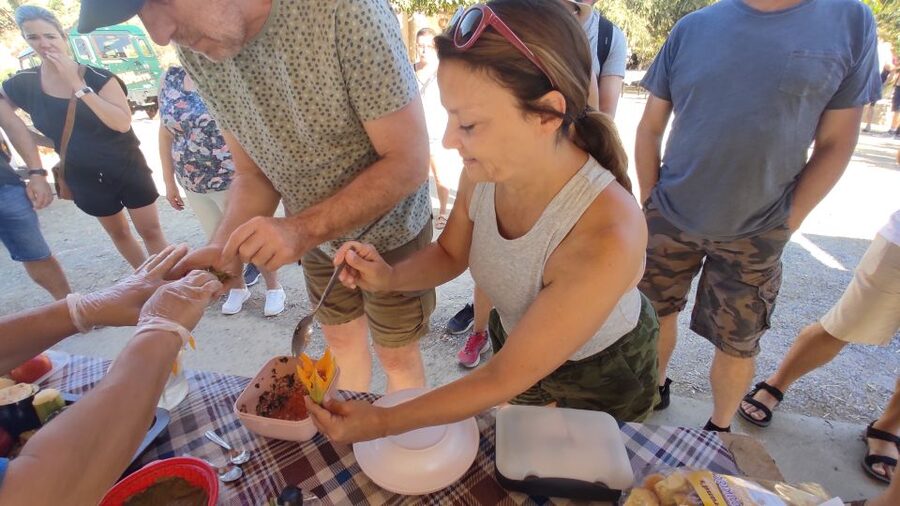
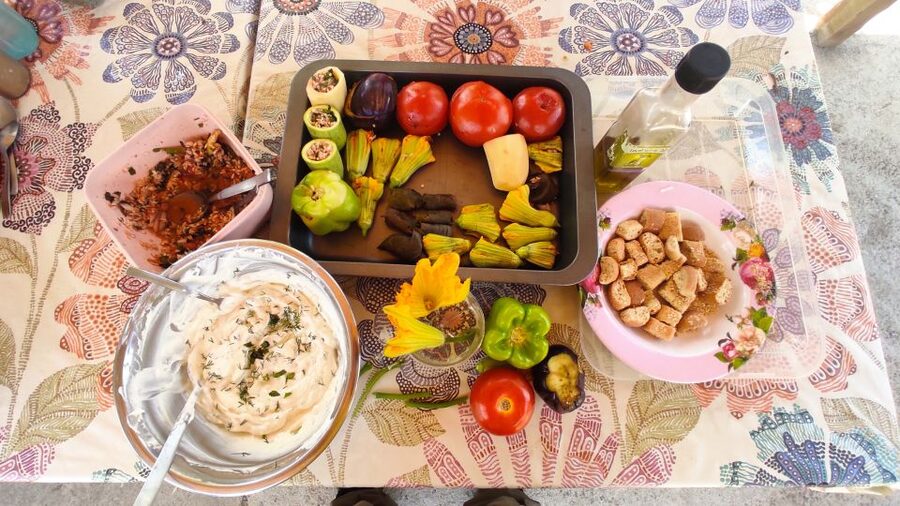
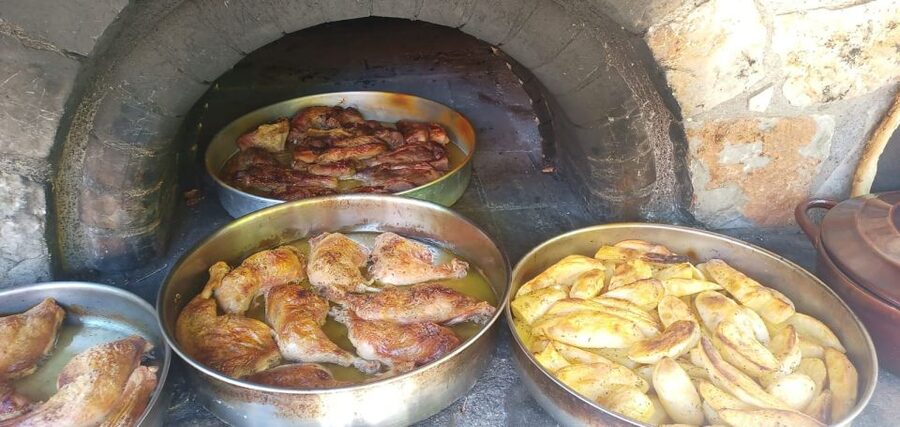
Cretan food is tied to ingredients and habits, and this tour focuses on that link. You’ll learn how to cook like a local with step-by-step instructions using pure ingredients and local products. After that, you’ll sit down for lunch that’s described as baked in a wood oven.
How satisfying is it? The overall reaction is strongly positive, especially because it connects to the earlier stops (farm products, olive oil tasting later, and herbs from the gorge). One caution from past experience: some guests felt the cooking demonstration was a bit limited, and a few found the main meal less exciting than expected. So I’d treat this as a cooking-themed experience that’s part lesson, part meal, rather than a full chef-led cooking course where you cook every component from start to finish.
Still, lunch here is more than fuel. It’s a moment to compare what you saw earlier with what you’re eating now. If you enjoy understanding why food tastes the way it does, you’ll get more out of it.
Krasi village: aqueduct square stops and the 2000-year-old plane tree
Later, you reach the village of Krasi, which gives the day a calmer, village-scale feel. You stop at a square with an 18th-century aqueduct and see centuries-old plane trees, including the oldest plane tree in Crete that’s over 2000 years old.
This stop works well for people who need a breather. You can sit, look around, and let the day’s pace reset after driving and workshops. It also gives you a chance to frame what you learned: the island’s water systems (the aqueduct, and earlier the dam) and the way trees and settlements survived across centuries.
In other words, you’re seeing continuity. Crete isn’t only beaches and souvenir shops. It’s long-running infrastructure and long-lived nature.
Olive oil factory tour: from extraction to taste tests
The last major learning block is an olive oil factory tour. You’ll learn how olive oil is produced and then try oil samples. This is where the flavors from lunch start making sense in a bigger way. Olive oil in Crete isn’t a condiment; it’s a core ingredient, and tasting different samples helps you notice that not all olive oil tastes the same.
A practical benefit of this ending: if you’ve been asking yourself throughout the day why everything tasted the way it did, the olive oil sampling gives you an immediate answer. And because you’re not driving right after this stop (you’ll return to your accommodation after), it’s a good time to slow down, compare tastes, and ask questions.
Price and value: does $108 make sense for an 8-hour day?
At $108 per person, this is not a budget day. But it’s also not just a transfer with a couple photo stops. You’re paying for:
- hotel pickup and drop-off
- a 4×4 vehicle experience
- a farm visit
- a pottery lesson where you create something
- a cooking lesson
- lunch, plus wine and water
- an olive oil factory tour and tasting
If you tried to recreate this on your own, you’d spend money and time coordinating transport to inland sites, arranging activities, and finding where to eat a proper wood-oven lunch with guided context. This tour is priced like a full-day package, and that’s the right lens.
When it might feel less worth it: if your idea of value is a deep, unhurried cooking class, or if you’re sensitive to shared-group pacing. The day is efficient. That efficiency is also the reason it can feel busy at specific stops.
Group vibe and the one thing to manage: pace
The tour runs as a guided group experience. That’s usually good for safety and logistics on dirt roads, and it also helps you move between scattered sites without stress. On the other hand, at least one past experience described a more mass-tour feeling, where multiple groups move through activities quickly.
So here’s my advice: mentally frame it as a “great sampler” day. You’ll get a lot of Cretan life in a single 8-hour window. If you’re the kind of person who prefers quiet, one-group-at-a-time access, you might feel the schedule pressure.
That said, many other comments focus on guides who keep energy high and make the time fly in a friendly way.
What you should bring (and what to skip in the car)
Bring comfortable shoes, sunglasses, and a hat. This day includes sun exposure and outdoor walking around farm and village stops, plus dirt-road driving where your feet need grip.
Also plan around what’s not allowed. Smoking isn’t allowed in the vehicle, and you won’t be able to bring drinks or food into the car. If you’re picky about water taste, stick with what’s provided on the tour (water is included).
Who should book this day trip
This works best if you want:
- a hands-on day with pottery you make yourself
- an off-road Crete experience that goes beyond the coast
- food connections that start at the farm, show up in cooking, and end with olive oil tasting
You might consider another style of tour if:
- you want a longer, slow cooking experience
- you’re uncomfortable with a packed schedule
- you expect every stop to feel totally uncrowded
Should you book this Crete cooking, pottery, and off-road day trip?
I think this is a strong buy if you’re trying to cover a lot of inland Crete without renting a car. The combination is the secret: farm + gorge 4×4 + ceramics + olive oil tasting, plus lunch that ties it together. For many people, that’s the easiest way to get beyond the surface.
Book it if you’re excited to get your hands involved (especially the pottery) and you like learning through doing. Skip it—or at least set expectations—if you’re hoping for an ultra-in-depth cooking session that feels like a private class rather than a guided lesson inside a busy day.
If you’re going for the full package and you dress for sun and walking, you’ll likely come away feeling like you experienced how Crete functions, not just how it looks.
FAQ
How long is the Crete sightseeing day trip with cooking lesson and lunch?
The tour lasts 8 hours.
Where does pickup happen for this tour?
Pickup is available from Analipsi, Heraklion, Hersonissos, or Sisi.
What vehicle is used for the off-road parts?
The tour uses a Land Rover Defender or a 4×4 Mercedes Vito with fully functioning AC.
What hands-on activities are included?
You’ll have a cooking lesson and pottery lesson, and you’ll create your own ceramic piece.
Is lunch included, and is it tied to Cretan food?
Yes. Lunch is included and described as a Cretan lunch baked in a wood oven.
Are drinks included during the day?
Wine and water are included.
What languages is the live tour guide offered in?
The live guide is available in Dutch, English, French, German, Greek, and Russian.
What should I bring, and what’s not allowed during the tour?
Bring comfortable shoes, sunglasses, and a hat. Smoking isn’t allowed in the vehicle, and you can’t bring drinks or food into the vehicle. Also note the tour route may change for safety or weather.
Is free cancellation available?
Yes. You can cancel up to 24 hours in advance for a full refund.