REVIEW · ADDIS ABABA
Addis Ababa Monasteries, Wildlife, & Hike Day Trip
Book on GetYourGuide →Operated by Aman Ethiopia Tour & Travel · Bookable on GetYourGuide
Monasteries and monkeys on one tidy day. I love the way Debre Libanos mixes museum artifacts with the quiet power of its church tomb, plus those stained-glass windows. I also like that you’re not just driving for views—you get a real shot at seeing gelada monkeys while you head to the Portuguese bridge.
This is a long day on the road, with about 2.5 hours each way. That means it’s worth bringing comfortable shoes (and patience), and it’s not a fit if you have back issues or limited mobility, since the day involves getting in and out of the car and moving around at stops.
In This Review
- Key highlights at a glance
- Debre Libanos Monastery: Saint Tekle Haymanot and stained-glass calm
- The 105 km ride to the Portuguese Bridge: road views and real Ethiopia
- Portuguese Bridge built in the 16th century: a historic stop with epic viewpoints
- Gelada monkey chance: how to spot Chelada monkeys (and when to lower expectations)
- Jemma River gorge lunch: coffee, timing, and where the day slows down
- Guides and pace: why names like Abe, Yihun, Sis, Dagi, and George matter
- Price and value at $81 per person: what you’re actually paying for
- What to pack and how to prepare for a comfortable day
- Should you book this Addis Ababa monasteries, wildlife, and bridge day trip?
- FAQ
- What’s included in the tour?
- Where does the tour go?
- How far is it from Addis Ababa?
- How long is the driving time?
- Is there an animal viewing chance?
- What do you see at Debre Libanos?
- What food and drinks are provided?
- What should I bring?
- Is this tour suitable for people with mobility issues?
- Is alcohol included?
Key highlights at a glance
- Debre Libanos museum with ancient Bible books, crosses, clothes, and monastery-used materials
- Stained-glass church interior plus the tomb of Saint Tekle Haymanot
- Portuguese bridge (16th century) in a seriously photogenic spot
- Gelada monkey chance for an Ethiopian endemic mammal moment
- Lunch by the Jemma river gorge with Ethiopian coffee
- Scenic route from Addis Ababa past farms, birds, and traditional huts
Debre Libanos Monastery: Saint Tekle Haymanot and stained-glass calm
Debre Libanos is the reason this day trip feels more than a “drive-by.” The monastery is respected and dates back to the 13th century, founded by Saint Tekle Haymanot. Even if you’re not the most religious person in the world, the place lands—because it’s old, and because people clearly still treat it with care.
You start with the museum portion, where you’ll see collections tied to monastery life: ancient Bible books, religious crosses, clothing, and traditional materials used within the monastery. It’s a helpful warm-up. Before you step into the church, you get context for what the community practiced and preserved over time.
Then you move into the church interior. This is where I like the pacing, because you’re not rushing through random rooms—you’re seeing the monastery in layers: artifacts first, then sacred space. Inside, you can visit the area connected to the tomb of the monastery’s founder, and the church’s stained-glass windows give the light a different tone. It’s one of those spots where you stop talking and just look for a minute.
A practical note: the monastery is an active place, so keep your voice down and be ready for a little walking on uneven surfaces.
You can also read our reviews of more tours and experiences in Addis Ababa.
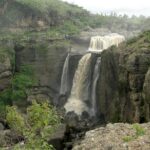
The 105 km ride to the Portuguese Bridge: road views and real Ethiopia
Most Addis Ababa day trips feel like transportation with a few stops. This one feels different because the drive itself is part of the experience. The route is about 105 km northwest of Addis Ababa, and the journey takes roughly two and a half hours each way.
As you head out, you pass through the kind of everyday countryside that’s hard to grasp from the city alone. You’ll have chances to see birds along the way, plus farm lands and traditional Ethiopian huts. You’re also with a professional driver—George is one name that came up for patient driving through challenging traffic—so you’re not white-knuckling every corner.
On the way back, you’ll get a second look at the countryside. That repeat matters. The first time you see a village or field, you’re still orienting yourself. The second time it’s easier to notice patterns: how people live, what the land supports, and how the landscape shapes travel and daily routines.
If you’re someone who hates long rides, plan your comfort. This trip is not a “quick hop.” It’s a day with an actual outbound journey and an equally real return.
Portuguese Bridge built in the 16th century: a historic stop with epic viewpoints
The Portuguese bridge is the other big anchor of the day. It was built during the 16th century, which gives it that classic “how did this get here?” effect. Set in a scenic area near the route, it’s the kind of place where you’ll naturally pause for photos, then pause again because the angles keep changing as you walk around.
What makes this stop satisfying is that it doesn’t feel like a single photo point. You can take in the bridge, look out over the area, and then settle in for your next part of the day—lunch. The viewpoints around the bridge area are described as breathtaking, and you can see why: the setting gives you depth, not just height.
If you’re planning your photos, wear shoes you trust. The bridge area and surrounding paths can be uneven, and you’ll want to move safely while you look around.
And here’s the bonus: this is also where your “wildlife chance” kicks in.
Gelada monkey chance: how to spot Chelada monkeys (and when to lower expectations)
This day trip targets Ethiopian endemic mammals—specifically gelada monkeys, often called Chelada monkeys in the tour description you’ll see. If you’re lucky, you’ll spot them near the bridge area.
Let’s keep it honest: wildlife viewing is never guaranteed. But I like that this experience is built around a realistic attempt—rather than promising a sure thing. When you’re in the right setting and you have a guide watching the terrain, your odds improve.
Here’s how you can help yourself:
- Stay alert as you approach viewpoints or edges near the route.
- Listen to your guide’s instructions and move only when asked.
- Don’t block others from looking if the group stops.
Even if you don’t see geladas, the day still works because the monastery and bridge remain the main events. The wildlife element just adds that extra “I can’t believe this is next on my itinerary” moment when it happens.
Jemma River gorge lunch: coffee, timing, and where the day slows down
After all the walking and looking, you get a proper lunch stop in front of the Jemma river gorge. This is a great place to reset. The setting lets you eat without feeling like you’re on a schedule only meant to move you along.
Lunch is included, and you’ll also have water and Ethiopian coffee. That coffee detail matters more than people think. A lot of day trips toss in a drink at random times. Here, coffee is part of the rhythm: you arrive, you tour, you walk, then you pause long enough to taste the place you’re in.
If you’re the type who gets hungry and cranky around midday, this helps. It’s also a good moment to ask your guide practical questions—like what you should notice on the drive back or how the monastery connects to wider Ethiopian religious history.
One small but real joy from the experience: people have been known to get a bit silly with the energy near the lunch stop, including an anecdote about shoulder dancing. Not required. But it hints at the vibe—people relax here.
Guides and pace: why names like Abe, Yihun, Sis, Dagi, and George matter
A lot of tours list a guide. Fewer guide teams actually shape your day. In this experience, the guide quality shows up in the details—especially the way history is explained and questions get answered without hand-waving.
I particularly liked hearing about the different guide styles from the same general tour concept. Abe stood out for connecting early human history and Ethiopian religious history. That’s not random trivia. It gives you a framework for understanding why certain sites matter and how to look at them with better eyes.
Yihun and Sis came up as strong guides too, with fun anecdotes plus plenty of knowledge about the sites. Dagi also led well for people who asked a lot of questions. And George, as mentioned before, was praised for patient driving in challenging traffic. That combination matters: you want history plus smooth logistics, because the road time can otherwise wear you down.
Pacing-wise, this day doesn’t drag for the sake of filling time. The flow is: drive out, museum and church at Debre Libanos, Portuguese bridge, wildlife chance, lunch by the gorge, then return to Addis. You’re kept moving, but not sprinting.
If you tend to get tired from mornings, don’t skip breakfast the day you go. You’ll be out long enough that your body will ask for it.
Price and value at $81 per person: what you’re actually paying for
At $81 per person, this is not a bargain “just get on a bus” kind of tour. It’s more like you’re buying three things together: guided access, a car with a professional driver, and included food/drink.
Here’s the value equation as I see it:
- Entrance fees are included, so you’re not hunting down cash or worrying about surprises at the gate.
- Lunch is included, plus water and Ethiopian coffee—so you’re not rationing your own budget at midday.
- You get pickup from Addis Ababa hotels or homes and also pickup from Addis Ababa Bole International Airport. That flexibility can save time and money versus arranging separate transport.
- Most importantly, you’re paying for an English-speaking guide and a guided route that strings together monastery history, an old bridge, and a wildlife shot.
Yes, it’s a full-day commitment. But for a one-day experience outside the city, the cost feels reasonable because you’re not paying extra for the basics. If you’d otherwise hire a driver and pay for your own entrance tickets plus lunch, the total tends to creep up.
If you’re watching your budget tightly, this might still be a “choose wisely” day. But if you want one solid cultural-and-nature day without stitching together multiple vendors, it’s a good deal.
What to pack and how to prepare for a comfortable day
This tour is simple, but you’ll enjoy it more with smart prep.
Bring:
- A passport or ID card (required for the experience)
- Comfortable shoes for moving around church and bridge areas
- Comfortable clothes for long travel time and outdoor conditions
Also, plan for a day that includes roadside viewing. The tour mentions chances to see birds and traditional huts during the drive. That’s easiest if you can move your body comfortably and step into photo-friendly spots without fuss.
And remember: it’s not listed as suitable for people with back problems, mobility impairments, or wheelchair users. If you fall into any of those categories, I’d treat this as a no for safety and comfort.
Should you book this Addis Ababa monasteries, wildlife, and bridge day trip?
I’d book it if you want a single-day outing that’s not just scenery. You’re getting a well-structured cultural visit at Debre Libanos—museum objects, church interior time, and stained-glass views—paired with the 16th-century Portuguese Bridge and a real chance at spotting Ethiopia’s endemic gelada monkeys. Add a lunch by the Jemma river gorge with Ethiopian coffee, and you’ve got the kind of day that makes Addis Ababa feel connected to the country beyond the city.
I’d skip it if long drives make your body miserable or if mobility limits mean you can’t comfortably move between stops. Also skip it if wildlife is your only goal. It’s a chance, not a guarantee.
If you’re flexible and ready for a full day, this is one of the best ways to get out of Addis without turning the day into logistics.
FAQ
What’s included in the tour?
Pickup from Addis Ababa hotels or homes (and from Addis Ababa Bole International Airport), a professional English-speaking guide, a car with a professional driver, all entrance fees, water and Ethiopian coffee, and lunch.
Where does the tour go?
It visits Debre Libanos Monastery and a Portuguese bridge built in the 16th century, then includes lunch in front of the Jemma river gorge.
How far is it from Addis Ababa?
The Portuguese bridge and Debre Libanos area are about 105 km northwest of Addis Ababa.
How long is the driving time?
It takes about two and a half hours by scenic driving to reach Debre Libanos, and you’ll return the same way.
Is there an animal viewing chance?
Yes. There’s a chance to see Ethiopian endemic mammals, specifically Chelada (gelada) monkeys, depending on luck and conditions.
What do you see at Debre Libanos?
You’ll visit the museum with ancient Bible books, religious crosses, clothing, and materials used within the monastery, then see the church interior with the tomb of the monastery’s founder and stained-glass windows.
What food and drinks are provided?
Lunch is included, along with water and Ethiopian coffee.
What should I bring?
Bring a passport or ID card, comfortable shoes, and comfortable clothes.
Is this tour suitable for people with mobility issues?
No. It’s not suitable for people with back problems, mobility impairments, or wheelchair users.
Is alcohol included?
No. Alcohol drinks aren’t included. Personal expenses and dinner are also not included.